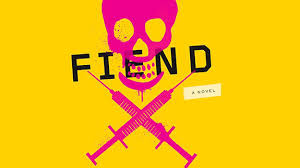
Fiend by Peter Stenson

Fiend

Grade: A

The zombie apocalypse is a pretty bleak affair. Not just because of the walking corpses perpetually trying to eat you, but because the entire world has turned on us. The nurturing planet we look to as our home and safe house has become hostile and bent on our destruction, the wonderful concept of humanity being created in god’s own image becomes only a cruel joke. The world has changed, forever, and has removed all hope. All that’s left is survival in the immediate, just a life of going from place to place. But none of this is new, we already knew all that, it’s been done. So how do you make the zombie plague even more soul-crushingly depressing? How about populating the world with drug addicts. In Fiend, author Peter Stenson uses the walking dead as a metaphor for the nature of addiction, in this case meth. The result is a terrifying look into not just addiction, but what people are capable of when survival is the only thing left worth anything.

The book follows Chase Daniels as he comes out of the tail end of a meth bender and, slowly, realizes that the people of the world are dead and have been replaced by zombies. He flees with his fellow tweaker Typewriter as they try to navigate the new hellish world while also trying to stay high. Their addict instincts take them to a cook known as The Albino, then to rescue Chase’s ex-girlfriend KK and her new dude. Things go badly and they flee to the Hmong end of town and hook up briefly with another cook, things go badly there and they flee yet again to find another safe house with yet another cook. These tropes are incredibly familiar within both the zombie genre and the druggie genre, yet nobody, to my knowledge, has ever thought to combine these two things before. Think about it for a second, there are really only two types of people in this world who truly exist only on a moment by moment basis: Drug addicts and those trying to survive a zombie apocalypse. Why not throw them together? The big twist on this book is that somehow the chemicals in meth are what keep the zombie plague at bay. This sets up an interesting scenario in that the only way to survive is to stay high. The junkies dream, and nightmare come true.

Fiend is written in the first-person, present tense, creating an immediacy and danger that makes the reader feel the same anxiety the characters feel. Stenson intimately understands the junkie’s mind and, refreshingly, cares little for zombie lore. We don’t know much about the living dead, and we don’t care, because they’re not really the point. His protagonist Chase comes off a little too educated for a druggie dropout, though. He consistently makes literary and classical allusions in his narrative to things like F. Scott Fitzgerald and Hephaestus, respectively. These come off a little insincere and seem more like Stenson than Chase. Don’t get me wrong, Chase is intelligent, it’s why we’re able to follow him on his journey despite the horrible and despicable things he does to survive, both before and after the zombie outbreak, but intelligence and education are two different things. This guy would not have knowledge of literary greats and mythical figures.

Zombies terrify us because in them we see what we can become. They’re mindless creatures that only exist for one thing, their next fix. The junkie is obviously the same, and because these two shadows of humanity are all that’s left in the world, this novel contains zero hope. It strips all things good and triumphant away and leaves us with the true nature of the junkie: truly alone, with only their dope to keep them company. The threat of zombies is just one more thing they have to deal with in their quest to get spun. Love and friendship and human connection are only important when they don’t interfere with the procurement of drugs. When given the choice, the junkie will freely enter a world of zombies with no hope of survival just for the vague promise that he might be able to keep getting high for just a little while longer. For an already bleak genre, Fiend is a disturbing, terrifying, and soul-destroying addition.
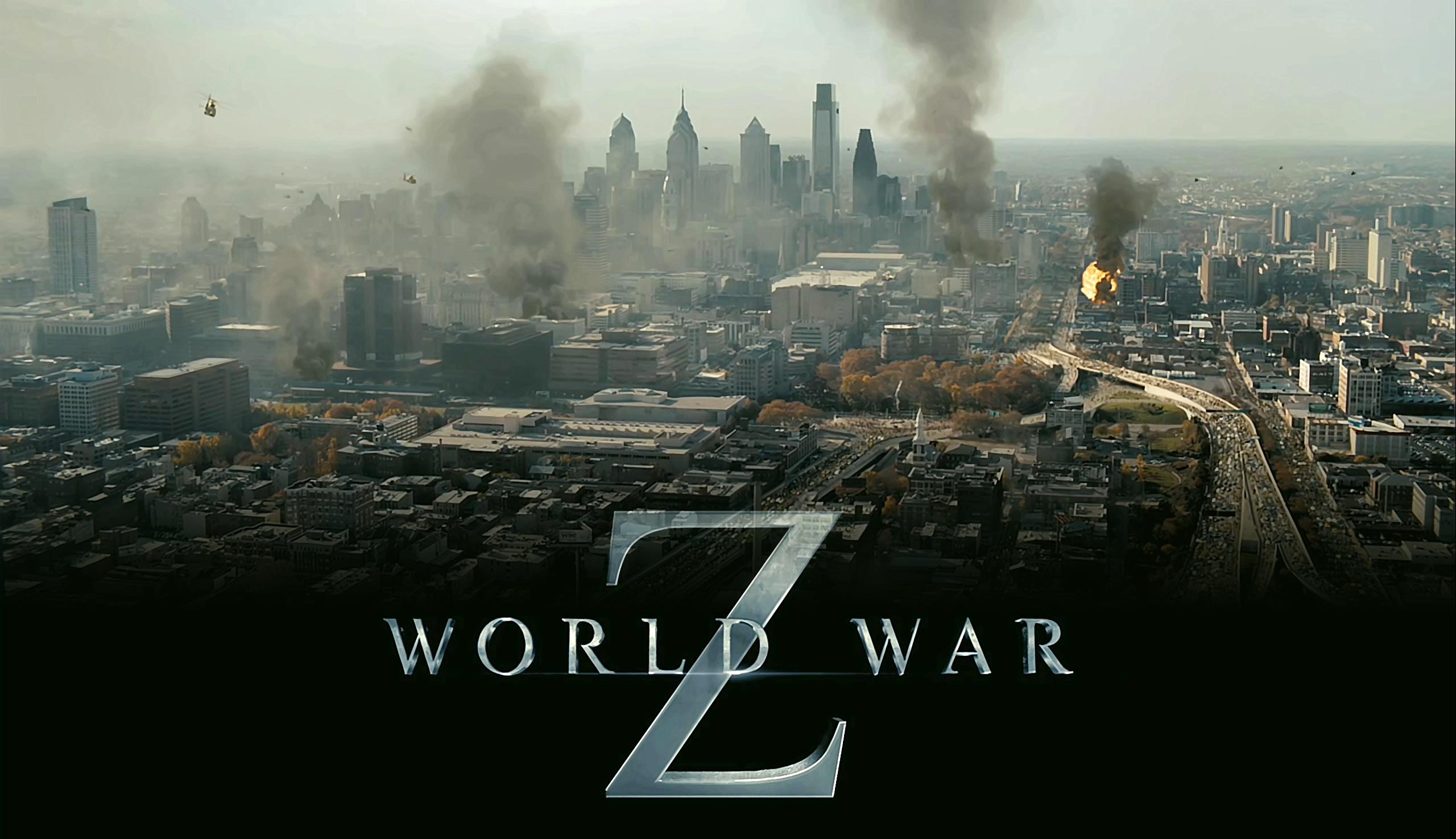
World War Z

world war z movie

Directed by Marc Forster

Starring Brad Pitt, Mireille Enos, Danielle Kertesz

Grade: C+

Zombies work best as satire. They can be frightening, disturbing, unsettling, and downright horrifying satire, but satire nonetheless. Zombies are brainless consumers, completely selfish and only concerned with their own carnal needs. Basically, they’re us, or at least a metaphor for us. When you reduce the gore, in a blatant marketing attempt to get it down to PG-13 and bring the teenage dollars in, and turn the zombies from an all consuming predator into a virus attempting to spread itself, the horror of zombies is nullified. What World War Z gives us is nothing more than a very suspenseful film that doesn’t add up to anything else.

The story follows Gerry (Brad Pitt), a former United Nations covert mission operative (and if you know what that means you automatically know more than the filmmakers) who is on a mission to find the source of the virus causing the rising of the dead. In his travels, which include South Korea and Israel, he is unable to find the source, or patient zero, because the world has erupted in far too much chaos to do that kind of detective work. Nobody has any answers for Gerry, who because he is Brad Pitt and is the star of the movie always has to be the smartest guy in every room, so he sets out to find a method to fight them. I won’t give away any spoilers here, but let’s just say that his solution isn’t entirely satisfying and poses a lot more logical questions than it gives dramatic solutions, but it does, of course, set up the sequel.

The first act of this movie is actually fairly good. The panic on the streets, the confusion, the terror, all feel very real and immediate. Due to his training, Gerry is calm and focused during the chaos, which allows us, the audience, to deduce what’s going on with him. He gets his family to safety, and then plot takes over. He’s the only man the government, or what’s left of them, trusts to go on this mission to find patient zero. This feels inauthentic, and just an excuse to give the film a reason to keep Brad Pitt as the focus. The second act, despite itself, stays fairly interesting as well. Taking us around the world, we at least get a glimpse, however disappointingly brief, of the global impact of the undead. Fans of the novel will recognize elements of the book during this period. It’s the third act where it really falls apart. The very title, World War Z, suggests a worldwide scope. This is an excellent idea, because all zombies shows and films feel very isolated with only the immediate need for survival on the characters’ minds. Unfortunately, the third act falls into the trap of only following a few people, in a very isolated area, and the massiveness of the devastation feels lessened. This turns the movie into a series of subpar zombie scares instead of an exploration of what it means to have a world war against the living dead.

The characters are pretty much paper thin, never given room to breathe. They only exist to set up the next plot point, the next run in with zombies. Pitt does a serviceable enough job, everybody in the cast does in fact, but there’s just nothing to do. The big emotional scene towards the end should feel a lot more impactful than it does, but it just never earned it. I think there’s a good movie here, but it requires a lot more ambition than is shown here. The film should feel bigger, the zombies should be more horrifying, there were actually a couple unintentional laughs during close-ups of the zombies, and there should be a sense of how silly the whole thing is. The novel had that, as Max Brooks understands satire, but the movie takes itself entirely too seriously. Where the book had fun with all the mythology surrounding zombies, the movie never takes a second to have any fun at all.

To be clear, the movie doesn’t’ fail because it didn’t follow the book very well, it failed because it completely missed the point of the book. The very spirit was altered in order to turn it into a summer blockbuster instead of a contemplative, and sadly funny, look at what it means to be human and just how important our civilization is to us. Also, zombies don’t move fast, they just don’t. Please stop making them run, Hollywood.

World War Z by Max Brooks

World_War_Z_book_cover

Grade: A

Editor’s note: I realize I’m way late on this one as this book came out years ago, but with the movie coming out soon, I thought it would be fun to compare the two.

One of the most primal fears that the concept of zombies preys upon is the idea that our world, as it exists today and without being destroyed by something like a bomb or meteor, can become a hostile, dangerous and even uninhabitable place. The cities themselves become our enemies, our own homes death traps. The limit of the genre, historically speaking, is in the desire to give us a consistent protagonist or protagonists, and therefore reducing the danger to an immediate survival story. The world wide apocalypse, while recognized, is more of an abstract thing that doesn’t necessarily feel real. Max Brooks throws all that away in his novel World War Z. By not having a main character to latch onto, except a nameless man conducting interviews and providing the through line, it allows the action to take on a fully global scale.

Since it is written as an oral history, there isn’t necessarily a plot, but there is a clear narrative that runs throughout. The individual stories, with a few exceptions, are completely engaging and capable of standing on their own, but all remarkably add up to something bigger and complete. The basic story, told from just about every point of view you could want, is that the zombies rise, slowly at first with isolated outbreaks. The government scrambles to contain them and keep them quiet. This obviously fails and pretty soon The Great Panic sets in, which is exactly what it sounds like. The people of the world lose their collective shit and society explodes into a fury of chaos and zombie snacks. Our first attempts at fighting back go embarrassingly bad and soon enough the world as we know it is over, Israel has quarantined itself, nuclear war breaks out between two countries, and not any of the two you’re thinking, and general anarchy begins to reign. In desperation, the leaders of the world turn to a South African man known for having plans for catastrophic plans like these but are hard to stomach due to their sheer coldness in terms of loss of human life. They follow his plan, basically willingly sacrificing a good chunk of the world’s population in order to save the rest and soon begin to see the tide of the war turning.

This is not a scary book, though it is frightening. What I mean by that is World War Z is not going to give the reader nightmares of face-eating, gross-looking zombies, but it does serve as a reminder of how fragile everything we rely on really is. The walking dead are merely a pop-culture vehicle used to demonstrate just how easily our governments, societies, cultures, and morals can be torn down. At the end of the day, human beings will do what is necessary in order to continue the species. That sounds pretty bleak and whereas this is no breezy beach read of a novel, Brooks isn’t only interested in bleak. He makes sure to give us a spark of hope at all times and does seem to say that humankind’s resiliency is a good thing, a powerful and unbreakable thing.

In addition to bringing a fresh trope to the zombie fiction genre, Max Brooks proves that he’s truly his father’s son (little known filmmaker named Mel) and brings wit and a sense of satire throughout the novel. He seems to know that zombies are really a pretty ridiculous thing and this kind of book has to laugh at itself before the reader starts laughing at it. Gags go from big picture odd, like millions of zombies swarming the oceans, to low-brow gut laughs like a monkey peeing on a lone survivor of a zombie attack/bridge explosion. It’s these aspects that make this story stand out and transcend an otherwise pretty tired genre. If this book took itself completely seriously it would be a long forgotten, perfectly serviceable, horror novel.


Buy this book!