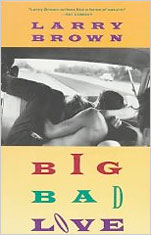
Big Bad Love by Larry Brown

big-bad-love-151

Grade: A

It’s not my intention to pigeonhole anything here, but when I think of the American Short Story my mind goes straight to Hemingway and his spawn. Writers of a dark masculinity that create poorly concealed autobiographical fiction where the men desperately search for their place in the world while acting terribly. They are womanizers and boozers, some are violent and most are emotionally unstable, but the catch is that they’re smart enough to understand the damage of their actions. The writing is unrefined and coarse, reflecting their working class characters. These are the Bukowski’s and the Carver’s of the world and Larry Brown deserves his place among them, both in style and skill. His collection Big Bad Love contains stories of men who are desperate for love and a human connection but will never get it because their understanding of it is so flawed and their choices so awful.

The stories themselves are all set in the south and all are written in first person. They have ever-present themes like poverty and violence and desperation. Most of the men in the stories are married, though some are divorced, and most of them too are either looking to cheat or are cheating, though some just live in agony as they try to figure out how to make their women happy. In “The Apprentice” the man’s wife is a struggling writer who he supports financially but secretly thinks she’s terrible at it and should give up, but he continues to support her through some obligation or maybe love. In the title story “Big Bad Love,” it’s less subtle. The protagonist can’t please with wife for physical reasons. The man spends time in the bar alone and laments “I just couldn’t do anything with her big Tunnel of Love. I could hit one side at a time, but not both sides.” If man’s inadequacy and inability to conquer the new world is your central theme than what better metaphor exists than a cavernous vagina? Sure, some could argue this collection is a bit on the sexist side, and they wouldn’t be wrong, but it’s honest in the portrayal of the existential crisis of these men.

The last half of the book is sort of a novella titled “92 Days” that is about a divorced man who dreams of being a writer. He sits at home alone and writes and writes and sends manuscripts out and awaits the rejections slips. If this sounds like Bukowski to anybody, it did to me too, but there’s one key difference. Bukowski never doubts his writing or his genius. Rejection slips mean nothing to him because being misunderstood is actually a good thing to him. Brown feels the horrible pain of every rejection, he’s honest that some of the things he writes are terrible. This is not a story about sticking with your dream and everything will work out fine (I’m not trying to say that’s what Bukowski was trying to do, for the record, but there’s a sort of inevitability to his writing that suggests eventually he will be recognized as great), but instead reads as a treatise on writing. About how it’s a passion that doesn’t go away simply because you’re not successful or it’s not really the smart way to live your life. Rejection slips pile up and the only solace is in the nicely written denial letters.

Larry Brown was one of our great writers. His stories, and novels, are dark and gritty and dangerous and punch you right in the gut. But there is also a humor in his writing that really makes it jump off the page. It’s as if he knows just how ridiculous the people in his world are but can’t help the fact that he loves them anyway. Nobody is all good, okay nobody is really very good at all, but nobody is all bad either. People are complicated and so are Brown’s characters, and all just desperately want to connect to another human being. If you haven’t read any Larry Brown, do yourself a favor and get on that. This collection and his debut novel Dirty Work are literary masterpieces that show both the ugliness and beauty of people.
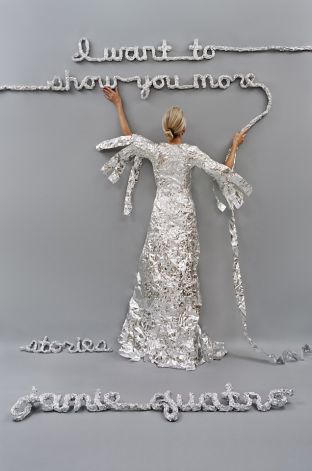
I Want to Show You More by Jamie Quatro

I want to show you more

Grade: A-

A sense of spiritual existentialism hovers throughout Jamie Quatro’s short story collection I Want to Show you More. The characters all feel an enormous amount of loneliness, stemming from things like guilt and fear but always coming back to being alone. An old woman goes to mail a letter protesting the war to President Bush, a girl attends a party with her newly paraplegic mother, and a teenage boy attempts to connect with a sick girl at a Christian camp. These stories are mostly about people seeking, and usually failing in some capacity, to forge some kind of connection to other human beings. Throughout the collection, we keep returning to a woman who has been unfaithful to her husband via a long distance relationship and her struggle to understand her feelings. These recurring stories, to be honest, I wasn’t as enthralled with as the others, but they are necessary in that they produce a thread of continuity and connectivity that ties the independent story lines into one cohesive theme.

In college creative writing courses I remember an exercise. It was simple, have a character walking somewhere, and make a story unfold around them as they go. It could be anything, walking down a driveway, down a street, the destination wasn’t important as much as keeping that forward momentum going. Quatro gives us the best example of this exercise I’ve read in “1.7 to Tennessee.” Eighty-nine year old Eva Brock has written George Bush a letter, informing him that she disagrees with sending young people to war, and is determined that she will walk the 1.7 miles to the post office and mail it herself. As she goes along we get a sense of the town and the people in it, without having to tell us too much about either. More importantly, during her journey, we learn everything we need to know about Eva. She gets confused and disoriented, losing her sense of time and direction, her memories both consume her and fail her, but all along she keeps plugging forward even though her destination becomes increasingly abstract. The story ends tragically, though in very much a non-melodramatic way, and the form letter from the white house received by the post office reminds me of About Schmidt and Jack Nicholson’s realization that none of it matters and connections aren’t real.

In “Better to Lose an Eye,” Quatro masterfully dances on the line of sentimentality. Lindsey’s mother was shot by her boyfriend and is now paralyzed. With her religious grandmother, Lindsey and her mother attend a birthday pool party. Lindsey is embarrassed of her mother and terrified of all the situations where she has to explain her condition. By the end, so upset over everyone’s tendency to ignore her mother, she accepts it herself in a beautiful moment. There is nothing necessarily groundbreaking about this story, just that it’s perfectly constructed. It serves as a reminder just how good a simple, well told story can be and how much it can resonate with a reader.

Quatro crafts her stories with style and all the mystical aspects of southern Christianity. There is tragedy around every corner but she never leaves the reader, or her characters, hopeless. It’s great to drag these people through the gutters and do terrible things to them, but equally important not to abandon all things good, give us some reason to continue on. In this, the stories of I Want to Show you More are completely successful. She gets in a bit of trouble when she starts going too much into the quirky, fantastic worlds she creates. This collection is exponentially stronger when it tells simple, toned down and great stories. Some books of short stories tend to be a bit top-heavy, but this one is actually the opposite, it starts out a bit slow but by the fourth or fifth story you’re hooked. Once the stories get into their groove every one of them is firing on all cylinders and do all the amazing things short stories are capable of.


Buy this book!

Note: Jamie Quatro will be at Changing Hands bookstore in Tempe, Arizona this Thursday, March 28th. Come meet her and get a book signed. Support literary authors and independent bookstores.