
Grade: A
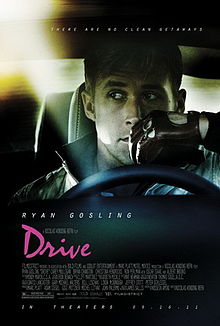
Violence is used in many different ways in film. Sometimes it’s a metaphor, sometimes it’s for shock-value, hell, sometimes it’s even used for laughs. In Drive, director Nicolas Winding Refn uses violence to suggest it’s an ingrained, and inescapable, part of human nature. Nobody in the movie seems particularly fond of hurting and killing, yet all ready to jump into it without a moment’s hesitation. The lead, aptly named Driver, played by Ryan Gosling, is a quiet, slow-moving, and deliberate man. That he works as a getaway driver for heists and a stunt driver for movies seems somewhat contradictory to his nature, until we realize it’s a cover for the rage monster that is constantly held at bay. When the situation calls for it, he explodes into a fury of violence, destroying anyone in his way. To say it’s a bad temper is to cheapen the frightening menace that is his true self.
The plot’s not new: a man with a questionable and checkered background meets a girl Irene (Carey Mulligan), and her son, who melt his icy heart and teach him about the value of human connection and all that. Matters get complicated when we learn Irene’s husband is getting out of jail and is coming home. When her husband needs his help to get out of debt from dangerous men, Driver agrees out of some stoic sense of honor and obligation. Things go wrong, and Driver channels his rage into revenge and protection mode and, needless to say, he kills fucking everyone. I trust that’s not a spoiler. If you’ve seen a noir film, you know that everybody dies. That’s not what important here. What is important is that all the players in this film know that they’re in a situation where everybody needs to die, there’s no other way out. They live in a bleak and hopeless world, and violence and death is really the only thing they’re capable of controlling.
The performances are what stand out in this movie. Gosling has made the stoic, silent, and dangerous character sort of his staple at this point. He doesn’t bring anything new to this role, but he does it well. Mulligan doesn’t do anything particularly special either, she just plays the scared and sad, two-note female that’s pretty much expected in this kind of movie. Bryan Cranston and Ron Perlman both have a lot of fun with their characters, a hard luck car guru and a criminal boss who loves being a criminal boss respectively. The most enjoyable far and away in this movie, though, is Albert Brooks. He plays Perlman’s crime partner, and a man who knows the requirements of his business but does not enjoy the things he has to do. Other than Driver, he’s the most dangerous character in the film, and it’s because, like Driver, he gets no joy from the violence. It’s simply something that’s ingrained inside him, a part of his world as necessary as anything else. Brooks is crass, yet tragic, and utterly dominates any room he finds himself in.
If there’s something in this film that doesn’t work very well, it’s the idea that any girl would be charmed by Ryan Gosling’s absence of personality. I get that he’s very good looking, but at some point responding with one word answers and unemotional smiles is simply not going to make you very many friends. It’s a small complaint, but one that enough movies make where I feel it’s acceptable to bring it up.
Drive uses stylized, hyper-violence to accentuate the absence of morality in its world. The fleeting glimpses of goodness we get are held onto so tightly that it becomes necessary to protect it by the most extreme measures. Driver is willing to destroy the world, and himself, if it means Irene and her son can live a relatively peaceful life. We never learn the origin of his violent ways, and the film is better for it. The only thing we need to know is that violence begets violence, until the world simply eats itself, and hopefully those left standing will know some small level of hope.

 Some Damn Fool's Thoughts