Fiend by Peter Stenson

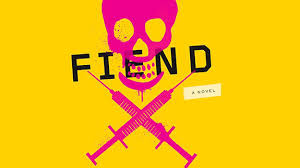
Fiend

Grade: A

The zombie apocalypse is a pretty bleak affair. Not just because of the walking corpses perpetually trying to eat you, but because the entire world has turned on us. The nurturing planet we look to as our home and safe house has become hostile and bent on our destruction, the wonderful concept of humanity being created in god’s own image becomes only a cruel joke. The world has changed, forever, and has removed all hope. All that’s left is survival in the immediate, just a life of going from place to place. But none of this is new, we already knew all that, it’s been done. So how do you make the zombie plague even more soul-crushingly depressing? How about populating the world with drug addicts. In Fiend, author Peter Stenson uses the walking dead as a metaphor for the nature of addiction, in this case meth. The result is a terrifying look into not just addiction, but what people are capable of when survival is the only thing left worth anything.

The book follows Chase Daniels as he comes out of the tail end of a meth bender and, slowly, realizes that the people of the world are dead and have been replaced by zombies. He flees with his fellow tweaker Typewriter as they try to navigate the new hellish world while also trying to stay high. Their addict instincts take them to a cook known as The Albino, then to rescue Chase’s ex-girlfriend KK and her new dude. Things go badly and they flee to the Hmong end of town and hook up briefly with another cook, things go badly there and they flee yet again to find another safe house with yet another cook. These tropes are incredibly familiar within both the zombie genre and the druggie genre, yet nobody, to my knowledge, has ever thought to combine these two things before. Think about it for a second, there are really only two types of people in this world who truly exist only on a moment by moment basis: Drug addicts and those trying to survive a zombie apocalypse. Why not throw them together? The big twist on this book is that somehow the chemicals in meth are what keep the zombie plague at bay. This sets up an interesting scenario in that the only way to survive is to stay high. The junkies dream, and nightmare come true.

Fiend is written in the first-person, present tense, creating an immediacy and danger that makes the reader feel the same anxiety the characters feel. Stenson intimately understands the junkie’s mind and, refreshingly, cares little for zombie lore. We don’t know much about the living dead, and we don’t care, because they’re not really the point. His protagonist Chase comes off a little too educated for a druggie dropout, though. He consistently makes literary and classical allusions in his narrative to things like F. Scott Fitzgerald and Hephaestus, respectively. These come off a little insincere and seem more like Stenson than Chase. Don’t get me wrong, Chase is intelligent, it’s why we’re able to follow him on his journey despite the horrible and despicable things he does to survive, both before and after the zombie outbreak, but intelligence and education are two different things. This guy would not have knowledge of literary greats and mythical figures.

Zombies terrify us because in them we see what we can become. They’re mindless creatures that only exist for one thing, their next fix. The junkie is obviously the same, and because these two shadows of humanity are all that’s left in the world, this novel contains zero hope. It strips all things good and triumphant away and leaves us with the true nature of the junkie: truly alone, with only their dope to keep them company. The threat of zombies is just one more thing they have to deal with in their quest to get spun. Love and friendship and human connection are only important when they don’t interfere with the procurement of drugs. When given the choice, the junkie will freely enter a world of zombies with no hope of survival just for the vague promise that he might be able to keep getting high for just a little while longer. For an already bleak genre, Fiend is a disturbing, terrifying, and soul-destroying addition.

American Boy by Larry Watson

american boy

Grade: B

Simple, small town American stories are going out of style. Modern audiences, even the “literary” among us, want more, a bigger vision and preferably something quirky somewhere in the story. This isn’t really a bad thing as writers should continue to push the envelope, and after all, what more can really be said about small town life? But sometimes it’s nice to be reminded why a trope worked so well for so long. In the novel American Boy, Larry Watson tells a simple story, set in the early 1960’s in Willow Falls, Minnesota, that succeeds as both an ode to a small town and a coming of age tale, even when it comes up a little short in other areas.

The story follows Matthew Garth, a poor kid with a dead father who has more or less been adopted by his friend Johnny’s family, the Dunbars. The father, a doctor, teaches the boys medicine and is more or less grooming them to be doctors themselves one day. The novel opens with a gunshot victim, Louisa Lindahl, being brought in during Thanksgiving. After a glimpse of her wounded, naked body, Matt becomes infatuated with her. He attempts to court her in ways that only an unsophisticated, seventeen year old boy can think of, and naturally comes up short. His pursuit, and obsession, of her unveils Dunbar family secrets that could threaten the model of perfection. Until a disappointing ending, which I’ll get to in a minute, American Boy is very much about the power the successful have over the poor.

What drives this novel more than anything is the voice. It is told in first person from Matt’s perspective. Matt’s worldview, and therefore our worldview, is limited by his age, his lack of experience, and his lack of access to anything bigger than himself. This voice feels amazingly authentic, and has the power to make us feel every bit as frustrated as the protagonist when he fails or is withheld information. We only get to know the other characters from his view, so they are always seen through a filter and never fully realized as human beings. This isn’t a complaint, but rather an observation that the Dunbar family and Louisa only exist as ideas in Garth’s mind, so naturally we’re only going to get these glimpses of them. Sometimes the writing isn’t quite as sharp though, like when Watson constantly insists on deviating from the action to let Matt reminisce about something that’s clearly a metaphor for what’s currently happening. It would’ve been wiser to just stay focused on the moment and let it speak for itself. Don’t telegraph the meaning for us, we’ll figure it out.

Okay, about that ending. The whole novel lets itself unravel slowly and naturally. The tension builds and builds, and we figure out certain things long before Matt does, until it hits a boiling point at a small motel in Bellamy. The class commentary is in full force at this point, when during a fight, Matt observes “Father and son kept me down long enough for me to be reminded again as to who possessed power and weight in the world.” Up until, and including, this point, the book was engaging and heart-wrenching, but then the last few chapters speed up and rush to an ending that is fairly unsatisfying. We get another chapter in the present, then a fast forward into the near future, where we discover that Matt did just fine on his own. This ending robs of us two things: the first being a satisfying resolution to the actual story line. The second is a bit more abstract. The novel, working as a haves versus have-nots feels authentic and poignant, until it seems to cop out at the end. Having Matt be successful in life, and not just successful but successful because of what Doctor Dunbar taught him, feels like a cheat. The message seems to be that the rich can do whatever they want, but pay attention to what they have to teach and you’ll do just fine.

This is still a worthwhile read, and a reminder that Larry Watson is one of our great contemporary novelists. It may be far from perfect, but it’s refreshing to read a simple story that, for the most part, stays simple and true and moving. Every once in a while, something that’s old-fashioned and out of style can feel fresh and exciting when done well.


Buy this book!

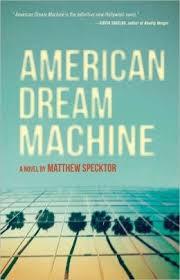
American Dream Machine by Matthew Specktor

american dream machine

Grade: A

A Hollywood story is a tricky thing to write. Especially nowadays, when the public love affair with the movie industry is long over and we view celebrities as over-privileged rich assholes who keep butting into our social and political arenas and ought to just shut up and entertain us. Monkeys. How then does a writer proceed? The easy answer is to view the industry, and the entire town, indeed as many have done, with a cynical eye. Render those Hollywood types into shallow caricatures who we can laugh at even though their lives are better than our own. But in American Dream Machine, author Matthew Specktor doesn’t take the easy route. He uses the town, and the film business, as a backdrop to tell the story of a man’s rise, fall, rise to even greater heights, spectacular fall, rise yet again, and once again fall, and how the echoes of this man’s successes and failures affected his offspring. In short, this book is a deeply personal tragedy, or series of tragedies really, that, while remaining cooly detached enough to stay hip and not delve into melodrama, isn’t afraid of deeply sentimental moments.

The novel follows the life of Beau Rosenwald-seen through the eyes of his illegitimate son Nate-and his extreme ups and downs. Beau is overweight, ugly, and obnoxious, but can talk his way through any situation. He’s a Hollywood agent who loves what he does for only the most visceral of reasons. He’s no artist, no fan of art in fact, but believes powerfully in movies and loves the challenge of the deal. American Dream Machine tells his life story, and through it, brings life to Hollywood, the film industry, and the sense of time passing. Time passing is a big theme in this novel as it has no problem skipping ahead great amounts of time yet never losing its sense of urgency. The title itself refers to the name of the talent agency that Beau opens with his friend Williams, along with a few other colleagues, and conquers Hollywood with. There is everything you expect in a novel like this, power struggles, personal and professional tragedies, the straining of the offspring of powerful men to separate themselves from their fathers, but though all this seems familiar, the novel never delves into the cliché. The material is fresh, mostly due to dead-on characterization, pitch-perfect dialogue, and a cynical love of all the characters that inhabit this world.

There is a mystery, a few mysteries in fact, moving the plot forward in this book. The mysteries involve an unexplained death, a missing person, and family trees. The beauty of these mysteries is that the novel doesn’t depend on them. They’re plot devices, yes, but it’s more that they’re character defining obsessions. The reader won’t even fully realize we’re reading a mystery until we come to the big reveal moments, and then realize we’ve been hooked all along. This will not be marketed as a mystery novel, and rightfully so as it has just about nothing in common with the Grishams and Pattersons of the world, but it seems to have the potential of a crossover hit.

Specktor’s voice is the standout star of this novel. He’s funny, he’s tragic, and most of all, he’s a story-teller. The fact that this novel spans over 40 years means naturally we’ll get to know a lot of different characters. People come and go throughout, and yet all of them feel fully realized and complicated. Time is such an important issue in this book and is dealt with masterfully. Specktor has no problem, often in the context of a single paragraph, reaching far back or forward in time. Using time this way, there is a constant uneasy sense of tragedy looming on the outskirts at all time. We know things are going to go bad, because we’re told all along that they will, so when the tragedy hits it feels like a foregone conclusion, a destiny.

This is Specktor’s third novel, by my count, and though I have yet to read his other work, he seems to be a rising star. And if word is true that this novel has been optioned for a Showtime series, then that could mean we’ll be hearing a lot more from him. To which I say, hooray.


Buy this book!

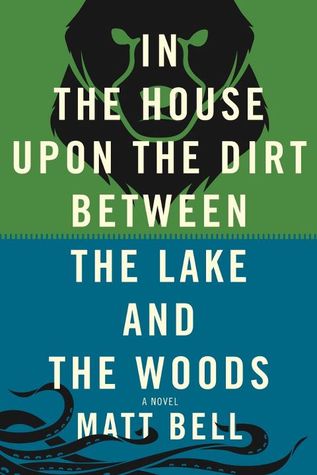
In the House Upon the Dirt Between the Lake and the Woods by Matt Bell

In the House

Grade: B-

Metaphors are the building blocks of writing, or one of the building blocks anyway. Metaphor gives us symbolism and symbolism gives us meaning. The problem arises when a writer leans on metaphors too hard and they become murky and convoluted. You stack metaphor on top of metaphor until you lose all meaning and you’re left with a Dio song, a great ride but ultimately just confusing. Matt Bell’s debut novel In the House Upon the Dirt Between the Lake and the Woods reads like an allegory, a fable meant to instill in us some moral that will enrich us in some way, but is just too fucking weird for its own good most of the time. In playing too many themes too close to the vest, it just becomes a frustrating exercise in deciphering meaning that may or may not be there.

The novel follows a man and a woman, whom we never learn the names of, who move away from the city and into the woods where they build a cabin to live in and hope to have a child. This proves first difficult and then downright impossible. The wife has a series of miscarriages and it becomes clear that she cannot bring a pregnancy to term. In desperation, the husband eats the tiny, dead fetus of one of the miscarriages and it begins to grow inside him. The fetus begins to speak to him and corrupt him against his wife. Then the wife steals a cub from a bear and turns it into a human son, and lies to her husband about the origins. She claims the child is his, but he suspects otherwise. Also, the bear wants revenge and there is a squid/whale monster in the lake that wants to take possession of the husband. The through line is actually a lot more understandable than it sounds. Bell writes in clear enough language that the action is easy to follow and builds suspense and a sense of dread effectively.

There are things done right in this novel, in fact things that are downright awesome. Bell is a master with language and great at creating vivid imagery. The action scenes, particularly ones where the man crafts his own suit of armor out of raw hides and fights The Bear, feel immediate and dangerous. The first half of the novel keeps the suspense amped up to where you won’t feel very comfortable but you will want to keep reading, though that aspect peters off some in the second half. Bell is, in a way, a victim of his own talent. He’s a very good writer, but too often the story suffers from Bell feeling the need to prove it and the book devolves into overly long segments of “look how well I can write these sentences and describe things.”

The message I suppose, if there is one, is that the pressure of childrearing can bring out the worst in people. The refreshing thing here is that it’s from the paternal side rather than maternal. More often than not, it’s the other way around. Overall, I liked this book, though the second half dragged quite a bit, but ultimately wasn’t sure what I was supposed to get out of it. Ambiguity is fine, even an asset a lot of the time, but this just seems simultaneously convoluted and vague. There is a lot more to writing than just proving how smart you are. Bell is a good writer, but not, at least in this book, a great storyteller.


Buy this book!

World War Z by Max Brooks

World_War_Z_book_cover

Grade: A

Editor’s note: I realize I’m way late on this one as this book came out years ago, but with the movie coming out soon, I thought it would be fun to compare the two.

One of the most primal fears that the concept of zombies preys upon is the idea that our world, as it exists today and without being destroyed by something like a bomb or meteor, can become a hostile, dangerous and even uninhabitable place. The cities themselves become our enemies, our own homes death traps. The limit of the genre, historically speaking, is in the desire to give us a consistent protagonist or protagonists, and therefore reducing the danger to an immediate survival story. The world wide apocalypse, while recognized, is more of an abstract thing that doesn’t necessarily feel real. Max Brooks throws all that away in his novel World War Z. By not having a main character to latch onto, except a nameless man conducting interviews and providing the through line, it allows the action to take on a fully global scale.

Since it is written as an oral history, there isn’t necessarily a plot, but there is a clear narrative that runs throughout. The individual stories, with a few exceptions, are completely engaging and capable of standing on their own, but all remarkably add up to something bigger and complete. The basic story, told from just about every point of view you could want, is that the zombies rise, slowly at first with isolated outbreaks. The government scrambles to contain them and keep them quiet. This obviously fails and pretty soon The Great Panic sets in, which is exactly what it sounds like. The people of the world lose their collective shit and society explodes into a fury of chaos and zombie snacks. Our first attempts at fighting back go embarrassingly bad and soon enough the world as we know it is over, Israel has quarantined itself, nuclear war breaks out between two countries, and not any of the two you’re thinking, and general anarchy begins to reign. In desperation, the leaders of the world turn to a South African man known for having plans for catastrophic plans like these but are hard to stomach due to their sheer coldness in terms of loss of human life. They follow his plan, basically willingly sacrificing a good chunk of the world’s population in order to save the rest and soon begin to see the tide of the war turning.

This is not a scary book, though it is frightening. What I mean by that is World War Z is not going to give the reader nightmares of face-eating, gross-looking zombies, but it does serve as a reminder of how fragile everything we rely on really is. The walking dead are merely a pop-culture vehicle used to demonstrate just how easily our governments, societies, cultures, and morals can be torn down. At the end of the day, human beings will do what is necessary in order to continue the species. That sounds pretty bleak and whereas this is no breezy beach read of a novel, Brooks isn’t only interested in bleak. He makes sure to give us a spark of hope at all times and does seem to say that humankind’s resiliency is a good thing, a powerful and unbreakable thing.

In addition to bringing a fresh trope to the zombie fiction genre, Max Brooks proves that he’s truly his father’s son (little known filmmaker named Mel) and brings wit and a sense of satire throughout the novel. He seems to know that zombies are really a pretty ridiculous thing and this kind of book has to laugh at itself before the reader starts laughing at it. Gags go from big picture odd, like millions of zombies swarming the oceans, to low-brow gut laughs like a monkey peeing on a lone survivor of a zombie attack/bridge explosion. It’s these aspects that make this story stand out and transcend an otherwise pretty tired genre. If this book took itself completely seriously it would be a long forgotten, perfectly serviceable, horror novel.


Buy this book!