
(Editor’s note: I’m currently on vacation and will be back to post after the weekend. The following review is by the writer of The Roost and her contributions are greatly appreciated here at Some Damn Fool.)
Grade: A+
The Oscars are on Sunday, and if “Amour” goes home with nothing, the Academy doesn’t know a damn thing about film. Michael Haneke has created a gorgeous piece of art, with raw emotion that filters through every scene – start to finish. Death and dying are not topics our society has an easy time looking at with honesty. We like to sugar coat it, wrap it in wry remarks and humorous anecdotes, hoping to distance ourselves from the inevitable reality we will all face. “Amour” doesn’t do that. It “bares all” in its examination of dying, and the effects that it has on our loved ones. More importantly, it “bares all” when it comes to what love truly means.
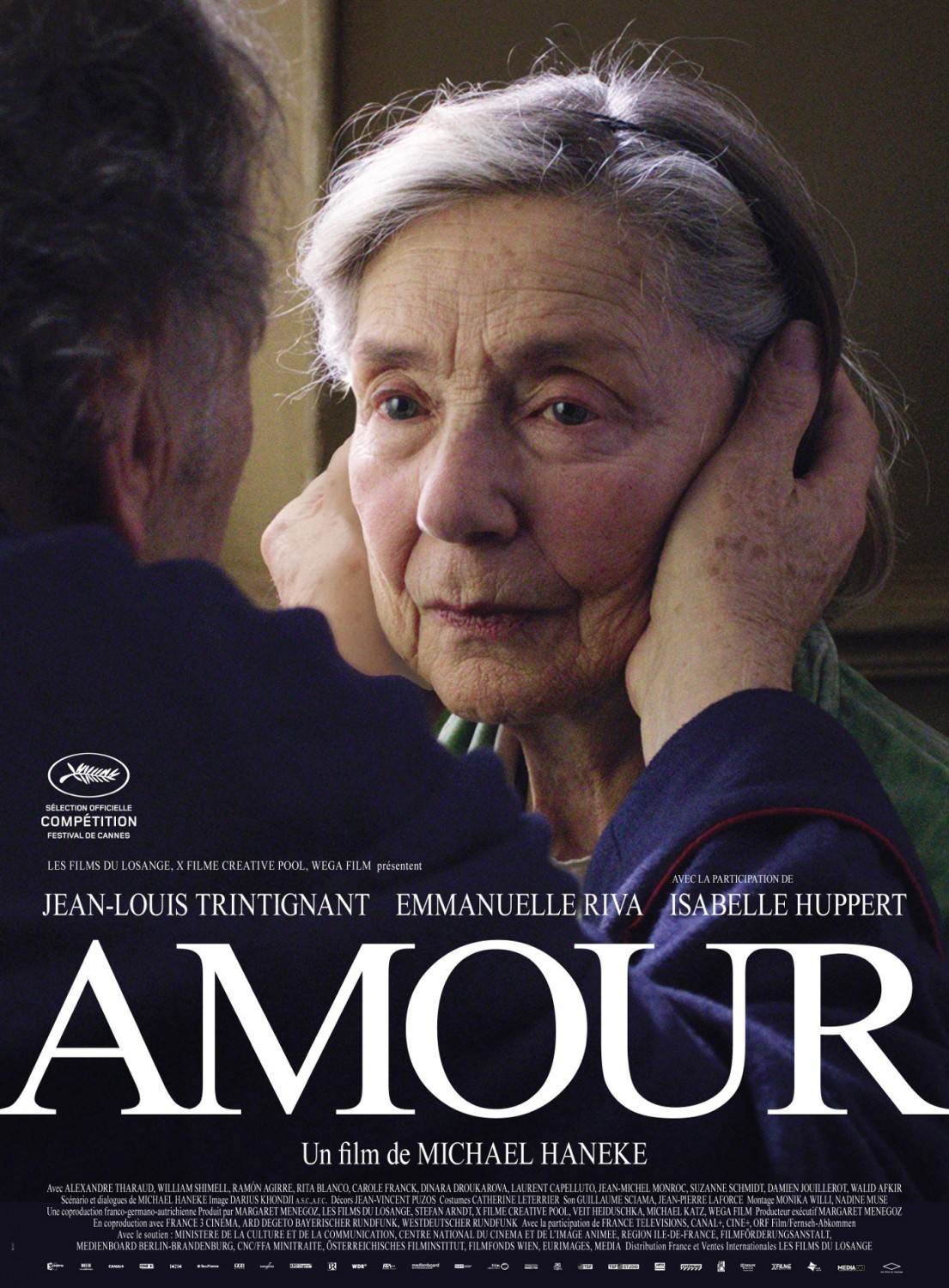
From the onset, it is clear that the movie deserves it’s title. In the opening pre-credit scene, police barge into the apartment find the bedroom sealed off, a carefully laid to rest Anne inside. The care and consideration taken with her body are just a glimpse into the loving relationship Anne and George have. The chemistry between Emmanuelle Riva and Jean-Louis Trintignant enriches the script and reverberates off the screen, leaving the daughter’s marriage to a philandering English musician in stark contrast. Snippets throughout the movie of George’s care of the infirmed Anne – from helping her get out of her chair, to aiding her with the toilet, feeding her when she can no longer feed herself, washing her, taking her through her exercises – show a man unable to even consider a life without his wife; loving her even when her mind is too deteriorated to return that love.
Anne and George Laurent are retired music teachers, an elderly couple who still find comfort in each other’s company. Anne suffers from a stroke, leaving her paralyzed on the right side of her body. At first, George takes care of her by himself, cutting up her food so that she can still feed herself, helping her with the nuances of using the bathroom or taking a bath, and taking her through her daily exercises. She can still read, still talk, still move around in her automated wheel chair, but this changes. It is inferred that Anne has suffered a second stroke, and finally George must get a nurse to come in – three times a week. The remaining time, he is still her primary care taker, a role that ages him considerably throughout the movie. Anne’s mind is slipping, she is unable to do even the most basic of tasks, and the two of them start to remove themselves from the outside world.
Much like the pigeon that keeps flying through the courtyard window, their daughter flutters in and out of their apartment, unwilling or unable to leave her parents to simply die, even when it is requested. A nurse is let go for attempting to show Anne a mirror, so that she might see the hairstyle the nurse has roughly brushed out. A letter from a former student, remarking upon the sadness of Anne’s condition, changes their tiny moment of excitement back into depression. The young do not understand what it is to die. While well-meaning, their interruptions and sentiments are not acts of selflessness, but of an inability to relate; a reflection of their own needs and not the needs of the couple. George’s final interaction with Anne may be construed by society as murder, but for them, it was release. Love is acknowledging the needs of another.
Trintignant is superb as a man completely devoted to his wife. Every expression, every movement, every line delivered reflects the progressing toll Anne’s condition has on George. His wife is suffering her way to death, and it is killing him. The Oscar nod was truly deserved for Riva, however. Her performance was heartbreaking. Frustration, resentment, depression, dignity, mental deterioration – there are very few actresses that could act with such grace and subtlety. Riva doesn’t just show us the emotional turmoil Anne is going through, she makes us feel it.
We talk a lot about what defines marriage and love, our proclamations of “in sickness and in health” and “’til death do us part” often ring hollow. Haneke’s “Amour” is more than just a couple dealing with death. It is a movie about love beyond youth, beyond romance, beyond the good times. Love through sickness and frustration. Love that is devoted and respectful and forgiving. While looking through family photo albums, Anne remarks in sad reflection “C’est beau – la vie.” Haneke’s exploration of love and dying are equally beautiful – and devastating. Bring your tissue boxes.
 Some Damn Fool's Thoughts