
Grade: B+
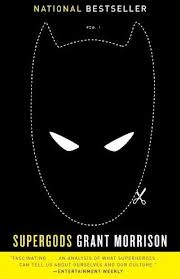
If superheroes are the mythology of modern times, and it’s been suggested enough times including on this blog that they are, then why? That seems a simple enough question, but mostly this idea is either accepted as an absolute or dismissed as juvenile nonsense, either way without an argument. The why is important though, and further, the why it matters that we have a mythology. Grant Morrison attempts to tackle this subject in his book Supergods. Part history, part criticism, part memoir, and part spiritual exploration, Morrison attempts to have it all, and mostly succeeds. Parts of it may drag a bit and parts may be a bit self-indulgent, but when Grant Morrison is talking comics, no matter how long winded it is, it will behoove you to listen. You will learn a lot.
The history and the criticism aspect of the book display Morrison’s immense and thorough knowledge of the comic book world. He shares insights into the styles of various writers and artists as well as the evolution of specific characters and teams over the decades. Non comic book fans will probably find this a bit tedious, though to be fair they probably won’t be reading this book anyway, sadly. Unfortunately, to the target audience, a lot of this is stuff we already know. It’s great to hear Morrison’s take on them but the background details of characters like Superman and Batman as well as artists like Jack Kirby probably don’t need quite the amount of ink they’re given, if only because it’s a little redundant. The tradeoff is worthwhile in many ways, though, because his take on modern comics, including the Dark Ages from the 80’s through the current world of superheroes, is nothing short of brilliant. This is where he shines because he’s able to come off, not as a historian or fanboy, but as an insider, someone who knows the process and the talent involved in creating these stories.
The memoir and the spiritual exploration tie into each other pretty closely. Morrison is very interested in telling his own story, from shy pacifist to punk artist to comic book guru. The narrative is actually very typical and vanilla through the first half of the book, then Grant Morrison’s weirdness starts coming out, and I mean that in every good way possible. His exploration into fiction versus reality, including a possible alien, or angel, abduction, a chat with a cosplayer he convinces himself is the actual Superman, and lots and lots of drugs. This is where the book begins to claim its own identity as a defense and manifesto of what roles superheroes play in our culture. He argues that superheroes are real, but exist in a 2D world and are therefore outside of our own reality. He traces the polar reversal of the solar magnetic field to show how society changes in our moods and thought and the superheroes change with that. This latter bit he has used to his advantage to stay ahead of the curve in relevancy.
The second half of Supergods is better than the first half, or at least it’s what we we’re waiting for when we heard Grant Morrison wrote a book dissecting the superhero. Still, the second half could not exist without the solid foundation he builds and establishes in the first. By laying out a concrete history and criticism of the superhero canon, Morrison is able to launch into a whole new universe where anything is possible and caped supermen and women are waiting to show us the way to something bigger and better than we ever thought possible. If that sounds a little on the sentimental side, well that’s part of the takeaway from this book. The cynical age of superheroes has passed and it’s time to move on to the height of human potential where mutants and gods and masked vigilantes will be or guides, and we will be theirs.
 Some Damn Fool's Thoughts