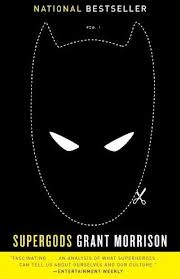
Supergods by Grant Morrison

supergods

Grade: B+

If superheroes are the mythology of modern times, and it’s been suggested enough times including on this blog that they are, then why? That seems a simple enough question, but mostly this idea is either accepted as an absolute or dismissed as juvenile nonsense, either way without an argument. The why is important though, and further, the why it matters that we have a mythology. Grant Morrison attempts to tackle this subject in his book Supergods. Part history, part criticism, part memoir, and part spiritual exploration, Morrison attempts to have it all, and mostly succeeds. Parts of it may drag a bit and parts may be a bit self-indulgent, but when Grant Morrison is talking comics, no matter how long winded it is, it will behoove you to listen. You will learn a lot.

The history and the criticism aspect of the book display Morrison’s immense and thorough knowledge of the comic book world. He shares insights into the styles of various writers and artists as well as the evolution of specific characters and teams over the decades. Non comic book fans will probably find this a bit tedious, though to be fair they probably won’t be reading this book anyway, sadly. Unfortunately, to the target audience, a lot of this is stuff we already know. It’s great to hear Morrison’s take on them but the background details of characters like Superman and Batman as well as artists like Jack Kirby probably don’t need quite the amount of ink they’re given, if only because it’s a little redundant. The tradeoff is worthwhile in many ways, though, because his take on modern comics, including the Dark Ages from the 80’s through the current world of superheroes, is nothing short of brilliant. This is where he shines because he’s able to come off, not as a historian or fanboy, but as an insider, someone who knows the process and the talent involved in creating these stories.

The memoir and the spiritual exploration tie into each other pretty closely. Morrison is very interested in telling his own story, from shy pacifist to punk artist to comic book guru. The narrative is actually very typical and vanilla through the first half of the book, then Grant Morrison’s weirdness starts coming out, and I mean that in every good way possible. His exploration into fiction versus reality, including a possible alien, or angel, abduction, a chat with a cosplayer he convinces himself is the actual Superman, and lots and lots of drugs. This is where the book begins to claim its own identity as a defense and manifesto of what roles superheroes play in our culture. He argues that superheroes are real, but exist in a 2D world and are therefore outside of our own reality. He traces the polar reversal of the solar magnetic field to show how society changes in our moods and thought and the superheroes change with that. This latter bit he has used to his advantage to stay ahead of the curve in relevancy.

The second half of Supergods is better than the first half, or at least it’s what we we’re waiting for when we heard Grant Morrison wrote a book dissecting the superhero. Still, the second half could not exist without the solid foundation he builds and establishes in the first. By laying out a concrete history and criticism of the superhero canon, Morrison is able to launch into a whole new universe where anything is possible and caped supermen and women are waiting to show us the way to something bigger and better than we ever thought possible. If that sounds a little on the sentimental side, well that’s part of the takeaway from this book. The cynical age of superheroes has passed and it’s time to move on to the height of human potential where mutants and gods and masked vigilantes will be or guides, and we will be theirs.

Superman: The Unauthorized Biography by Glen Weldon

Superman The Unauthorized Biography

Grade: B

In some circles it’s not a secret, insight or revelation to suggest that superheroes are our modern day mythology. That idea has been explored, and widely accepted, in the greater geek and nerd cultures. To some, though, it will probably seem silly. These are just stories of men and women running around in capes and tights punching other ridiculously dressed beings. The book Superman: The Unauthorized Biography by Glen Weldon is probably for the latter group. For the initiated it’s more a detailed examination of what we already knew, though still a fun read I should point out. The book, obviously, focuses on Superman, and what superhero has more sacred, and godlike, a feel than him? Superman is essentially Zeus and Jesus and probably a lot of other really important God figures in mythology, that is to say, he’s the God of the superheroes. Weldon traces the evolution of Kal-El throughout his 80-plus years, from his socialist, working-class days of protecting the poor from the corrupt rich of his early days, to his stern, but loving Republican father figure that he’s usually perceived as today. Superman is exactly what we need him to be, whenever we need him to be it. The book is essentially a decade by decade examination of the character, and doesn’t just stick to the comic pages. Every incarnation of pop-culture Superman is represented, including the obvious like newspaper comic strips, television, radio and feature film, but also goes into some detail about how the Last Son of Krypton has been merchandised within an inch of his life over the years.

Accepting that Superman has not been the same boring boy scout figure his entire existence, Weldon boils down the two things that are constant, two traits that make Superman, well, Superman:
“1. He puts the needs of others over those of himself.
2. He never gives up.”

These are pretty simple ideas, easy tenets to base a superhero on, but they are utterly unshakeable, with a few notable exceptions over the years that Weldon is eager to point out. With that in mind, as his powers change from an incredibly strong guy who can jump really far to an indestructible demigod to a weird electromagnetic being and back again, Superman changes with each generation. Sometimes he’s moody, sometimes he’s boring, sometimes he’s square and sometimes he’s just kind of a dick. During the depression he stuck up for the working class Joe, while during the Second World War he turned into an uber-patriot, in fact that’s when the phrase “Truth justice and the American way” came about. That catchphrase was deliberately created by the radio show in order to sell patriotism to a fearful audience. The fact is Superman is the most time tested superhero because he has the ability to be what we can’t be, will, in all likelihood, never be. He is who we aspire to be, “…he is not the hero with whom we identify; he is the hero in whom we believe.” This idea comes in the first few pages and Weldon sticks with this thesis throughout the book, as America changes so too does the Ma of Steel. Sometimes crass, sometimes preachy, sometimes hopelessly out of touch, Superman is the ideal we all strive for, as do his fictional peers.

In Superman, Weldon details what’s going on behind the scenes at DC comics throughout the years in order to add life to the book. This makes it an excellent companion piece of sorts to Marvel Comics: The Untold Story, as many of the same writers and artists are given a look. Where Weldon stumbles at times is when he can’t seem to decide whether he wants to be snarky about the Big Blue Boy Scout or not. His knowledge is detailed but he seems to get more enjoyment from making fun of the character than he does celebrating him. It’s okay to be unsentimental about a topic like this and just give a rather straightforward history, but Weldon often seems to only enjoy Superman as a concept rather than a literary figure, except of course when Grant Morrison is writing him.

Superman is often considered a boring character, one who is just too powerful, too good, too white-washed. This book won’t change that perception, but it will give insight to those who know him only through mainstream pop-culture. For those of us who already know why Superman matters, it mostly serves as a fun journey through his existence and an excellent source of trivia fodder. This book doesn’t bring a whole lot new to the table, nor will it likely bring any new fans, but it stands as a solid addition to the Superman cannon and another worthy footnote in The Man of Tomorrow’s life. It’s not a permanent biography, as the character will exist far longer than any of us, enduring is sort of his thing, but a firm reminder of why a fictional alien, an immigrant, captures the ideals of a free world so much better than anything in reality ever could.


Buy this book!

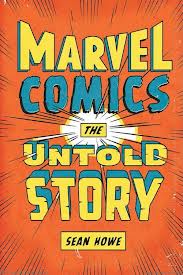
Marvel Comics: The Untold Story by Sean Howe

marvel comics the untold story

Grade: A

Lies, deceit, grandstanding, backroom deals, backstabbing, and the creation of some of the most iconic characters and story-lines in modern history. This is the history of Marvel Comics. Author Sean Howe takes us through over a century, starting with Martin Goodman and comic books starting to take shape in popular culture, all the way to present day with Marvel owned by the monster corporation Disney and pumping out movies and merchandise in addition to the comics themselves. Everybody knows the name Stan Lee, and he is the one figure that hovers throughout the entirety of the book, and even casual comic fans will recognize the names of Jack Kirby, Chris Claremont, Frank Miller and Grant Morrison, but Howe details the contributions, failings and personalities of dozens of other writers and artists that have come and gone over the years. What’s amazing about it is that Howe manages to actually bring all these people to life and get a sense of who they are/were. The strength of this book is that it’s interest is in the people behind the scenes rather than exhausting us with the history of the characters, which any good comic fan already knows anyway.

Regarding Stan Lee: It’s debatable how much, if anything, he actually had to do with any of the creative process throughout the years. He is officially credited with creating such characters as Spiderman, the Fantastic Four and the X-Men just to name a few, and many people take that at face value. This book details how Jack Kirby probably did most of that creating, if not all of it, and essentially got screwed both in a financial sense and a pop-culture sense. That comic book nerds know the legend of Jack Kirby is little comfort to a man who died bitter and resentful, and mostly broke. What makes this book unique is that it doesn’t try to take sides on these issues of creator vs. company. It acknowledges Stan Lee as an amazing salesman who took credit for all these things, but it hardly paints him as a villain. He’s his own tragic figure in fact, taken advantage of by the company while getting screwed in business deals with internet start-ups, while constantly dreaming of Marvel characters being turned into Hollywood movies. That he got his wish as an old man after trying to make it happen since the 1970’s is a testament to his ability to play the long game. Still, he’s something of a tragic figure in that he became a legend for something he really had little love for. He still pines for what might’ve been. He’s quoted saying “I wish I had the time to be a novelist. I think I could have done better. I mean, I would have loved to have written a great novel. I would have loved to have written a great bunch of screenplays. I would have loved to have written a Broadway show. I didn’t have any big compulsion to write comics. It was a way of making a living.” The great champion of comics over the years was just trying to make a buck. In fact, he originally took on the pen name Stan Lee only because he imagined himself becoming a serious writer one day.

This is not Stan Lee’s story though. It’s a story, as the name suggests, of Marvel. The artists, the business men, the presidents, the salesman and everyone in between, Sean Howe brings it all to life. He does it with a fan’s eye but without getting overly sentimental about anything. He freely acknowledges the lack of quality certain eras contained and details the reasons why it went downhill. Each generation brought with it new ideas and new shortcomings. This is not a book about how after a rough road everything is now fine in Marvel land. The company still has its problems, especially in comic sales, and the royalties paid to the artists has still never been solved in any kind of satisfactory way. But it’s the characters that will live on. The artists and the writers come, they leave, and come back. They quit in grand gestures, as stances against the exploitation of the creative staff, sometimes solitary and sometimes in groups, but then they come back because they make comics and there are just not that many paying gigs for comic book writers and artists. Their professional lives parallel the comics they write. The superheroes that die and come back and are stuck in stasis are really the creators who keep telling their stories. There seems to be no permanence in their world, but really it’s only the illusion of change.


Buy this book!