True Detective Summons an Old God, But Maybe Not the One You Think

true-detective-poster-636-380-01

This won’t be a long post, just two quick thoughts. I just finished the season finale of True Detective, season 1. I’m not going to offer up a full review because I’m late to the party and it’s already been done, and far more thoroughly than I could. Also, SPOILER ALERT.

First off, Rust Cohle (Matthew McConaughey) ends the season with this quote: “You’re looking at it wrong. Once there was only dark. If you ask me, the light’s winning.” I’ve seen this quote heralded as a generic good vs evil mantra as well as a more specific God vs Satan, but I see in this bit of dialogue a bit of Zoroastrianism. The idea of the light vs dark, good vs evil, and that good will, is destined to, win. Too universal? Okay, maybe you’re right. But in addition, Zoroastrianism teaches that the reason good will triumph over evil, and the good God is Ahura Mazda, is through the good works that we as people do. Tie this in with the fact that Rust and Marty just defeated a very evil man, though hardly evil itself, and it fits. Think about that for a second, True Detective does not want you to believe that everything is grand at the end, there is still a far bigger conspiracy in play than these two ordinary men will ever be able to tackle, but the world is a little better. That’s the only kind of victory that counts because eventually these little victories end in Ahura Mazda’s triumph and paradise on earth. Is this what Nic Pizzolatto was going for? Probably not, but it’s nice to use a random bit of knowledge I learned in college that will likely never come up again.

My second thought is something I believe is called The Inverse Allegory of the Cave. It’s a darker look on Plato’s Allegory of the Cave. If you’re not familiar with this and can’t be bothered to click the link I just provided, it’s basically this: Man is in a cave, the light he sees are really only reflections. If he becomes enlightened enough, he will emerge from the cave and see the true light. Now that’s a really complex philosophical idea condensed into a simple thought, but you get the idea. The Inverse Allegory of the Cave is basically the same thing except when the enlightened man emerges from the cave, he only finds a deeper darkness. Sound a bit like ol’ Rust Cohle? When he tells Marty of his near death, when he let himself go into a deep darkness where he could only feel his daughter’s love, this is that inversion. True Detective has the nerve to suggest that not only will the enlightened man emerge from the cave to see, not a light but a darkness, but that maybe that darkness isn’t such a terrible thing. Love can exist in the black as well.

I guess maybe these two ideas aren’t all that compatible, what with the light and dark imagery and all, but at least maybe it’s some food for thought.

Danny Cerullo On Writing

Ray-Bradbury-quote

I grew up reading fantasy and comic books. This seems pretty standard as these genres are perfectly suited for stirring the imagination of the young and creating excitement for reading in general. In short, many kids start this way. This was of course augmented with the occasional classic, the Tom Sawyers and Treasure Island’s of the world.

Okay, a quick digression about my parents. My mother and father are very conservative people by nature and bought into the idea of protecting their children from the nastiness of the world. This meant no R-rated movies, music was censored, and comedy with curse words were strictly forbidden. Somehow, though, this philosophy was never, at least in my memory, applied to books. I remember my mother’s take on it vividly: “As long as he’s reading…” This was her response to my grandparents suggesting my love of comic books was a problem. “As long as he’s reading” became a (probably somewhat reluctant) mantra for my entire childhood. This was severely tested when, in my early teenage years, I developed a taste for True Crime. I eagerly gobbled up every book on serial killers and mass murderers (they’re two very different things) I could get my hands on, and my parents bought these books for me. They weren’t happy, were in fact quite concerned, but never told me I couldn’t read them. This, parents and prospective parents, is a glorious way to instill a love of reading into your children. Books should carry an element of danger to them, and parents should support while not necessarily condoning the reading choices. End of digression.

My fascination with True Crime led me to gritty, literary fiction. Charles Bukowski, Larry Brown, Raymond Carver, and John Fante became my heroes. When I first started writing seriously, my goal was to emulate these guys. Thus, in my early creative writing classes, I turned in short stories that were bleak and utterly grounded in realism. My professors, possibly finding it refreshing to read young people writing about drunks and the hardness of life, lauded praise on me. I don’t mean to say that in bragging fashion, well maybe a little, but to suggest that this destroyed my development. Over the years, my writing got more and more realistic. I became obsessed with staging, and believable dialogue, while forgetting the importance of things like plot and action. My solution to a lack of action? Make something incredibly violent happen, if possible, a grisly death.

I have had zero success in the real world. Rejection slips have piled up (metaphorically) higher than Manute Bol’s reach. The problem, to be honest, is that my work is kind of boring. And predictable. I’ve come to realize I’m not a tortured soul like Bukowski, nor an alcoholic like Carver. I might have a bleak outlook, but I’m not nihilistic by any means. Further, writing is fun, I’m learning. It’s not just about creating something dark and gritty and devastating, it’s about telling any story I could ever want, a story that sticks with me and hopefully the reader for a long time.

The joke is that he was a very tall man.

The joke is that he was a very tall man.

I think I’m starting to realize the possibilities of writing now. If I want something crazy, or insane, to happen, then why the hell not? Just write it, and make it good, and believable within the context of the story, right? Of course, it’s not that easy, but it’s a start. My thinking has changed from “what would happen here, to what can happen here? I just rewrote a short story where the climax is a man celebrating the one surviving ant of thousands killed at this man’s own hand. He responds with so much joy at this one life that I got a little emotional myself. Is it any good? I don’t know, probably not, at least it most likely needs more work, but it feels good and fresh and exciting. It’s not boring anyway.

I honestly don’t know if this means I’ll have any more success, or if this post is in any way exciting to any of you, but I feel something changing in my approach and I can barely contain it anymore. Plus, I haven’t posted anything in a while, so there you go.

A Life At the Movies

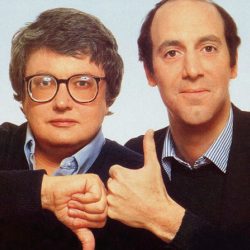
roger_ebert_17759

I can’t really tell you when I first started reading Roger Ebert’s reviews, only that I’ve been reading them longer than I can remember, longer than I even knew who he was in fact. I didn’t know him as a TV personality and have no memory of watching his show until the Roeper days to be honest. To me, Ebert was simply the guy who wrote about movies every week in the paper. I loved movies, so I read his reviews even though I didn’t actually see the vast majority of the movies he was writing about. The first review I can recall having an impact on me was his review of the Jim Carrey movie The Mask. He liked it, surprising in retrospect because my adult self can’t really stand that movie, but was surprised that he liked it because he didn’t like Jim Carrey in Ace Ventura: Pet Detective. This blew my young, adolescent mind. How can somebody not like Jim Carrey? Pet Detective shaped a great deal of my preteen sense of humor. I used to say “Alrighty then” so often that I’d like to travel back in time and kick my 12 year old ass for being such an obnoxious little shit.

Still, I wasn’t mad at the disagreement. Instead, it did something else to me. I finally noticed his name at the top of the review and started paying more attention each week to his write-ups. Week after week he’d talk about movies, sometimes trashing them and sometimes praising them, but always confident in his opinion. I still mostly enjoyed reading about movies, but I also started noticing things in my own film watching that he would talk about. Over the years I’d learn to spot flat characters, plot contrivances, over-reliance on special effects. To say that Ebert taught me more about movies than anybody else is an understatement. He taught me virtually everything I know. Sure, some of that knowledge has been reinforced by friends, professors, books and other critics, but the root of everything was with Roger Ebert. I didn’t always agree with him, in fact would argue vehemently against many of his reviews, but one of the greatest things he taught me is that it doesn’t matter whether I agree with him. It’s not his job as a critic to cater to me. He said it best: “The job is to describe my reaction to a film, to account for it, and evoke it for others. The job of the reader is not to find his opinion applauded or seconded, but to evaluate another opinion against his own.” I have trouble articulating just what this statement means to me. This isn’t just the attitude I have towards movies and critics, it’s the backbone of my philosophy on life, really. And if movies can teach us something important about our lives and the greater world around us, a good critic is about as useful a tool as we can have.

The above quote is in his terrific response to the hate mail he got when he dared suggest Transformers 2 isn’t a good movie. I encourage you to read it and it will give you an idea on just what a critic is actually for and the amazing wit of Roger Ebert. Occasionally I’ve been referred to as an elitist by friends or family, and this rebuttal is just perfect.

That somebody would refer to him as an elitist has always been funny to me, because he’s never come off that way to me. He’s sort of stuck in the middle in some ways, too artsy for the mainstream crowd and too mainstream for the art crowd. He never dismissed a movie simply because it’s a summer blockbuster nor did he reward a movie for being artistic. He was honest, and often brutal, and frequently hilarious.

I’m not really a critic, I just have a blog where I write about stuff. I’ve also moved on a bit in regards to my choice of critics I read, or at least expanded. Ebert still is, or was now, a weekly read, but I’ve found others whose opinions and writings I enjoy as much as him. Though I still have yet to find one I cherish as much. All I can really say is that Roger Ebert has given me years of enjoyment and insight and I’m eternally thankful for his role in this world. I’ll miss reading him every week, but I guess it is somewhat comforting that even a nerd like me hasn’t read every review he’s ever written. Which means I’ve got years of his archives to go through. I’ll probably start tonight and I encourage you to do the same.

The Only Stupid People Here are All of Us

yoga-road-rage2

Here’s the scenario: You’re driving along, dutifully alert to everything happening in and around your car, when suddenly a car in the lane next to you changes lanes without a turn signal and nearly hits you. God! What an idiot, am I right? Actually, I’m not right. This person is probably not an idiot, at least not any more than you. I hear people complaining about stupid drivers constantly and it always bothers me. Why? Because in all my years on this earth I have yet to drive with somebody who’s not a stupid driver, and I’m including myself on that list. We all drive either too fast or too slow, roll our wheels at stop signs, or just have mental lapses where we do insanely stupid and dangerous things. The difference is that when we do it we dismiss it as not a big deal because it’s not like we do that all the time. It was just a minor infraction on an otherwise solid record. But holy fuck balls, when it’s done to us we become absolutely sure we are dealing with a habitual shitty, inconsiderate driver.

Look, I get it. Driving is stressful enough in and of itself without adding the daily stresses like running or awful music on the radio to it. All I ask is for some perspective on the rhetoric.

Remember that driving is largely a social contract. We all try to be attentive drivers to the best of our ability but we will all lapse on these things. The idea is that when you lose focus and switch lanes without looking, I will be paying attention and not hit you. And on the flip side, when Men Without Hats comes on the 80’s greatest hits station and I’m too busy doing the Safety Dance in my front seat to notice the light just turned red, you’ll notice and not hit me. Sort of a you scratch my back and I’ll not crush you with two tons of steel situation. When two people simultaneously have lapses, accidents happen. Driving is about trusting your fellow citizen, a difficult concept for some. The reality of the situation is that it’s not that hard to get a driver’s license. All you really need is a lack of outstanding warrants and traffic fines, and twelve dollars. If the law was aware of all that shit that you do, driving drunk or tired or angry or any other state that prevents you from paying 100 percent attention to the road at all times, they’d take your license away without a second thought. But they can’t know these things. We can’t expect them to govern these things, it’s just not realistic. That’s why we have social contracts. They work well for everyone.

Here’s the thing that really freaks me out. Road rage. What a weird thing, and a lot of people actually boast of their road rage. Stop that. Sometimes people will lose their cool and start yelling at other drivers while I’m in the passenger seat. Holy shit, keep that craziness to yourself. Don’t put m e in the middle of it. Picture this: You’re walking down Hollywood Boulevard searching for Ozzy’s star so you can affectionately rub your genitals on it, when you pass a bit too close to a homeless man. He starts screaming at you. You get out of there as quickly as you can and later tell your friends about the insane man losing his shit because of something incredibly trivial. You were right too, because yelling at strangers in public is what crazy people do. And I know you think nobody notices when you’re in your car but I’m here to tell you that you look every bit as terrifying and hilarious as that crazy homeless man.

So calm down, accept you suck just as bad as everybody else on the road and for the love of god don’t complain about stupid drivers on Facebook or Twitter or Friendster (kids still use Friendster, right?). Oh, if you’re wondering “I wonder if he’s talking about me?” The answer is yes.

Now if you don’t believe me, for God’s sake, believe Goofy