Spring Breakers

-Spring-Breakers-selena-gomez-33260560-1500-1372

Directed by Harmony Korine
Starring James Franco, Selina Gomez, Vanessa Hudgens, Ashley Benson, Rachel Korine

Grade: D-

Who needs Reefer Madness when you have Harmony Korine films? His newest movie, Spring Breakers, plays like an R rated Christian propaganda film. Parents, if your kids smoke pot they will turn into murderous psychopaths who fuck older gross gangster men. (Note to parents: If your kid is a stoner psychopath, they’ll still be a psychopath if you sober them up.) Disguised as an edgy and gritty thriller, Breakers is really just an hour and a half long Ned Flanders nightmare. This is the kind of America that my grandparents are convinced exist because the liberals took Jesus out of schools. The screenplay reads like it’s written by someone who’s never done drugs, or met an actual black person, in their entire lives.
The story follows four girls, one who is actually given some semblance of a personality, as they rob a local restaurant in order to fund their spring break trip to Florida. Once on the beach, they party, have sex, do drugs and generally act like assholes. They get busted for doing drugs at a party and James Franco, a drug-dealing rapper who acts like a stereotypical black thug because he grew up as the only white kid in his neighborhood. The girls come stay with him, except for Selina Gomez because she believes in God so she’s the only one with enough sense to get out of that situation. The four girls are down to two. Then one gets shot in the arm by a rival drug dealer and suddenly everything gets a little too real for her and she gets on a bus and goes home too. That leaves the blond one and the other blond one. Their names aren’t important because they’re given no personality, other than that they seem to like drugs and they’ll probably have sex with you if you have some drugs. Asking these two girls to essentially carry this movie is a bad idea because they’re just so horrifically boring and uninteresting people. Finally, the girls go on a murderous rampage, because well, why wouldn’t they?

There are a few laughs in this movie, though almost all of them seem to be unintentional. Franco does get to show off his comedic improvisational skills at times though, particularly in a fairly inspired scene where he’s showing off the things his drug-dealing money bought him. This movie probably would’ve actually worked about a hundred times better if it was just a screwball comedy and they paired James Franco with Will Ferrell and one of the spring break girls were played by Aubrey Plaza. Because at least then the characters would be fun to watch and we could enjoy ourselves. As it is, Spring Breakers takes itself completely seriously, unless I totally missed the point, and tries to come off as a poignant social commentary on how stupid white girls are. Or something like that.

The greatest thing about this movie is that it even fails at its job of being a Christian propaganda film. With all its repetitive shots of titties and slutty girls, it just comes off as a somewhat artsy Girls Gone Wild video. Then by the end, it just devolves into a exploitation film. It’s basically porn for dudes who like pretty young girls in bikinis firing machine guns. If that’s your thing, though, there are far better movies for that. And the hilarious irony of Breakers is that while it strives to be a commentary on the objectification of young girls by all of society, all of society is only going to see this movie because you kind of sort of get to see Vanessa Hudgens naked. Yay.

Go see this movie!
Fandango - Movie Tickets Online

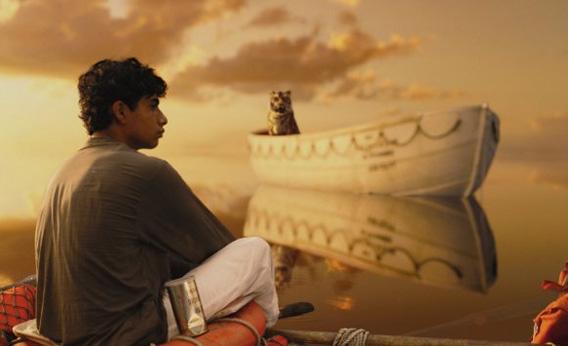
Life of Pi

life of pi

Starring Suraj Sharma, Irrfan Khan

Directed by Ang Lee (Winner of the Oscar award for Best Director for this film)

Grade: A-

Life of Pi centers around a fairly simple question with complex answers. What matters more, the truth of a story or its merit? Especially if both stories convey the same devastation and heartbreak, but one adds moments of beauty and illumination and the proverbial triumph of the human spirit. This is dangerous territory because it’s so easy to cop out with ambiguity, but this movie never removes or shies away from the complexity and refuses to make things simpler even if it means denying us the traditionally satisfying resolutions we so often crave at the movies.

Suraj Sharma stars as Pi, the son of a zookeeper in India who, along with his family, relocates from India to Canada. On the voyage, though, something goes wrong. The ship sinks, and Pi is stranded alone out at sea. Well, he’s not really alone, there’s a full grown Bengal tiger in the lifeboat as well. A tiger in the boat and sharks consistently circling around the craft, neither is a very promising option. The story follows Pi along his journey out at sea and his desire to not just survive, but remain a good man. He seems resourceful enough, he could probably figure out a way to kill the tiger, named Richard Parker because of a clerical error, and in fact is even presented with a golden opportunity at one point but chooses to save the wild animal. Pi, who is a Hindu, Catholic, Muslim (“We get to feel guilty before hundreds of gods”), and raised by a father who values the secular world and rational thinking above the mystic. Giving into selfishness, even if it’s necessary for his survival is not an option. Throughout their time together they learn to tolerate each other. It’s not a Disney-esque friendship that blossoms, but rather a mutual respect, begrudging on Richard Parker’s part.

I didn’t see this Life of Pi in 3D as I’m not a particular fan, but nevertheless this was one of the best looking movies I’ve ever seen. The CGI, while not always completely believable, though I believe intentionally so, is far more satisfying and well executed than any summer blockbuster of the last year anyway. If you get nothing else from this movie, see it for the visuals, it’s very much worth your time.

My only real complaint about this movie is the book endings. While Irrfan Khan does a great job as the adult Pi recounting his story, in fact the haunted but contented look in his eyes is pretty spectacular, I was a bit bothered by the presence of the writer. First off, it feels a bit cliché, as it’s something that’s been used time and again. Second of all, and maybe I’m reaching a bit, why did the writer have to be white? This is a movie all about Indians, well mostly, and though they’re in Canada during the telling of the story, it feels a bit manipulative. It’s as if by making the writer white, it’s assuming most of the audience is white and that makes this story about people from India hanging out with wild animals while stranded at sea so much more exotic. I don’t really think it needs to be any more exotic, let the story speak for itself. Overall, a small complaint, I just don’t like when I feel like I’m being pandered to.

The ambiguous ending, often used as a cheap tactic to trick people into thinking the film’s smarter than it is, is actually perfect. If you think of Pi as a man of many faiths, all of which he holds to be true, then you can see that both of his stories contain the truth, because all stories (i.e. religions) contain truth, if not a universal one, then simple some truth
we need.

Buy this movie!
http://www.cduniverse.com/productinfo.asp?pid=8855214&style=movie&frm=lk_Somedamnfool

Take This Waltz

Take This Waltz

Directed by Sarah Polley
Starring: Michelle Williams, Luke Kirby, Seth Rogen

Grade: B+

Let’s face it, character studies do not make good popcorn movies. They don’t tend to be terribly exciting and they’re not particularly funny either. Long stretches of quiet drag out followed by moments where you have to rush for the control to turn the volume down because you’re suddenly completely started by the noise, thus spilling greasy popcorn all over your new ironically phrased T-shirt you just scored from the Salvation Army. What these kind of movies do though, at least the good ones, is find a tense note and push it all the way to the brink until you can’t stand it any longer. Take This Waltz, directed by Sarah Polley, uses sexual tension to this effect, and does it well. The meat of the film revolves around an emotional extramarital affair in which the two characters use every ounce of restraint they possess to not physically touch each other, though it’s clear that symbolically the deed is already done. The tension these two feel is so palpable it becomes too much for the audience to stand, much less the two characters on screen.

The film centers around Margot (Michelle Williams) who has a good marriage in seemingly every facet except for a lack of sex. I wouldn’t even say there is a lack of intimacy, because Margot and her husband Lou (Seth Rogen in a rare dramatic turn) are very affectionate in a quirky, demented way. But the lack of action between the sheets is all too apparent and every attempt at rectifying that ends in failure and resentment on both parts. Enter dreamy Daniel (Luke Kirby). He’s everything Lou is not: cynical, mysterious and far better looking. Margot meets Daniel on a trip to Toronto, shares a plane with him and they are both surprised to learn he lives virtually right across the street from her. Convenient, yes, but the film is good enough to overlook this impracticality. The two begin having secret rendezvous where they flirt and even talk bluntly about all the sex they would have if she wasn’t married, but they never act on it. Lou meets Daniel and likes him. He invites him over to their house for a party. He pieces together what’s been happening eventually but is far too nice of a guy to have the explosion moment we’re used to getting in these kinds of movies, instead he backs off. Lou is not willing to fight for her, and Daniel is. Maybe that’s the message here, but it’s a lot more complicated than that.

Michelle Williams is fast becoming one of the best young actresses working right now. People who only remember her as the girl from Dawson’s Creek are doing themselves a disservice. She turns in an amazing performance in this movie as a character so full of angst, toward just about everything in this world, that she has to work up courage in order to seduce her own husband. Seth Rogen, meanwhile, definitely has limits. He’s an incredibly funny man and plays a great everyman. Most of this movie requires him to simply a sweeter version of the same character he usually plays, but when the script calls for him to do some heavy lifting, Williams is acting circles around him. Luke Kirby is good in his thankless role. It’s thankless because it’s virtually impossible not to dislike this guy. He’s a decent enough guy going through his own moral quandaries, but the fact that he’s leading Margot away from Lou, who’s just so fucking nice, makes us resent him.

A standout performance comes from Sarah Silverman. She only shows up in a few scenes, probably a good thing. A recovering alcoholic, she dreads the inevitable relapse that always seems to come to the afflicted, and provides virtually all the insight in the film. She sort of serves as the voice of the audience in some ways as she spells out the subtleties that we might not have picked up on. “New things get old,” she tells Margo at one point. It’s fairly early in the movie, but by the end we realize this is probably the most important piece of dialogue. It might seem heavy handed but the rest of the film plays it so close to the vest that it’s nice to have something concrete to latch onto.

Overall this is not a story interested in satisfying conclusions. It’s also not a love story, not really. It’s about unsatisfied lives and trying to find happiness wherever you can.

Buy this movie!
http://www.cduniverse.com/productinfo.asp?pid=8587887&style=movie&frm=lk_Somedamnfool

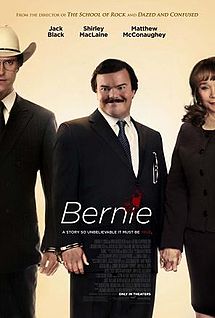
Bernie

215px-Bernie_film_poster

Grade: A

Is murder ever justifiable? Should a man be condemned for his entire life because of one bad moment? These don’t sound like questions a comedy would normally tackle, but Bernie is a question of moral ambiguity disguised as a screwball, black comedy. The movie is based on a true story, for whatever that’s worth anymore, and because of that it doesn’t pretend to have any definitive answers. We know a murder took place and who committed the act, but we don’t know for sure what the motivations were or what the relationship between the murderer and the murderee was. This forces us to tackle these questions with our own logic, our own morality and our own experiences.

The title role is played by Jack Black in one of his most restrained performances. Gone are all the boisterous and obnoxious qualities that have made him famous, and instead we get an effeminate, awkward man who seems to spread good will wherever he goes. He is a mortician who caters to every need and whim of both the deceased and the bereaved. The town of Carthage, Texas adores him for his kind spirit. Most seem to either think he’s gay or asexual, though some seem to have quiet theories about what he does with the old widows that he comforts.

Enter Marjorie Nugent (Shirley Maclaine), a recent widow whose wealth is only outdone by her malice. Bernie befriends her, much the same way he does all the women, and starts enjoying the perks of being a rich, lonely woman’s friend. They go on exotic vacations together, staying in first class hotels, he learns to fly a private airplane and spends a great deal of his time and her money up in the air. He finally even obtains power of attorney so he can spend her money at his leisure. Then he kills her and hides her body for nine weeks, only being discovered when her granddaughter leads the police in a search of her home when Bernie isn’t around, in an icebox.

This seems mostly cut and dry, and to the town sheriff (Matthew McConaughey) it is. A gold-digger gained the trust of a rich old widow, gained power of attorney, then killed her and enjoyed her wealth all to himself. Except the movie gives us enough evidence that it might not be that simple. Bernie might’ve been a genuinely good guy who snapped after being harassed by a mean old woman for far too long. The town refuses to believe he’s capable of such a thing, and even if he did do it, which he did, he admits it freely once caught, he should be forgiven because of all the good he did for the community.

Black and Maclaine bring humanity to what could have been stock characters. If we don’t know who exactly Bernie is, then that’s okay, because this is the kind of movie that could inspire passionate debates over several rounds of beers.

I’ve talked about three of the characters in the movie but I’ve failed to mention the fourth and maybe the most important one: The city of Carthage. The structure of the movie moves through a compilation of interviews with the citizens of the small town. They are eerily realistic and though they employ all the clichés of typical southern small town people as seen by Hollywood, they come off as real viable human beings. They’re probably the best part of the movie, at once hilarious and a bit terrifying. Their faith in Bernie goes beyond any possible atrocity he may have committed because he’s one of them and they’ve seen the good he’s capable of.

The last thing I want to point out is that this movie is in fact a comedy, and it succeeds there too. So forget all that shit about moral dilemmas and conundrums and whatever other pretentious things I said, and just know that it’s pretty goddamned hilarious.

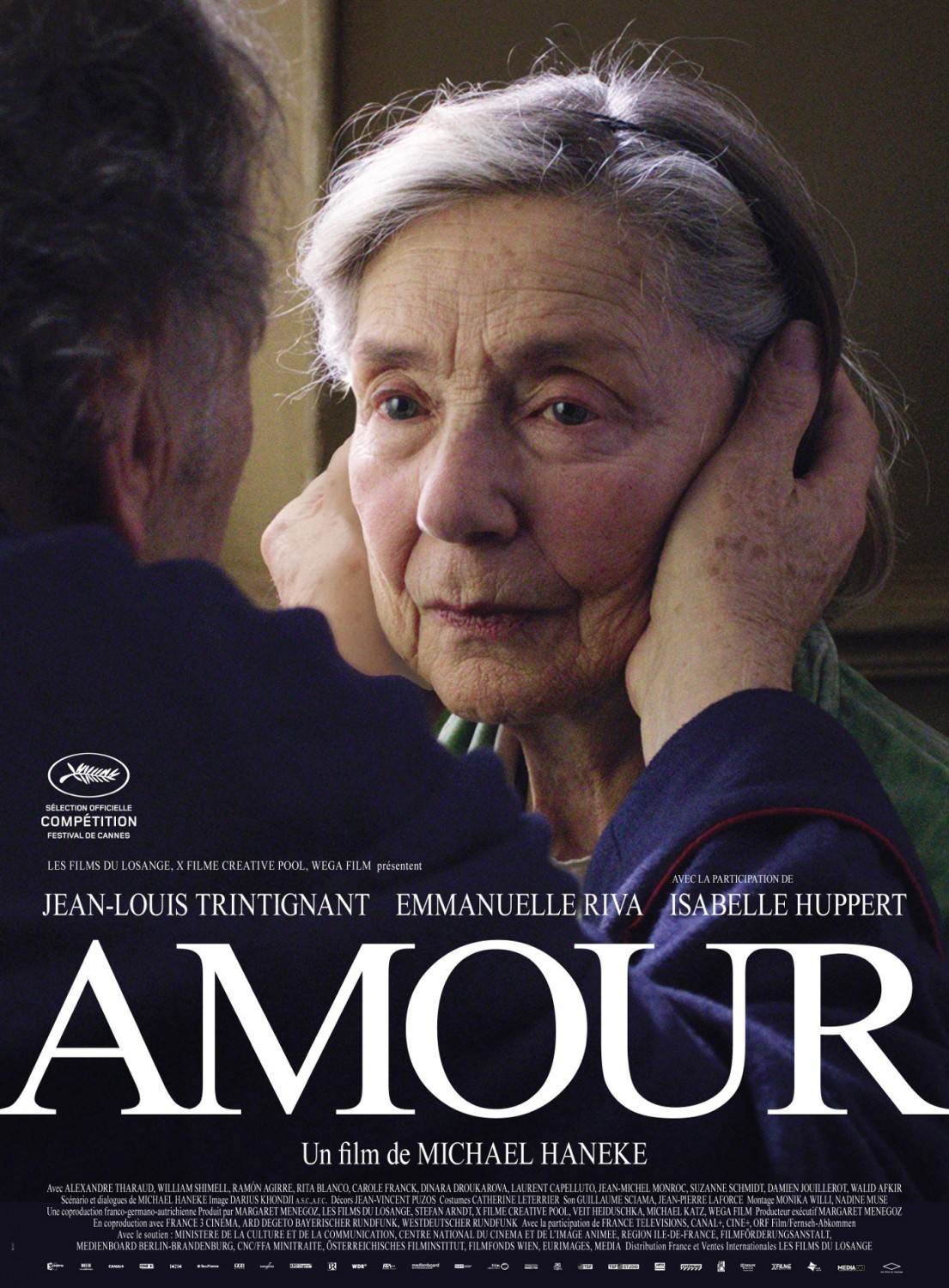
Amour

(Editor’s note: I’m currently on vacation and will be back to post after the weekend. The following review is by the writer of The Roost and her contributions are greatly appreciated here at Some Damn Fool.)

amour-movie-poster-2

Grade: A+

The Oscars are on Sunday, and if “Amour” goes home with nothing, the Academy doesn’t know a damn thing about film. Michael Haneke has created a gorgeous piece of art, with raw emotion that filters through every scene – start to finish. Death and dying are not topics our society has an easy time looking at with honesty. We like to sugar coat it, wrap it in wry remarks and humorous anecdotes, hoping to distance ourselves from the inevitable reality we will all face. “Amour” doesn’t do that. It “bares all” in its examination of dying, and the effects that it has on our loved ones. More importantly, it “bares all” when it comes to what love truly means.

From the onset, it is clear that the movie deserves it’s title. In the opening pre-credit scene, police barge into the apartment find the bedroom sealed off, a carefully laid to rest Anne inside. The care and consideration taken with her body are just a glimpse into the loving relationship Anne and George have. The chemistry between Emmanuelle Riva and Jean-Louis Trintignant enriches the script and reverberates off the screen, leaving the daughter’s marriage to a philandering English musician in stark contrast. Snippets throughout the movie of George’s care of the infirmed Anne – from helping her get out of her chair, to aiding her with the toilet, feeding her when she can no longer feed herself, washing her, taking her through her exercises – show a man unable to even consider a life without his wife; loving her even when her mind is too deteriorated to return that love.

Anne and George Laurent are retired music teachers, an elderly couple who still find comfort in each other’s company. Anne suffers from a stroke, leaving her paralyzed on the right side of her body. At first, George takes care of her by himself, cutting up her food so that she can still feed herself, helping her with the nuances of using the bathroom or taking a bath, and taking her through her daily exercises. She can still read, still talk, still move around in her automated wheel chair, but this changes. It is inferred that Anne has suffered a second stroke, and finally George must get a nurse to come in – three times a week. The remaining time, he is still her primary care taker, a role that ages him considerably throughout the movie. Anne’s mind is slipping, she is unable to do even the most basic of tasks, and the two of them start to remove themselves from the outside world.

Much like the pigeon that keeps flying through the courtyard window, their daughter flutters in and out of their apartment, unwilling or unable to leave her parents to simply die, even when it is requested. A nurse is let go for attempting to show Anne a mirror, so that she might see the hairstyle the nurse has roughly brushed out. A letter from a former student, remarking upon the sadness of Anne’s condition, changes their tiny moment of excitement back into depression. The young do not understand what it is to die. While well-meaning, their interruptions and sentiments are not acts of selflessness, but of an inability to relate; a reflection of their own needs and not the needs of the couple. George’s final interaction with Anne may be construed by society as murder, but for them, it was release. Love is acknowledging the needs of another.

Trintignant is superb as a man completely devoted to his wife. Every expression, every movement, every line delivered reflects the progressing toll Anne’s condition has on George. His wife is suffering her way to death, and it is killing him. The Oscar nod was truly deserved for Riva, however. Her performance was heartbreaking. Frustration, resentment, depression, dignity, mental deterioration – there are very few actresses that could act with such grace and subtlety. Riva doesn’t just show us the emotional turmoil Anne is going through, she makes us feel it.

We talk a lot about what defines marriage and love, our proclamations of “in sickness and in health” and “’til death do us part” often ring hollow. Haneke’s “Amour” is more than just a couple dealing with death. It is a movie about love beyond youth, beyond romance, beyond the good times. Love through sickness and frustration. Love that is devoted and respectful and forgiving. While looking through family photo albums, Anne remarks in sad reflection “C’est beau – la vie.” Haneke’s exploration of love and dying are equally beautiful – and devastating. Bring your tissue boxes.