Prometheus

prometheus

Directed by Ridley Scott

Starring: Noomi Rapace, Michael Fassbender, Charlize Theron

Grade: C-

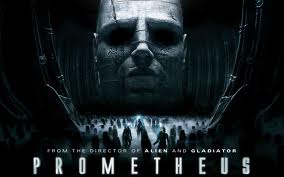
Prometheus is an underwhelming, conventional, two hour sci-fi film that exists solely for a thirty second scene at the end to make fan boys say “Oh, so that’s where Alien comes from! Cool!” This of course speaks to the problem of any film franchise, and that is being overly self-referential. Remember how in the Star Wars prequels they couldn’t stop reminding you, as heavy handed as possible, about the old movies? Aside from the shitty story, hollow dialogue, empty characters, awful directing, and wooden acting, it was the single worst part of those films. I don’t go to see new Terminator movies because I hope Schwarzenegger will pop up and say “I’ll be back,” I go because I want to see robots killing people, and people blowing up robots. Likewise, I don’t care if Prometheus is a prequel to Alien or not, I just want it to be a good movie where people I’ve grown to care about in some capacity die in really horrible and interesting ways. Is that so much to ask?

The story is this: Some scientists find a bunch of cave paintings in various parts of the world that are all kind of the same. They seem to hint that there is this cluster of planets and there are beings there that probably created us. How the scientists determine this is not really explained. Also, this is in the future so they can travel there and check it out for themselves. The android David (Michael Fassbender) watches over the badly assembled team as they sleep over the course of a two year long flight. I say badly assembled because it doesn’t really make much sense to embark on a mission of this magnitude that takes this much knowledge and skill, and not make sure in advance that the people involved like each other and can work together. Anyway, they get there and the place is a tomb. It turns out the aliens were building some weapons of mass destruction (ooh, political!) and killed themselves. This team of scientists and geologists and a security guy that nobody listens to, don’t get along at all and make really poor choices that leads to many unnecessary deaths. The corporation that funded the trip is represented on the journey by Meredith Vickers (Charlize Theron), who’s a real bitch for some reason, and at one point has sex with the pilot just to prove that she’s not an android like David.

Bubbling beneath the surface, Prometheus seems to want to wrestle with large questions, as any good sci-fi story should, questions about the nature of humanity, our capacity for destruction and our equal capacity for love, and whether we’ve squandered this gift of life or are just beginning to harness it. But ultimately, none of those questions add up to anything. We just get a monster movie where the monster isn’t even cool. Then at the end there’s some big, body-builder alien that wants to kill everybody, and never explains why. This isn’t being awesomely deceptive and ambiguous, it’s just a copout.

Ridley Scott has made far more bad and mediocre movies than great ones at this point in his career and is quickly losing his status as a “must see” director. I’m not saying Prometheus had to be some jaw-dropping, shake my entire worldview kind of movie, but it could’ve at least been fun and entertaining and maybe even a little bit terrifying. The worst thing a movie like this can ever do is be boring. A great deal of the running time, I was just hoping somebody else would hurry up and die. That’s probably not a sign of a great movie.

Buy this movie!

http://www.cduniverse.com/productinfo.asp?pid=8745615&style=movie&frm=lk_Somedamnfool
42

42

Directed by Brian Helgeland
Starring: Chadwick Boseman, Harrison Ford, Nicole Beharie

Grade: B

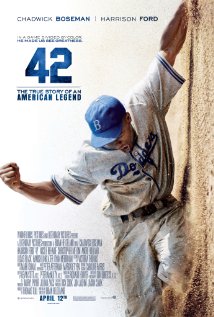
Baseball is a game reliant on myth. We look back on figures like Babe Ruth, Sandy Koufax, and Hank Aaron and think of them as something bigger than a simple game played on a dirt and grass diamond. We remember them for the things they might have done, and what they represented, just as much if not more than what they actually did. Jackie Robinson is probably the greatest example of this, and for understandable reason. Most baseball fans can tell you certain facts about players. Babe Ruth hit 60 homeruns in a season, Hank Aaron hit 755 in his career, Koufax threw 4 no-hitters, but I’d venture a guess that a lot of casual fans can’t name statistics about Jackie. They’ll tell you he played for the Dodgers and that he was the first black major leaguer, but what was his batting average? How many homeruns did he hit? These are not questions with important answers in most circles because Robinson was far more than just his stats. He is remembered as a legend, a man who triumphed over something sinister that we created and would love to forget. Jackie Robinson, just by being one of us, makes us all better people. The movie 42 is not a baseball movie in that it’s not concerned with the outcome of games or statistics or anything tangible. It’s a tall tale, using the myth of the first black player as a way to stir the inner romantic of the audience.

42 is advertised as Jackie Robinson’s life story, but it’s not really. It’s about two years in his life. The first year is when he officially joins the Brooklyn Dodgers organization and spends the season in the minors, and the second year is about him breaking the color barrier. An important two years, for sure, but hardly an all-encompassing biopic. Newcomer Chadwick Boseman brings the quiet intensity and inner resolve the legend of Jackie Robinson needs and deserves. He smartly doesn’t oversell it, in fact his performance is probably the only thing even remotely subtle in this film, and because of that he brings credibility to the story.

The story is this: Branch Rickey (Harrison Ford) wants to integrate baseball and he wants the Brooklyn Dodgers, the team he runs, to be the ones to do it. His motivations are deliberately cynical, though in this kind of movie there of course has to be a reveal that he’s not quite so cynical and crotchety as he pretends. Harrison Ford brings his natural crotchetiness to the role and hams it up big time with his curmudgeony Brooklyn accent and big cigars and insane eyebrows. So he wants to integrate baseball, but he needs the right player to do so. Enter Robinson. He’s strong-willed, anti-authority and publicly hates segregation. Plus, he’s really good at baseball. He attends spring training, deals with venomous racism, but makes his mark on the game anyway. His year in Montreal, playing for the Dodgers AAA affiliate is kind of glossed over and quickly arrives at the season where he is promoted to the major leagues. His teammates don’t want to play with him, in fact sign a petition that they refuse to do so, the opposing teams pitchers’ plunk him with pitch after pitch while spewing out vicious slurs at him. He’s only given one moment in which he nearly breaks, such is his resolve, and he is saved by the calming words of Branch Rickey. Because every movie dealing with racism has to have a saintly white character helping the poor black person along. Jackie’s real rock, though, is his wife Rachel (Nicole Beharie) who is always ready to lend him her strength when he falters. In the end, as we’d expect, his teammates, and to a lesser extent the fan base, accept him as one of their own and he becomes the hero we know him as today.

The big criticism of this movie is that it paints in too broad of strokes. It’s more concerned with the legend than the man, and I would agree with that. Though I don’t think that’s unintentional. I believe this movie purposely perpetuates the legend of Jackie Robinson because baseball, and America really, kind of need him to be bigger than life. It took a man better than everyone around him, and not just at swinging a bat, in order to change that old, beautiful game. I’m willing to concede that there is a better Jackie Robinson movie that hasn’t been made yet, one that doesn’t pull any punches and focuses on the truly harrowing journey this man took, over the entire course of his life. Robinson’s story is good enough on its own where it doesn’t really need any embellishment. However, I don’t think the fact that there could be a great movie means this isn’t a good movie. The inner romantic baseball fan in me was sufficiently stirred.

See this movie!


Fandango - Movie Tickets Online

The Place Beyond the Pines

The_Place_Beyond_the_Pines_Poster

Directed by Derek Cianfrance

Starring: Ryan Gosling, Bradley Cooper, Eva Mendes

Grade: A

The Place Beyond the pines is really three movies in one. Three different stories, though related, are told, but not interweaving. The first third is a bit of a modern crime noir, second third is a police corruption tale, and the last third is the story of two wounded sons doing battle for their fathers’ sins. That it succeeds in all three modes is pretty remarkable. It teases us with its ambitions for a while, starting out as a minimalistic, character driven story and ending on an epic scale spanning two generations. Director Derek Cianfrance, who last gave us Blue Valentine (also starring Ryan Gosling), a toned down horribly depressing drama about a doomed marriage, sets his sights much higher this time.

The movie starts out with mumbling, stoic tough guy and circus daredevil, Luke (Gosling) discovering he has a one year old son. He makes the decision to do the right thing and stick around for the kid, even though he’s not really wanted. His baby momma Romina (Eva Mendes) still has feelings for him but her new man is not happy with Luke’s intrusion into their lives. Luke takes up robbing banks in order to support his son. Gosling knows this world well, he knows in this case it’s a lot more important what he doesn’t say rather than the dialogue that is used. Quietly mumbling his way through scenes helps shape this character and the bleakness of the world. Sometimes the script forgets that and gives moments of too much clarity, like when his bank-robbing friend tell him “If you ride like lightning you’re going to crash like thunder.” This comes from a character that smokes and drinks his way through life when he’s not driving the getaway truck. It’s not a terrible thing, and maybe it’s needed, but it feels a little forced. Soon, though, that obviously foreshadowing quote comes to fruition. A bank job goes wrong and has tragic consequences for Luke.

The second story is about hero cop Avery (Bradley Cooper), struggling with both a physical injury and severe damage to his psyche. He’s not quite so sure he’s the hero everybody thinks he is. His new role gets him into the inner circle and he quickly finds out about the corruption within his station. The crooked cops, led by Deluca (Ray Liotta at his Ray Liottaest) attempt to turn him to their cause, but Avery is too moral of a guy to be seduced. Or at least, that’s what we think initially. Avery, with the help of his Judge and politically powerful father, uses the situation and his new found knowledge to gain his own political influence and launch a career. Cooper plays this well, as someone who is a good man but too politically minded to ever truly be a morally centered person. Cooper’s recently gotten a lot of accolades for his acting and has come a long way from being the go-to asshole in an R-rated comedy. His work here is some of the more subtle I’ve seen from him.

The last section of the film jumps forward in time and tells the story of the two men’s sons unwillingly, and in one case unknowingly, dealing with the consequences of their father’s choices. The two teenagers, AJ and Jason, both seniors in high school, are drifting towards dark paths, though in different ways. One is withdrawn and isolated while the other is angry and sadistic. They fight, manipulate, and seek only to hurt each other, for reasons that are much clearer to us than them.

The three sections build towards a confrontation which ends in a confession, an apology, and if not exactly anything even remotely happy, there is at least an acceptance. This is, after all, a pretty noir world we’re in, and by definition we can’t get a happy ending. What we do get is a detailed, fully realized world populated by people who are in a constant struggle to find meaning and hope amidst the pain of an increasingly bleak existence and the city of Synecdoche has never looked so drab and lifeless. But the film is not interested in making you abandon all hope either, it wants to leave that possibility alive that things can finally work out, probably because that will make it all the more devastating when it doesn’t. Through everything the movie attempts to do and all the genres it encompasses, it finally settles on the good old-fashioned American epic. The mantra “Go west, young man” is at the center of its resolution, both literally and figuratively. One could argue that The Place Beyond the Pines tries to do too much, to be too much, but it’s that reckless ambition that defines the great American film, isn’t it?

Go see this movie!


Fandango  - We've Got Your Movie Tickets!

A Life At the Movies

roger_ebert_17759

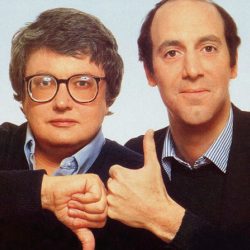
I can’t really tell you when I first started reading Roger Ebert’s reviews, only that I’ve been reading them longer than I can remember, longer than I even knew who he was in fact. I didn’t know him as a TV personality and have no memory of watching his show until the Roeper days to be honest. To me, Ebert was simply the guy who wrote about movies every week in the paper. I loved movies, so I read his reviews even though I didn’t actually see the vast majority of the movies he was writing about. The first review I can recall having an impact on me was his review of the Jim Carrey movie The Mask. He liked it, surprising in retrospect because my adult self can’t really stand that movie, but was surprised that he liked it because he didn’t like Jim Carrey in Ace Ventura: Pet Detective. This blew my young, adolescent mind. How can somebody not like Jim Carrey? Pet Detective shaped a great deal of my preteen sense of humor. I used to say “Alrighty then” so often that I’d like to travel back in time and kick my 12 year old ass for being such an obnoxious little shit.

Still, I wasn’t mad at the disagreement. Instead, it did something else to me. I finally noticed his name at the top of the review and started paying more attention each week to his write-ups. Week after week he’d talk about movies, sometimes trashing them and sometimes praising them, but always confident in his opinion. I still mostly enjoyed reading about movies, but I also started noticing things in my own film watching that he would talk about. Over the years I’d learn to spot flat characters, plot contrivances, over-reliance on special effects. To say that Ebert taught me more about movies than anybody else is an understatement. He taught me virtually everything I know. Sure, some of that knowledge has been reinforced by friends, professors, books and other critics, but the root of everything was with Roger Ebert. I didn’t always agree with him, in fact would argue vehemently against many of his reviews, but one of the greatest things he taught me is that it doesn’t matter whether I agree with him. It’s not his job as a critic to cater to me. He said it best: “The job is to describe my reaction to a film, to account for it, and evoke it for others. The job of the reader is not to find his opinion applauded or seconded, but to evaluate another opinion against his own.” I have trouble articulating just what this statement means to me. This isn’t just the attitude I have towards movies and critics, it’s the backbone of my philosophy on life, really. And if movies can teach us something important about our lives and the greater world around us, a good critic is about as useful a tool as we can have.

The above quote is in his terrific response to the hate mail he got when he dared suggest Transformers 2 isn’t a good movie. I encourage you to read it and it will give you an idea on just what a critic is actually for and the amazing wit of Roger Ebert. Occasionally I’ve been referred to as an elitist by friends or family, and this rebuttal is just perfect.

That somebody would refer to him as an elitist has always been funny to me, because he’s never come off that way to me. He’s sort of stuck in the middle in some ways, too artsy for the mainstream crowd and too mainstream for the art crowd. He never dismissed a movie simply because it’s a summer blockbuster nor did he reward a movie for being artistic. He was honest, and often brutal, and frequently hilarious.

I’m not really a critic, I just have a blog where I write about stuff. I’ve also moved on a bit in regards to my choice of critics I read, or at least expanded. Ebert still is, or was now, a weekly read, but I’ve found others whose opinions and writings I enjoy as much as him. Though I still have yet to find one I cherish as much. All I can really say is that Roger Ebert has given me years of enjoyment and insight and I’m eternally thankful for his role in this world. I’ll miss reading him every week, but I guess it is somewhat comforting that even a nerd like me hasn’t read every review he’s ever written. Which means I’ve got years of his archives to go through. I’ll probably start tonight and I encourage you to do the same.

Your Sister’s Sister

your sisters sister

Directed by Lynn Shelton
Starring Mark Duplass, Emily Blunt, Rosemarie Dewitt

Grade B-

I hesitate to call this movie a hipster romance due to the vehement attention that word gets and the fact that it’s now become every bit as cliché to rip on hipsters as it is to actually be one. Nobody wins with that word anymore. Though allow me to digress on that a moment. White people can’t stand being referred to as a hipster, in fact they seem to get mortally offended by the accusation. It’s become some sort of racial slur against the self-consciously hip white crowd, though I think it’s fair to keep in mind that most other races in this country deal with far more cutting and vicious slurs than hipster. Just food for thought next time you get enraged that someone uses “that word” referring to you when you drop references to obscure authors and say things like “I liked their early stuff.” Okay, digression over. Anyway, Your Sister’s Sister is about grown white people living in Seattle who ride bikes and are intelligent and read a lot and are generally slacking their way through life. When you break it down, this movie is really a pretty simple romantic comedy with just enough quirk thrown in to get away with it.

The basic plot is this: Jack is sad about his brother’s death a year ago and is drinking too much and acting like an asshole everywhere he goes. His best friend Iris, who it shouldn’t be much of a surprise is in love with him, sends him up to her family’s cabin where he can be alone and get his mind straight. When he gets there, though, Iris’ lesbian sister Hannah is already there, trying to come to grips with the fact that she just walked out of a 7 year, destructive relationship. Jack and Hannah have drunken, awkward sex and naturally Iris shows up the next day and everybody struggles with just how much information they should share with everybody else. Also, Hannah may or may not have used Jack in order to get his sperm so she can get pregnant.

Individually, pretty much every scene in this film is enjoyable. The always charming Mark Duplass plays Jack and is funny and jaded, at one point giving an awkwardly hilarious-yet-tragic monologue about his dead brother’s shortcomings as a human being at what’s supposed to be a celebration of his life. He brings this same tone to the rest of the movie and is consistently enjoyable to watch. The entire cast, Duplass, Emily Blunt and Rosemarie Dewitt, all play well off each other and bring life to all the dialogue, which sounds natural and unforced. The moments that are played for laughs get them and the moments that are aiming for uncomfortable achieve it just fine. The problem is that, while they all work individually, they don’t quite add up to anything particularly remarkable. Everything works out about as well as you’d think, and even the bit of a cliffhanger at the end doesn’t come off as terribly important. Nobody seems to really come to terms with any of the shit they’ve been dealing with, but everyone seems pretty much okay with that. That they become a sort of makeshift family is nice and all but I’m not sure it totally earns that feeling.

This is a movie that I punish more for what it could be rather than what it is. The cast assembled is great and they obviously have some passion for the material, and writer/director Lynn Shelton has a very good ear for dialogue. It just doesn’t quite achieve what I think it was capable of and that’s unfortunate. Whether that’s fair or not, I can’t say, but thems my thoughts.