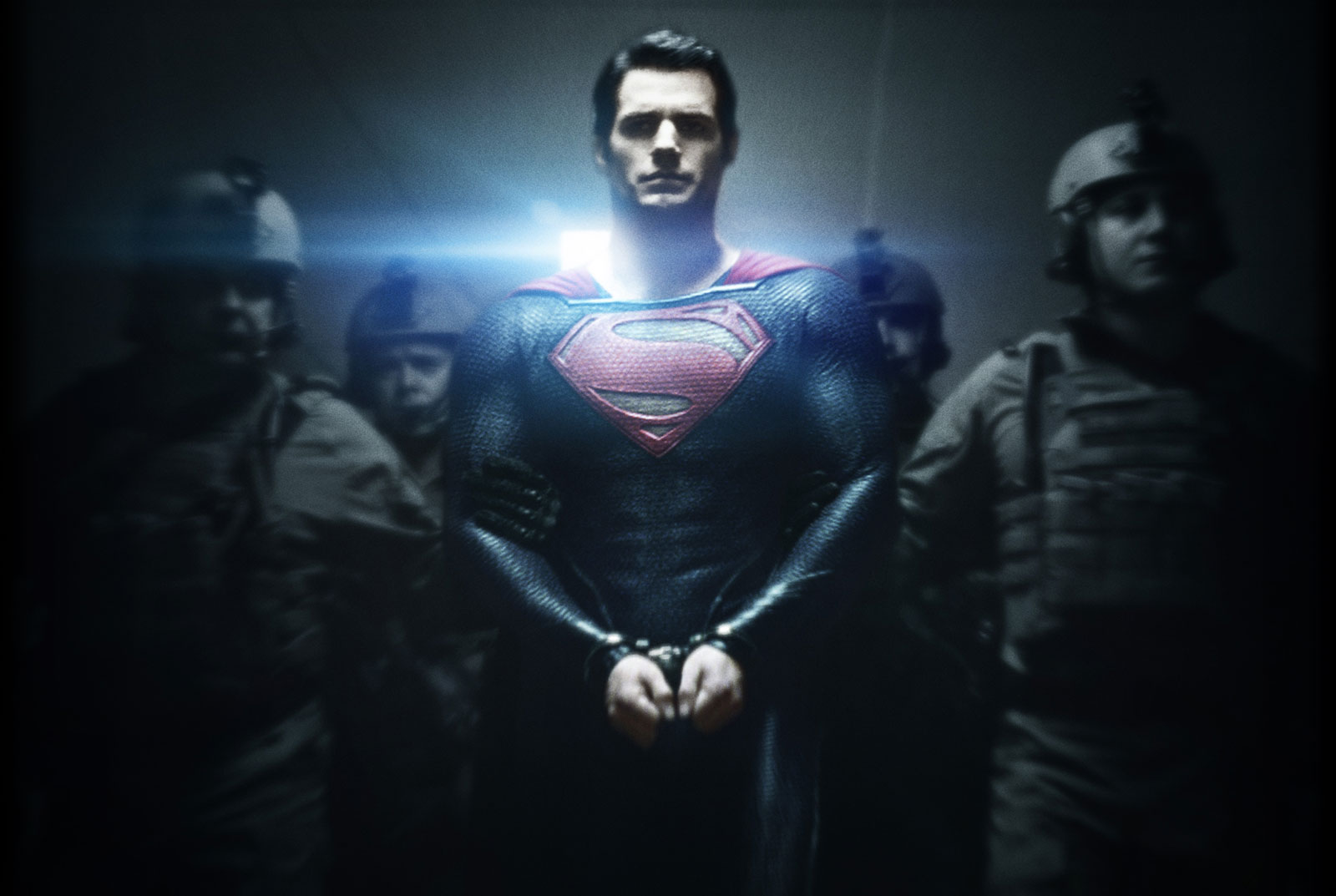
Man of Steel

man of steel

Directed by Zack Snyder
Starring Henry Cavill, Amy Adams, Michael Shannon

Grade: B-

Superman is a serious character. The go to criticism of Man of Steel is going to be that Superman is supposed to be lighter, more whimsical. I know this because that criticism had already started from the moment it was announced that Christopher Nolan would serve as a producer. The internet was upset because, as they would say, dark and serious tones work for Batman but not the Last Son of Krypton. The problem is, that’s not true. As I said, Superman is a serious character, every bit as serious as Batman. Superman: The Movie was more parody than anything, a very well made and entertaining one, but a parody nonetheless. Unfortunately that film has essentially defined the character for mainstream audiences. But Superman and Batman are in some ways the flip sides of the same coin. Think about it, they’re both orphans, both abide by an unwavering moral code, and both are alone in this world. The difference is that Batman fights the darkness with a darkness of his own, while Superman fights it with light. He serves as an inspiration to what humanity should aspire to. That doesn’t make him any less serious, just more awe-inspiring.

With that out of the way, Man of Steel has its flaws. The action sequences tend to drag on far too long, namely the climactic battle between Superman and General Zod where two super powered beings punch and throw each other with enough force to destroy skyscrapers, yet do no harm to either of them. Filmmakers don’t seem to understand that this kind of action gets boring really quickly. If your characters can’t get hurt by conventional means than it’s your job to find a way to raise the stakes in a fight. On that note, the collateral damage in this movie is just far too severe. General Zod and his army essentially destroy the entire city of Metropolis. By the end it looks like a post apocalyptic wasteland (though the Daily Planet building naturally seems fine in the very last scene). A conservative estimate of casualties has to lie in the hundreds of thousands. I understand the desire to make this movie epic as Superman Returns was panned for not having enough action, but if the whole point of the story arch is to establish Superman as an ally, and potential savior, of humanity, this is really a failure. There is absolutely no believable way that people of earth would trust this alien after seeing all the destruction him and his fellow Kryptonians caused. They would be terrified of him.

The changes to the Superman mythos I didn’t mind too much for the most part, with one exception. That is the Lois Lane relationship. The allure of Lois Land and Superman is the cat and mouse game, the constant flirting, the deceiving, the impossible conundrum that she thinks Clark Kent is a doofus while being in love with Superman. This is what makes the relationship fun. Here, there’s no banter, just instant love. There is nothing more dramatically boring than instant love.

My last major complaint is that the opening sequence is far too long. We see too much of Krypton. This is not a movie about the demise of another world, it’s about that world’s lone survivor and his adaptation to earth. The overly lengthy segment just feels like director Zack Snyder wanted to show how cool he could make Krypton look. We really didn’t need to see Jor-El flying through the sky on the back of some kind of winged monster as he races to save his son from General Zod. A scene on Krypton needs to be in the movie, but it needs to be quick and to the point. In the words of Grant Morrison, “Doomed Planet, Desperate Scientists, Last Hope…”

I don’t mean to totally shit on this movie though. It got some things right. Superman comes off as an outsider, desperate for acceptance from his new world while still pining for his old one. It feels very much earned when the film forces him to choose where his true loyalties are, and produces probably the best moment of the movie. Henry Cavill is good in the role, though the script forgot to give his character much in the way of personality. There are two essentials to the character of Superman, other than his origin and powers of course, and those are the two facts that he never gives up and he puts the needs of others ahead of himself. Cavill captures this very well. He gets knocked down, he gets back up. He’s overmatched, he keeps fighting. He brings a quiet determination to the role that speaks to an all powerful alien trying to find a way to use his powers to save humanity, and at the same time blend in with them, and live among them.

As an origin film, Man of Steel simultaneously drags on for too long and tries to do too much in a relative short amount of time. Still, there is enough good here that has me hopeful for the sequel. I’m in the camp of superhero fans who are tired of origin stories. We all know who Superman, Batman, and Spiderman are, so forget where they came from. Just tell us a good story about them. Hopefully the inevitable follow up to this movie can move on and just tell a great Superman story.

The Trouble with Trouble with the Curve

1354895031_trouble-with-the-curve

Directed by Robert Lorenz
Starring Clint Eastwood, Amy Adams, Justin Timberlake, Matthew Lillard, John Goodman
Grade: F

Most people don’t know this and therefore might think this a crazy statement, but the game of baseball is at the forefront of a new war between the young and the old, the newcomers versus the old guard. The old are, understandably, wary of relinquishing their post so they reject the new methods as robbery of the world’s humanity. Meanwhile, the young are overzealous in all their newfound knowledge and can come off a bit pompous. In baseball, specifically, the information age has given us seemingly infinite amounts of data and with it countless new stats and metrics, all designed to further understanding of the game. This terrifies and then enrages, as one tends to follow the other, the old guard. Trouble with the Curve, directed by Robert Lorenz, is the horribly biased movie version of this argument. The film hates technology and anybody who believes it can be used for good is automatically a villain. Insulting to baseball fans, movie watchers, and every single member of this cast, Trouble with the Curve is a manipulative, self-serving, and entirely dishonest film.

The action follows Gus (Clint Eastwood), an aging scout with failing eyesight. He once was the best scout in the business, we know this because we are told this repeatedly just in case we ever doubted. He’s grumpy and dismissive to everyone he meets, though nobody seems bothered by it except his daughter Mickey (Amy Adams), whom he has neglected ever since her mother died when she was six. A big reveal late in the movie, and a disgusting piece of audience manipulation, is that Gus caught some random baseball guy molesting Mickey in a woodshed after a game when she was six and sent her away in order to protect her. Mickey, named after Mickey Mantle because this is a way to establish both that Gus is obsessed with baseball and has no idea to relate to a daughter, is up for a promotion to partner at the law firm she works at. Sound familiar? Probably because that’s the go to premise of any shitty movie where the young, overworked professional must learn a valuable lesson about loving something simple. Anyway, she takes a vacation in the middle of a crucial case, which spoiler alert will cost her that fancy partnership before the movie’s through, to accompany Gus as he scouts a young high school ballplayer. While on this trip, Mickey meets Johnny (Justin Timberlake), a former player who was drafted by her father but after blowing his arm out is trying his hand at scouting. Naturally, they fall in love, though she resists because she must put her career ahead of all relationships. Also, the player they’re scouting is a total piece of shit who has no appreciation for anything, and in the film’s climax Mickey and Gus prove that he has “trouble with the curve,” thus rendering those computer-stat nerds-geeks-assholes-queers into complete frauds and failures and the most vile one of them all gets fired.

As far as the performances go, there is nothing really impressive going on either. Eastwood is clearly on autopilot, grunting and growling his way through every scene. I suspect that Eastwood did this movie as a favor as Lorenz worked as his assistant director for many years and this was his directorial debut. Amy Adams is supposed to be the emotional center of the film, and to her credit she does what she can with the role, but the character is so stock and clichéd that it comes up empty. Timberlake is his usual charming self but only exists in this movie as a plot device. John Goodman is a welcome relief and in his small role as the scouting director of the Atlanta Braves easily gives the best performance. Matthew Lillard is only there to be snaky and I suppose he does that pretty well. You might be thinking to yourself, “hey this is a pretty good cast,” and you’d be right and that’s what makes this movie so infuriating. To assemble a talented and charismatic cast and then reduce them to uninteresting movie clichés is just a bummer.

I won’t go into all the ways this movie also gets the baseball details wrong too, as I’m sure many readers won’t care, but rest assured the way that the talent is scouted and drafted in this movie is absolutely not the way it works in real life (and in what fucking world do the Red Sox get the first overall draft pick? They’d never be bad enough for that). All I’ll say is that this movie fails on virtually every conceivable angle and does not bode well for Robert Lorenz’s directing career. It seems Trouble with the Curve was simply made to be the anti Moneyball, which is fine in its own right, I suppose, but whereas Moneyball certainly had issues of baseball accuracy of its own, at least it was a good movie.

Behind the Candelabra

behind-the-candelabra

Directed by Steven Soderbergh

Starring: Michael Douglas, Matt Damon

Grade: B-

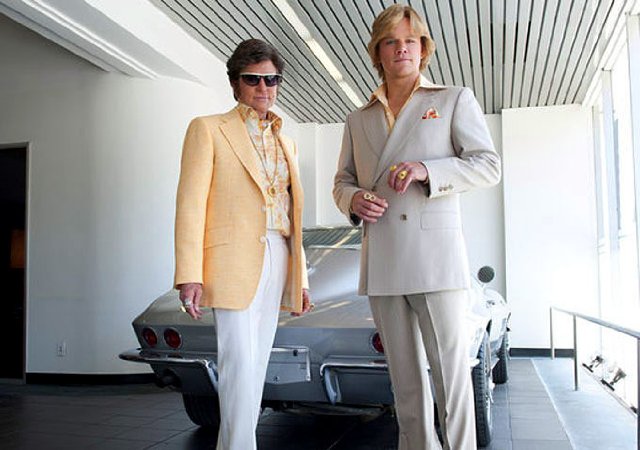
Liberace was a flamboyantly gay man that did everything in his power to hide it from the American public. In that respect, it’s a lucky thing for him that he lived during the times he did, because flamboyancy was expected, and encouraged, by musicians in the 70’s and 80’s, and homosexuality was something you just didn’t talk about in polite society. In Behind the Candelabra, Michael Douglas plays the famous piano player simultaneously as vulnerable and sociopathic. These two traits might seem incompatible, but consider the fact that the sociopath knows that if he’s found out, the fun’s over, and it makes more sense. Liberace is in love with himself, his sexuality and his lifestyle and if the word gets out about the first two, the third’s gone. This movie, not a biopic, is about the last parts of Liberace’s life and his relationship with a much younger man, Scott Thurson (Matt Damon). The film doesn’t attempt at being faithful to the reality of Liberace, because it’s only seen through the eyes of Thurson.

Scott Thurson is a teenager (a quick aside: Matt Damon is aging phenomenally well and looks like a much younger man than his 42 years, but under no circumstances would anyone believe he’s 17 years old and as good as he is in this role, the mere fact that he’s nowhere near the right age for the part reeks of a desire to get some more star power in the film) who was raised by foster parents and likes working with animals. When he meets Liberace, he’s taken away from all these things and set up with everything he could ever want, at least from a materialistic view. He mistakenly believes that Liberace wants a romantic partner, someone to share a life with, when all he really wants is a trophy boyfriend. The relationship is built on image and sex and nothing more, and the deeply disturbed psychosis of Liberace reveals itself when he quite literally tries to remake Scott in his own image. Thurson battles addiction, shame, and loneliness but never loses his genuine naivety and therefore never stops believing that Liberace’s love is honest. The musician’s true intentions are clear to us, the audience, much faster than they are to Scott.

Douglas and Damon are both good in their roles but a few of the minor characters come off more as caricature or simply going through the motions. Aykroyd, as Liberace’s manager, never looks like he’s having any fun at all, while Rob Lowe is so over the top it’s hard to take him seriously. Still, this movie rests solely on the shoulders of the two leads and they come through. Douglas’ Liberace has been putting on a show his entire life and now his life has become the show. A slightly surreal ending sequence suggests that even in death his show is going on. Damon’s Thurson is so naïve and sincere that even when he’s betrayed by his lover and everything is taken away from, his affection never dissipates. A phone call is all it takes to get him back to Liberace’s side.

The problem here is that the idea of Liberace’s entire existence being a show is really all there is to this movie. It’s an idea we accept rather quickly, and then that’s all there is. Since we only see him through the perceptions of Scott, we never really get to know him except through a couple personality traits and disturbing actions. That wouldn’t be terrible, except that we don’t really get to know Scott either. We know he’s young, he’s not terribly bright, he’s very good looking and he’s being manipulated by an older man. The story follows a pretty predictable arch and holds no real surprises and because of that it just doesn’t add up to anything more. This is not a bad movie by any means, but not anything with any staying power either.

The Master

The Master poster

Directed by Paul Thomas Anderson
Starring: Philip Seymour Hoffman, Joaquin Phoenix, Amy Adams
Grade: B+

Sometimes the controversial or provocative subject matter in a film can dominate the conversation and overshadow the film itself. The Master, directed by Paul Thomas Anderson, is one such movie. Yes, it is a thinly veiled attack on Scientology, there is no question about that and there shouldn’t be. The thing that seems to get missed is that Anderson and his cast aren’t interested in convincing you that Scientology is a fraud, they just accept that it is and move on with the story. To say The Master is a film about the evils of Scientology is like saying Schindlers List is a movie about the evils of Nazism, or The Dark Knight is about the evils of the mob and clowns. This movie is both much simpler than that and much more complex, a simple attack on Scientology is far too easy for a director of the caliber of Anderson. What the film is really concerned with are two men who are drawn to each other despite their best interests, despite the disruption and chaos they cause in each other’s lives. They bring out the worst in each other, though occasionally the best.

The plot follows Freddie (Joaquin Phoenix), a sailor, returning home from war and struggling with a vicious case of PTSD and alcoholism, though it seems clear he had some mental issues beforehand. He drifts around until his special moonshine nearly kills an old man and he’s accused of poisoning him, so he stows away on a boat of what appears to be a well-to-do gathering. There he meets the charismatic Lancaster Dodd (Philip Seymour Hoffman), the leader of The Cause, a cult like collection of people who believe in past and future lives and seek to perfect the soul as it is the true being and the body being merely a vessel. Dodd immediately takes a liking to Freddie’s moonshine and takes him in. The story then goes broad, following Dodd as he evangelizes The Cause, tries to cure Freddie, while his wife, Peggy (Amy Adams), keeps a tight rein on him and his own demons. Also, periodically Freddie flips out and beats the living shit out of anyone who publicly questions Dodd and his beliefs. These are two men headed toward self-destruction, one who is perfectly okay with that, while one is desperately trying to prove there is no crazy. If Dodd can cure Freddie, there just might be hope for himself.

joaquin-pheonix-600

Hoffman and Adams steal the show here. Hoffman brings charisma, danger, instability, manipulation, and boat loads of charm to the role of Lancaster Dodd and makes it so much his own character that the viewer doesn’t need to think of the comparisons to L. Ron Hubbard, because Dodd is his own man with his own set of problems. Amy Adams, meanwhile, keeps herself controlled to the point of unease and to where we understand that while Lancaster is manipulating everyone around him and bending them to his will, Peggy is pulling the strings on him. Peggy never loses her cool, never raises her voice, but is very calmly, and confidently, critical of anything that doesn’t support the survival of The Cause.

The problem here is Phoenix. Joaquin has become like a darker, more twisted, Johnny Depp. He can play weird, strange, intense, and quirky characters very well but seems to leave it at that. Like his Burton-lovin’ peer, he fails to find the humanity in these strange characters he creates. In The Master, there are a few scenes where Freddie feels genuine, and I’m referring to almost any scene where he’s one on one with Hoffman, but for the most part he comes up short. We need to follow Freddie through this movie but he’s just not very empathetic and any time he’s on screen without Hoffman or Adams the film kind of drags.

Destructive friendships don’t always have to end in destruction, and the end of Freddie’s journey, at least the one we see on screen, feels very satisfactory. Of course, the film doesn’t let him off completely easy and it’s slightly ambiguous, but it at least sets up the possibility that he might just have a life ahead of him after all. Dodd, meanwhile, seems to be the true prisoner at the end, chained to The Cause he himself created, his actions seemingly completely out of his control. Their friendship is unsustainable because one wants to conquer the world while the other is simply okay with trying to live in it for a while. Neither man is free, one a prisoner of mental illness and alcoholism, the other a prisoner of ambition, though whose ambition is not entirely evident.

Buy this movie!

http://www.cduniverse.com/productinfo.asp?pid=8870397&style=movie&frm=lk_Somedamnfool

Iron Man 3

iron-man-3-official-hd

Directed by Shane Black

Starring: Robert Downey Jr, Don Cheadle, Gwyneth Paltrow, Guy Pearce, Ben Kingsley

Grade: A-

I don’t know if Shane Black loves Christmas or hates it, but I’d love to know the psychology behind his obsession. You see, I love Lethal Weapon and firmly believe that it, along with myself, is one of the few truly great things to come out of the 1980’s. The movie didn’t invent the buddy cop genre, but it set a standard, one that hasn’t been reached again since. Black brings his directing talents (only his second directorial endeavor, he only wrote Lethal Weapon) to Iron Man 3 and adds his familiar tropes to the tested superhero formula. Everything is there, the buddy cop stuff, Christmas imagery, pitch-perfect dialogue, and a lead character that is barely keeping his shit together. The third, and presumably final Robert Downey Jr. led, film makes a startling discovery: that human beings are infinitely more interesting than machines. It’s hard to say a movie where there are insane amounts of explosions and literally (I think) hundreds of different Iron Man suits, is toned down or subtle, but it actually feels that way most of the time.

The plot picks up in a fairly logical place from where The Avengers ends. Tony Stark doesn’t quite know how to deal with what happened in New York. He’s seen too much, done too much, and can’t explain any of it. He can’t sleep most of the time and when he does he has nightmares. His relationships are crumbling around him and he’s becoming increasingly isolated. A superhero movie dealing, in its own way, with PTSD is a rather remarkable thing and not the stuff of your typical summer blockbuster. In addition to all this existential angst Tony is dealing with, there’s also a well-funded, lunatic terrorist named The Mandarin (Ben Kingsley) who wants to kill him and a whole bunch of other people, and to make it sting just a little bit more, Pre-Iron man drunken asshole Tony Stark may have inspired this new villain to a lifetime of evil.

In the third film of a trilogy the hero must lose everything and be nearly ruined in defeat, only to rise from the ashes and continue the fight because he or she figures why they did this heroing stuff in the first place. In this respect, Iron Man 3 doesn’t disappoint. Tony Stark does not have an easy time in this movie, in fact it follows a fairly similar arc to The Dark Knight Rises in some ways. The difference is that Stark is a lot more fun to be around than Bruce Wayne so when he goes most of the movie as himself rather than his costumed identity, we don’t really mind. Downey and Don Cheadle, who reprises his role as James Rhodes, have a lot of fun together, trade banter, and even raid a rich guys compound (more buddy cop stuff) in order to save the day. If the third act is kind of a let down, well that always seems to be the case with the Iron Man movies. Lots of explosions and infinite metal suits punching things is just not quite as much fun as Tony Stark trying to solve a mystery while fighting off panic attacks anytime someone mentions New York. Yes, the movie eventually devolves into our hero having to save his girl, Pepper Potts (Gwyneth Paltrow) and the President of the United States, but it provides nice enough twists to these familiar tropes that it feels somewhat fresh, if not completely unique.

As usual, Downey is a perfect Tony Stark and the supporting cast are just as great. Kingsley, Cheadle, and Paltrow all know they’re in a comic book movie and are having a great time with it. Guy Pearce, playing a slimy character, because of course he is, is a much more believable threat to Stark than Sam Rockwell’s Justin Hammer from the second film.

Iron Man 3 is an interesting follow up to the sheer spectacle of The Avengers, if only because it doesn’t try to top it. It tells a character driven story and has a complete absence of, except for some namedropping, other superheroes. This movie succeeds because it doesn’t try to do too much, and despite the somewhat too easy resolution, it’s a worthy addition to Marvel’s new film canon and a good way to introduce the next wave of Avengers related movies.