Not Fade Away

Not_Fade_Away_poster

Directed by David Chase

Starring John Magaro, Bella Heathcote, James Gandolfini

Grade: B+

Ah, the 1960’s, a decade that promised change, and hope, and the realization of human potential. And rock n’ roll. In fact, rock n’ roll was sort of at the forefront of all this. Well, it didn’t really work out that way and now those years are sadly regulated to a metaphor for the disillusionment of youth. In our naïve, and angsty, years we believe we can change the world but will of course fail. Not Fade Away does not dwell on this, what I’m trying to say is it’s not a particularly grim film, but this idea is always present. Writer and Director David Chase (The Sopranos) has created a love letter to the 60’s and the music that was the soundtrack.

The plot, which takes place over a few years, Douglas (John Magaro) and his friends while they form a band inspired by The Rolling Stones and The Beatles. Douglas was a clean-cut, scrawny kid in high school who couldn’t get laid to save his life, so naturally he is drawn to the new rock n’ roll where scrawny dudes seem to get laid all the time. He pines for a Grace (Bella Heathcote), a girl totally out of his league, who will eventually talk him into becoming the lead singer rather than the drummer. As Douglas gets a bit older, goes to college and drops out, and the band becomes a bigger and bigger part of his life, he becomes increasingly a symbol of the 60’s. His hair could be a Bob Dylan wig, and he dresses, as his father Pat (James Gandolfini) would say “Like you just got off the boat.” The band never finds success outside of their small town, but that doesn’t stop it from crumbling from inner turmoil, hurt feelings, and egos just like a real band, and eventually Douglas loses everything he thought he cared about most.

The performances are mostly fine, though Magaro makes Douglas rather tough to like as he becomes increasingly pompous and hypocritical. What I want to talk about though, and I’d be remiss if I didn’t, is the late James Gandolfini. I’m not writing a eulogy here, but the man was a talent and the acting world is going to miss him, is already missing him. As the conservative father In Not Fade Away, Gandolfini brings life and soul to what could otherwise be a very stock character. Pat has anger bubbling under the surface at all times, anger at a world that didn’t work out for him the way it was supposed to, anger at a world that is leaving his ideals behind, and anger at his son for following the world rather than him. But there is also the undeniable goodness in him that makes us root for him, even when he’s being kind of, okay very, racist. I won’t go into specific spoilers here, but Pat’s journey in this film is the most subtle and the most interesting. He represents the death of the “nuclear family,” the old guard. This kind of death is always resisted by rage and violent outbursts. By the end, there is a sort of sad acceptance, and he does what only an American father understands, he tells his son (metaphorically of course, he doesn’t actually say the following words) Go West, Young Man.

This movie definitely falls under the good, but not great umbrella in many ways. Watch it for the details, that turbulent decade comes to life on-screen. The music, the sets, the characters all feel authentic and it’s refreshing that Chase doesn’t idealize too much and doesn’t shy away from complicated race questions. Also, see it for Gandolfini. In fact, see any movie with him in it. The death of idealism is a tough thing to stomach, and in a way this movie works as a metaphor for the teenage and early 20’s years of all of us. There was a time, believe it or not, when we all believed we were capable of changing the world, and that something as pure and untainted as Rock n’ Roll would be that instrument. The fact that we were wrong doesn’t cheapen our efforts.

Buy this movie!

http://www.cduniverse.com/checkout/cart.asp?PID=8920300&style=movie&frm=lk_Somedamnfool
Much Ado About Nothing

much ado about nothing

Directed by Joss Whedon

Starring Amy Acker, Alexis Denisof, Nathan Fillion, Clark Gregg

Grade: B

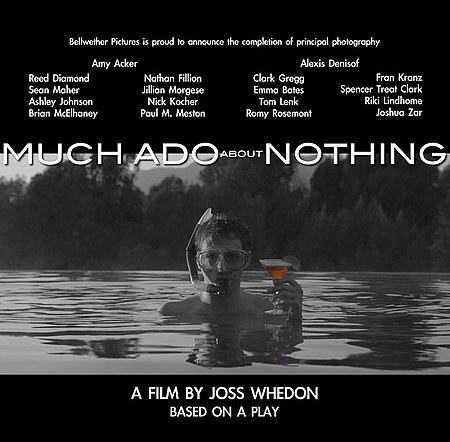
How do you make a movie version of a Shakespeare play accessible to a mainstream audience? It’s a tough nut to crack. Most directors either make them giant dazzling spectacles, ala Romeo and Juliet, or they just accept that they have a very narrow, nuanced audience, ala Kenneth Branagh. The latter is probably the better idea because, let’s face it, the big commercial audiences just aren’t going to spend their days off sitting through Shakespeare. Don’t scoff at that, it’s just simply a reality, and it doesn’t really mean people are stupid either. Shakespeare, language-wise, is a little dated now, and not for everyone. Joss Whedon takes a different tactic in his Much Ado About Nothing. He strips it down, sets it in a very modern location (his own house and backyard), moves it at a brisk pace, and makes sure there are plenty of sight gags to keep the laughs coming when the language becomes too tough to sift through. The result is a bit uneven at times, but very enjoyable. I can’t say this movie succeeds in being the giant crossover-Shakespeare-mainstream hit, but I can’t say that it really aims to be either.

The plot, for those of you who don’t know it, is both as simple and convoluted as every damn Shakespeare play. Two couples, who have opposite views of romance and who the audience instantly recognizes that these people should be together even when they maybe do not, go through a courtship and marriage. Devious plots that come off as incredibly far-fetched in a modern setting, threaten to break the spirit of romance, but ultimately love conquers and all that.

Whedon casts his usual gallery of rogues in this adaptation. The two most recognizable names to non-Whedonites will be Nathan Fillion and Clark Gregg and neither of them disappoint. Fillion gets the biggest laughs of the movie easily as Dogberry, and Gregg brings the same charm to Leonato as he did to Agent Coulson from The Avengers. The two characters who get the most screen time are Beatrice (Amy Acker) and Benedick (Alexis Denisof), who are the pair that shuns romance and love and marriage while not realizing they actually love each other. They are both good in their roles but the main appeal will be for Whedon fans to finally see Wesley and Fred get their happy ending they were denied on Angel.

Overall, this movie is fun but is probably limited in its scope due to the fact that it’s a bare-budget rendition of a Shakespeare play filmed in a dude’s house. It’s clearly something that some friends did for fun rather than any commercial, or even artistic, related reasoning. It’s the kind of thing many of my friends would probably love to do but lack the multi-million dollar mansion and private funding to accomplish. In fact, probably the biggest thing to take away from this film is that Joss Whedon has a really, really nice house.

So this is not the movie that makes Shakespeare accessible to everyone, and was probably really just released with the knowledge that Mr. Whedon has such a built-in audience that it’s absolutely guaranteed to make some money. If you’re a Shakespeare fan, or a Whedon fan, see it. If you’re neither of those things, you can probably skip it.

This is the End

this is the end

Directed by Evan Goldberg and Seth Rogen

Starring Seth Rogen, Jay Baruchel, James Franco, Craig Robinson, Jonah Hill, Danny McBride

Grade: B

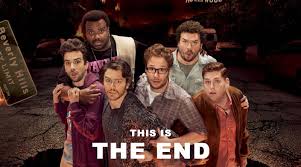
The Apatow-style comedy has a pretty simple formula. Get together a bunch of guys who either arrogant, hopelessly out of touch, or both, but make sure to make them loveable in their own flawed and shitty way, then put them in a situation entirely out of their comfort zone and let the actors improvise as much as possible. Plus, add a bunch of dick jokes. The lesser examples of this genre tend to forget two of those ingredients: the loveable part and the actors who are good at the improv bit. This is the End marks Seth Rogen’s directorial debut (actually co-directed with long time writing partner Evan Goldberg) and he knows the formula well. To mix things up, all the actors are playing themselves, well not really, they’re playing fictional versions of themselves, are in fact making fun of their own respective images.

The plot is this: Jay Baruchel is visiting Seth Rogen and they go to a party at James Franco’s house. Then the biblical apocalypse hits. Yes, sorry for the lack of spoiler alert, but if you’re really concerned with the plot twists of This is the End then I can’t help you. What follows is Jay, Seth, James, Craig Robinson, Jonah Hill, and Danny Mcbride all trying to survive. The variations of the characters are as follows: Jay is the hipster who resents all things Hollywood, Rogen is the small town good guy turned Hollywood elite, Franco is the clueless artist, Craig is the guy who projects an air of bad-assery but is really just as soft as the rest, Jonah is pretentious and fake, and Danny is the man-child only concerned with his own wants. McBride, possibly the best arrogant dick-joker this world currently has to offer, steals the show and once again lends credence to the idea that all movies would be better with Danny McBride involved. Yes, I mean all movies, I don’t mean that statement as hyperbole.

The movie gets more and more ridiculous as it goes and becomes something of a redemption tale, at least as far as these guys are willing to be redeemed. The term bromance has become far too overused, but that’s essentially what this film is, mostly being Jay and Seth, but Franco and Robinson get plenty of man-love moments too. Do we care about the characters? Not really, but we like them enough to enjoy their redemption, and enough to laugh at their shenanigans. This is not the best movie these guys have made together, though it’s certainly far from the worst.

I’m going to keep this review short because, well, what do you really say? It’s delightfully R-rated, McBride, Franco, and Robinson are all in top comedic form, and the movie never tries to be anything it’s not. Plus, seeing Michael Cera as the most obnoxious, coked out, entitled celebrity ever, is worth the price of admission alone. 40 Year Old Virgin it’s not, but it’s consistently funny and that’s all we’re really asking for.

World War Z

world war z movie

Directed by Marc Forster

Starring Brad Pitt, Mireille Enos, Danielle Kertesz

Grade: C+

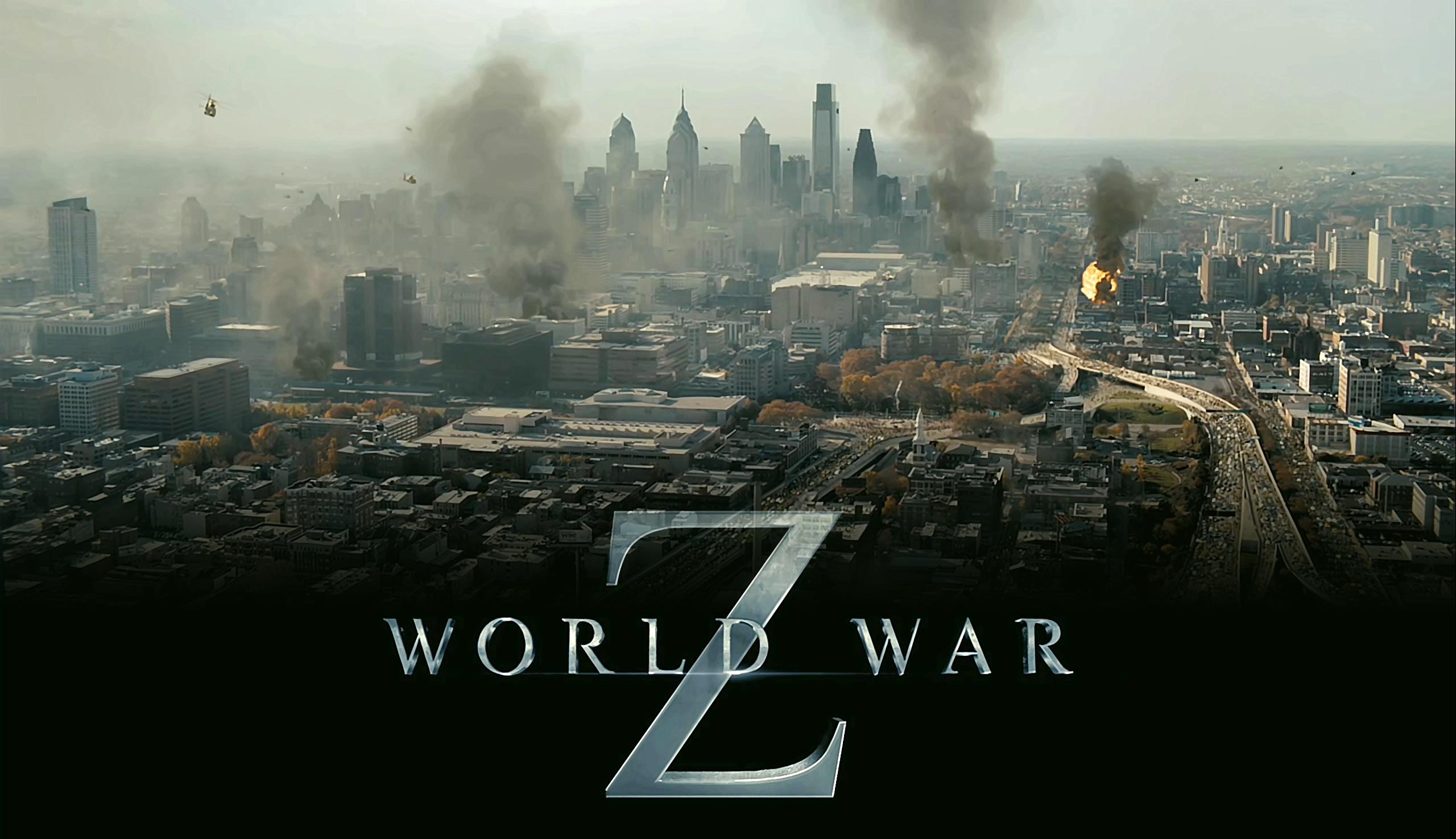
Zombies work best as satire. They can be frightening, disturbing, unsettling, and downright horrifying satire, but satire nonetheless. Zombies are brainless consumers, completely selfish and only concerned with their own carnal needs. Basically, they’re us, or at least a metaphor for us. When you reduce the gore, in a blatant marketing attempt to get it down to PG-13 and bring the teenage dollars in, and turn the zombies from an all consuming predator into a virus attempting to spread itself, the horror of zombies is nullified. What World War Z gives us is nothing more than a very suspenseful film that doesn’t add up to anything else.

The story follows Gerry (Brad Pitt), a former United Nations covert mission operative (and if you know what that means you automatically know more than the filmmakers) who is on a mission to find the source of the virus causing the rising of the dead. In his travels, which include South Korea and Israel, he is unable to find the source, or patient zero, because the world has erupted in far too much chaos to do that kind of detective work. Nobody has any answers for Gerry, who because he is Brad Pitt and is the star of the movie always has to be the smartest guy in every room, so he sets out to find a method to fight them. I won’t give away any spoilers here, but let’s just say that his solution isn’t entirely satisfying and poses a lot more logical questions than it gives dramatic solutions, but it does, of course, set up the sequel.

The first act of this movie is actually fairly good. The panic on the streets, the confusion, the terror, all feel very real and immediate. Due to his training, Gerry is calm and focused during the chaos, which allows us, the audience, to deduce what’s going on with him. He gets his family to safety, and then plot takes over. He’s the only man the government, or what’s left of them, trusts to go on this mission to find patient zero. This feels inauthentic, and just an excuse to give the film a reason to keep Brad Pitt as the focus. The second act, despite itself, stays fairly interesting as well. Taking us around the world, we at least get a glimpse, however disappointingly brief, of the global impact of the undead. Fans of the novel will recognize elements of the book during this period. It’s the third act where it really falls apart. The very title, World War Z, suggests a worldwide scope. This is an excellent idea, because all zombies shows and films feel very isolated with only the immediate need for survival on the characters’ minds. Unfortunately, the third act falls into the trap of only following a few people, in a very isolated area, and the massiveness of the devastation feels lessened. This turns the movie into a series of subpar zombie scares instead of an exploration of what it means to have a world war against the living dead.

The characters are pretty much paper thin, never given room to breathe. They only exist to set up the next plot point, the next run in with zombies. Pitt does a serviceable enough job, everybody in the cast does in fact, but there’s just nothing to do. The big emotional scene towards the end should feel a lot more impactful than it does, but it just never earned it. I think there’s a good movie here, but it requires a lot more ambition than is shown here. The film should feel bigger, the zombies should be more horrifying, there were actually a couple unintentional laughs during close-ups of the zombies, and there should be a sense of how silly the whole thing is. The novel had that, as Max Brooks understands satire, but the movie takes itself entirely too seriously. Where the book had fun with all the mythology surrounding zombies, the movie never takes a second to have any fun at all.

To be clear, the movie doesn’t’ fail because it didn’t follow the book very well, it failed because it completely missed the point of the book. The very spirit was altered in order to turn it into a summer blockbuster instead of a contemplative, and sadly funny, look at what it means to be human and just how important our civilization is to us. Also, zombies don’t move fast, they just don’t. Please stop making them run, Hollywood.

Rocky as a commentary on class in America

rocky-2

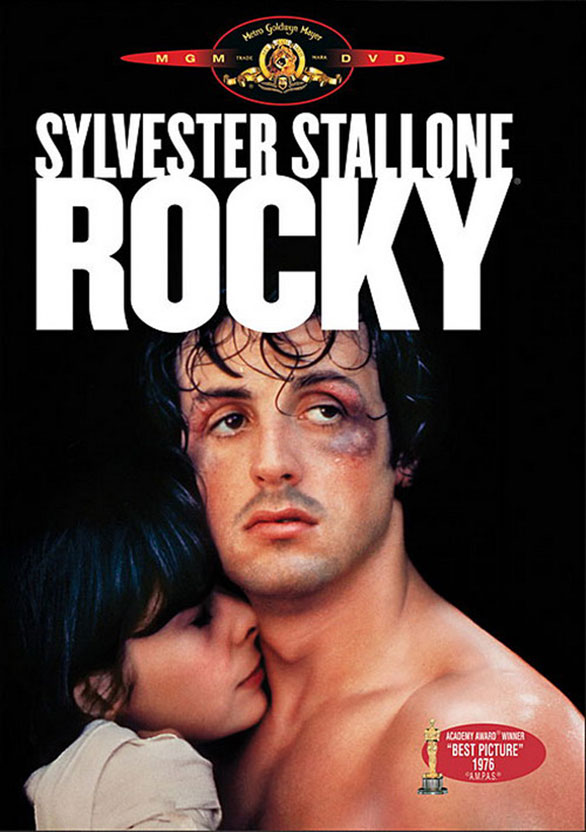
Rocky has entered the public vernacular to such a degree that a traditional review is both unnecessary and irrelevant. We all know the story: a nobody, never-was fighter gets a shot at the title and goes the distance against the world champion, Apollo Creed. What needs to be discussed is the perception of Rocky as a celebration of the American Dream. Generally, people always remember the film as the ultimate underdog story, an example of how anybody, with dedication and hard work, can make it in America. The problem is, that’s not what this movie is about. In fact, it’s quite the opposite. Rocky is a cynical attack on the American Dream, out to prove the whole concept as a sham.

Think about this for a second, Rocky was never going to win the fight. There was never a chance of it, and nobody, even and especially himself, ever believed he might. In a moment of vulnerability he tells Adrian that he can’t win, finally saying out loud what was already well established throughout the film. If this was truly an inspirational tale, Adrian would come back with something along the lines of “I believe in you” or “Miracles can happen.” But instead she agrees and just asks him what he’s going to do. His reply? To go the distance, because nobody ever has against Creed. Think about what that means. There is no American Dream, he can’t win, his life won’t change in any meaningful way. All he can do to fight the world is stay on his feet. He’ll still lose, is destined to do so, but he won’t let them knock him down. That’s some seriously cynical shit.

Rocky is very much about the haves and the have-nots. Balboa, being a poor nobody is paraded around like a clown by the rich class. Apollo and the promoters see this as a side show. They laugh at him, make fun of him, and never register him as any kind of threat. Hell, Apollo doesn’t even take the fight even remotely seriously until Rocky has the audacity to knock him down. The fact that this peasant thinks he’s really being given a shot at the title enrages Apollo and his team. Sure, this could be a set up to a classic underdog story, where the peasant rises up and beats the ruling class by sheer force of will, but that doesn’t happen here. In fact, the only reason Rocky goes the distance is because Apollo is kind of out of shape. Rocky had to work his ass off. He worked harder for this fight than he has for anything in his life, while Apollo barely trained, and he still is only able to fight him to a standstill. The lesson? It will take everything you’ve got to go toe to toe with the powerful elite, and you’ll still lose.

Some might respond with “but he made a shit ton of money off the fight, that’ll change his life.” Yes, he did achieve a good pay day. Rocky makes $120,000 off the fight. The problem is, that money won’t last forever. When it’s gone he’ll still be an under-educated, under-skilled, washed-up fighter. And how much do you think Creed made off the fight? Millions, easily.

So why then, does this movie work? Why is it remembered as such an inspiration film? Two reasons. The first is that the sequels completely bought into the American Dream and went into full patriotic mode, thus white washing the original movie. The second reason is that Rocky is a good and intelligent film. It has affection for all its characters, even those that should be villains. Loan sharks and drunks are shown to be full human beings who have depth. We grow to care about Pauly, and love him, even though he is horrible to his sister Adrian. Even Apollo, set up as the movie’s villain more or less, is not painted as evil. He’s exploiting a situation, yes, but he never seems like a bad guy, just kind of obnoxious. Finally, there’s Rocky. A lesser film would either make fun of him or turn him into some sort of martyr. Rocky is neither, he’s just a guy who’s in way over his head and doesn’t know how to back down from a fight. He continually tries, and mostly fails, to do the right and moral thing. He’s nice to people because he’s genuinely a nice man. He respects Apollo, his opponent, even though even Rocky isn’t stupid enough to not realize he’s being exploited. Balboa understands what’s happening to him and refuses to be a clown for the masses. He accepts his loss as a fundamental necessity of his role in life, but he won’t give them the satisfaction of humiliating him. He’ll stay on his feet, because that’s the only power he has in this life. Oh, and he gets the girl.