The World’s End

The-Worlds-End-poster

Directed by Edgar Wright

Starring Simon Pegg, Nick Frost

Grade: A

Shaun of the Dead was a surprisingly tender movie. A genre parody that had real affection for its characters was just ambitious enough to be something special. Likewise, Hot Fuzz did the same thing for the buddy cop movie. Now again, director Edgar Wright, and actors/writers Simon Pegg and Nick Frost are back with The World’s End, and they’re just as interested in creating characters that the audience will grow to care about and go to battle with as creating a hilarious alien apocalypse.

The plot is this: Five friends reunite, all except one unwillingly, to have another crack at a pub crawl they tried, and failed, when they were teenagers. Now in their late thirties, they all have baggage of pretty normal fare, wives and kids and jobs they hate and the like. Gary (Pegg), however, seemingly has larger problems, alcoholism being one of the primary issues. He assembles his friends and they all go with him mostly out of some misguided loyalty, though Andy (Frost) has deeper issues with Gary than the rest. They attempt this pub crawl, half-heartedly except for Gary, until things start to get weird. You’ll find no spoilers here, but you probably have an idea where it’s going if you’ve seen the trailers or ever seen one of these guys’ movies before. Vulgar, Apatow-style humor is combined with old-school Sci-fi movies with once again fantastic results.

Pegg and Frost switch their roles, so to speak, in this film. Frost plays the straight man while Pegg is the crazy one. Or if you like, Frost is Abbott and Pegg is Costello. Both actors are able to find the right humor and vulnerability in their roles to carry the movie. Pegg has made a nice career out of playing the reliable guy, the cautious and nice character that always seems to find himself in over his head, but here he is dangerous and unstable and brings an edge to the character that plays nicely. In Andy, Frost brings a quiet anger that’s bubbling just beneath the surface that is ready to erupt any time Gary challenges his patience. The supporting roles are all played with near perfect touches and a small role by Pierce Brosnan is pretty damn fun. And for those of you keeping score, yes, Cornetto does make it’s cameo.

The World’s End is funny and endearing. This is their third movie in the Cornetto trilogy and Wright, Pegg, and Frost understand these types of parodies. Too often nowadays, the spoof movies just go for heartless laughs, dick jokes and celebrity cameos while attempting to skewer the source material. These guys, though, understand what Mel Brooks always understood: that parody is a form of love. They love the movies they’re making fun of and remember that there has to be a story in there as well. Oh there’s plenty of dick jokes in there too, but at least we like the people making them. That’s all we ask as an audience, to like the people telling dick jokes.

Beasts of the Southern Wild

beasts of the southern wild

Directed by Benh Zeitlin

Starring Quvenzhane Wallis, Dwight Henry

Grade: A

How does a single father, who knows he’s dying soon, prepare his young daughter to live in a harsh world all alone? Not harsh in the abstract, every day sense that we all battle with, but harsh in the sense that survival depends on strength and fortitude. At the heart of Beasts of the Southern Wild lies this question. Wink (Dwight Henry) tries everything in his power to prepare HushPuppy (Quvenzhane Wallis) for a hard life on her own. They live in a tiny island bayou community known as The Bathtub, where the local icecaps are melting and flooding the village. He teaches her self-reliance on a daily basis and won’t allow her to ever wallow in any sort of self-pity. Somewhat ironically, the only thing he attempts to shield her from is having to watch her father die. If this is a simple father-daughter story, it would be one thing, but it’s also something else. I had trouble, initially, putting my finger on just what that something else is, until I realized it’s not that complicated. The setting, the bayou island, is both familiar and exotic, a reality we can latch onto and identify with the struggles and also a landscape totally foreign. This is what movies are capable of, they can transport us to worlds like this, into the lives of those we never think about. The cinematography is so beautiful and terrifying. This is what film has over the novel, the use of the visual medium to drive it’s story, rather than hiding behind it.

The plot is simple: Wink and HushPuppy live in The Bathtub. There is a small, but lively population that coexists with them, and the island community feels very much like a family. When a major storm hits, and wipes out most of the town, including killing several people, it gets things moving. For one thing, the government takes notice and they come in and take the survivors to a refugee camp where Wink is given medical attention. Everybody escapes, choosing to live and die on their own terms rather than be merely another gear in the government machine.

Quevenzhane Wallis, as HushPuppy, got a lot of attention for this role, becoming the youngest person ever nominated for the Best Actress Oscar. She deserves every ounce of praise she’s gotten, and more. She brings a natural strength that is necessary to a role that is at risk of drowning in all the pain. More importantly, she plays a kid. What I mean is that she’s constantly confused, in the dark, and scared. She’s by no means clueless, she understands her dad is sick even when he won’t tell her, but her confusion helps us, the viewer, to enter this world. Through her, The Bathtub doesn’t feel like a strange place, but rather a home like and unlike any other. Dwight Henry as Wink, plays her father as an incredibly hard man, and hard drinker. He’s a guy that has no patience for weakness, especially in his daughter. At one point he refuses to let her use a utensil to crack into a crab, she must instead use her hands and her mouth. Such is the nature of their life. Wink never loses his humanity though. Through all his tantrums, rages, and benders, there is never a second where his love for HushPuppy is doubted. He’s a widower, and a man that has known pain and loss all his life.

The setting and the feel of this movie, as much as the story and performances, are what separates it from anything else. It feels authentic and fantastic at the same time. That the movie ends with HushPuppy finding the strength necessary for her harsh life probably goes without saying, but it feels earned and it’s refreshing to have a big emotional ending without feeling manipulated. I say this with, hopefully, as little pretention as possible: Beasts of the Southern Wild is simply a gorgeous film.

The Way Way Back

way way back

Directed by Nat Faxon and Jim Rash
Starring Liam James, Sam Rockwell, Toni Collette, Steve Carell, AnnaSophia Robb

Grade: B+

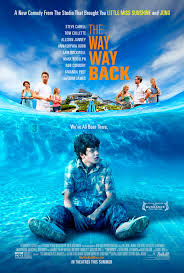
Story-telling conventions exist for a reason: they work. It’s pretty simple. We don’t gripe about clichés because they are inherently terrible, our ire comes from the fact that we’ve seen them too many times, presented in the same way, and our brain no longer is able to feel empathy or excitement. Modern movies, mainly of the independent nature, tend to spend a good deal of their efforts turning those conventions on their head, flipping them in some new direction so we can applaud them for their originality and we the viewers can pat ourselves on the back because we’re free thinkers and not slave to the Hollywood machine. The Way Way Back takes a different approach. Instead of twisting things around, the film instead chooses to remind us why those familiar tropes worked in the first place. Why we eternally seem to identify with the socially awkward, displaced teenager, why we want to befriend the older, eccentric loser who just may be the wisest man in the room, and why parental authority is just the worst.

The plot follows shy kid Duncan (Liam James) as he goes on summer vacation with his mother (Toni Collette) to her dickish boyfriend’s beach house. Duncan would rather be with his dad, but for reasons we immediately understand better than he does that is not going to happen. Mom’s boyfriend, Trent (Steve Carell) is an alpha male type and seems to be constantly establishing his dominance over Duncan, who in refusing to play the ridiculous mind game loses by default. Also along for the ride is Trent’s bitchy daughter (Zoe Levin) who is self-absorbed in that painful way that kids with self-absorbed parents are. The adults party, “it’s like spring break for adults” says Susanna (AnnaSophia Robb), the hot girl next door who inexplicably seems to be drawn to Duncan, and the miserable young man feels completely isolated from his family. In an attempt to escape, Duncan visits a local water park where he befriends the manager Owen (Sam Rockwell) who hires him. Owen is the kind of person that can only exist in the movies. He’s aimless, but smarter than he has any right to be and seems to have some sort of natural understanding of human behavior. He’s clearly got his own problems but he never projects them onto anybody else, instead only exists to help our young protagonist through his journey. As you would guess, Duncan learns to stand up for himself and gains the all important self-esteem because of his time at a job any sane person would deem shitty and soul-suckingly awful.

James brings a pure awkwardness to this role. The physicality alone is good acting, as Duncan constantly hunches over in that way that tall kids with no self-esteem tend to do. Being tall takes a certain level of confidence and when you don’t have it, you hide your size in an effort to not be noticed (I know this for all too personal reasons). His attempts at conversation with anybody at all are painful as he has no mastery whatsoever of social cues. The stand out performance is Sam Rockwell’s Owen though. He takes a character we’ve all seen a hundred times but delivers it so naturally that it feels fresh somehow. We buy his character probably because he’s the guy we’d really like to be hanging out with ourselves, and understand Duncan’s draw to him. The supporting cast is strong and littered with familiar faces. Rob Corduroy, Amanda Peet, a hilarious Allison Janney and the always dependable Maya Rudolph all lend this movie credibility where it otherwise would probably lack.

Steve Carell as Trent, though, is a failing of this movie. I get that he’s a dick, but does he have to just be a complete piece of shit? There’s not really a lot of depth to him other than that he’s a car salesman and he’s exactly what you’d expect a car salesman who’s dating your mother to be like. Carell doesn’t do a bad job with it exactly, it’s just kind of a frustrating character. The other weak point is Susanna’s interest in Duncan. The friendship I buy, as they’re both struggling with new family situations that more or less suck and they feel isolated, but the romance feels forced and unnecessary. Duncan’s victory should be that he made a friend and was able to communicate with a hot girl, but there’s no way she’d actually be attracted to him. He’ll get the girl later in life, but for now, let’s just stick with being able to have a conversation about something other than the weather.

The Way Way Back is corny and sappy and it knows it. I suppose it’s probably impossible to not watch this movie with some degree of cynicism nowadays as we’re all terribly jaded, but if you can get past that curmudgeony part of yourself, watch this movie and enjoy it. It hits all the right, if incredibly familiar, notes.

Drive

drive

Grade: A

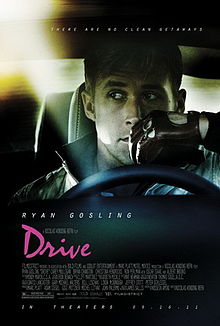
Violence is used in many different ways in film. Sometimes it’s a metaphor, sometimes it’s for shock-value, hell, sometimes it’s even used for laughs. In Drive, director Nicolas Winding Refn uses violence to suggest it’s an ingrained, and inescapable, part of human nature. Nobody in the movie seems particularly fond of hurting and killing, yet all ready to jump into it without a moment’s hesitation. The lead, aptly named Driver, played by Ryan Gosling, is a quiet, slow-moving, and deliberate man. That he works as a getaway driver for heists and a stunt driver for movies seems somewhat contradictory to his nature, until we realize it’s a cover for the rage monster that is constantly held at bay. When the situation calls for it, he explodes into a fury of violence, destroying anyone in his way. To say it’s a bad temper is to cheapen the frightening menace that is his true self.

The plot’s not new: a man with a questionable and checkered background meets a girl Irene (Carey Mulligan), and her son, who melt his icy heart and teach him about the value of human connection and all that. Matters get complicated when we learn Irene’s husband is getting out of jail and is coming home. When her husband needs his help to get out of debt from dangerous men, Driver agrees out of some stoic sense of honor and obligation. Things go wrong, and Driver channels his rage into revenge and protection mode and, needless to say, he kills fucking everyone. I trust that’s not a spoiler. If you’ve seen a noir film, you know that everybody dies. That’s not what important here. What is important is that all the players in this film know that they’re in a situation where everybody needs to die, there’s no other way out. They live in a bleak and hopeless world, and violence and death is really the only thing they’re capable of controlling.

The performances are what stand out in this movie. Gosling has made the stoic, silent, and dangerous character sort of his staple at this point. He doesn’t bring anything new to this role, but he does it well. Mulligan doesn’t do anything particularly special either, she just plays the scared and sad, two-note female that’s pretty much expected in this kind of movie. Bryan Cranston and Ron Perlman both have a lot of fun with their characters, a hard luck car guru and a criminal boss who loves being a criminal boss respectively. The most enjoyable far and away in this movie, though, is Albert Brooks. He plays Perlman’s crime partner, and a man who knows the requirements of his business but does not enjoy the things he has to do. Other than Driver, he’s the most dangerous character in the film, and it’s because, like Driver, he gets no joy from the violence. It’s simply something that’s ingrained inside him, a part of his world as necessary as anything else. Brooks is crass, yet tragic, and utterly dominates any room he finds himself in.

If there’s something in this film that doesn’t work very well, it’s the idea that any girl would be charmed by Ryan Gosling’s absence of personality. I get that he’s very good looking, but at some point responding with one word answers and unemotional smiles is simply not going to make you very many friends. It’s a small complaint, but one that enough movies make where I feel it’s acceptable to bring it up.

Drive uses stylized, hyper-violence to accentuate the absence of morality in its world. The fleeting glimpses of goodness we get are held onto so tightly that it becomes necessary to protect it by the most extreme measures. Driver is willing to destroy the world, and himself, if it means Irene and her son can live a relatively peaceful life. We never learn the origin of his violent ways, and the film is better for it. The only thing we need to know is that violence begets violence, until the world simply eats itself, and hopefully those left standing will know some small level of hope.

The Wolverine

thewolverine

Grade: B+

Superhero movies are at an interesting crossroad. The sheer novelty of seeing our favorite heroes on screen, in live-action, has worn off. The days where the joy and exhilaration of just seeing them fly through the sky, swing above buildings, or materialize from the shadows are over with. Film makers seem conflicted about how to handle this problem. For the most part, their answer is more, more, more. There must always be a global catastrophe looming, and the fate of every human being must be in peril. This is a pretty easy way to up the stakes without really trying too hard. Human annihilation not enough for you? Then they’ll give you more superheroes, more villains. Just keep stacking more of them on a single screen and the fan boys will be appeased. The fan boys must be appeased. The other, smarter, solution is to scale things down and just tell a good story in what is already a rich and entertaining universe. Luckily, The Wolverine does just this, cutting the mutant total down and not threatening genocide (An interesting note on that is the movie starts with the nuclear bombing of Nagasaki, which is the single greatest threat of genocide in the real world, but little more than a flash in the pan in a world with god-like beings constantly at war with one another). What we get instead is a more personal story about the indestructible clawed man with the bad temper, a simple save the girl and revenge kind of tale with fun twists and turns, which is exactly what we want from Wolverine.

Hugh Jackman resumes his now iconic role, though the character is a little different from the last time we saw him. This movie takes place sometime after the events of X-Men 3, and Logan, no longer acknowledging The Wolverine side of him, has retreated into a self-imposed exile. He dreams of Jean Grey, the girl he loved and killed to stop her from destroying the world, every night and is riddled with too much guilt to face his past. An invitation to say goodbye to an old friend on his death bed brings him to Japan where, naturally, nothing is as it seems. He encounters a bitter power struggle over Asia’s largest corporation, beautiful women, and ninja assassins. Through a suppression of his powers, Logan must face his own mortality, something he’s never had to do before. Setting up the scenario where Wolverine could actually die, even if we never believe it will actually happen, is a fun and welcome change from previous installments where he is absolutely indestructible and his only weakness is his super grumpiness. Needless to say, the conspiracy is unveiled and Logan must once again find the inner Wolverine in him to save the day and rescue the girl.

Jackman slips into the role easily, and even though this character is far removed from the comic book Wolverine, he has made the movie Wolverine so much his own that it’s hard to complain about it. I don’t think we needed the forced love story between him and Mariko (Tao Okamoto), mostly because Jackman is finally starting to age and the romance comes off a tad creepy, though it doesn’t make a ton of sense from a script standpoint either. For the most part, the rest of the cast are solid in their roles as well. Okamoto brings a stoic vulnerability, while Rila Fukushima gets the most fun role as the bad-ass sidekick Yukio. Svetlana Khodchenkova as Viper, though, was not very good. Her villain belonged in another movie, not this one. She was hamming it up a bit too much when everybody else in the movie is more or less playing it straight. This made it a bit distracting whenever she was on screen.

It’s hard to say that this is a small scale movie when the fate of Asia’s largest corporation is at stake, and there is a post credits scene teasing Days of the Future Past, which appears to be insanely grandiose in its scope, but The Wolverine feels very self-contained and not interested in the fate of mutants as a whole. This is quite refreshing and whereas I was skeptical of James Mangold directing (I absolutely hated Walk the Line), he shows skill at keeping the story in focus and creating exciting, and actually believable in their own way, action scenes. Here’s hoping that, going forward, superhero movies understand that the story is more important than the explosions. There were only three mutants in this movie, and I never felt wanting for more.