Planet of the Apes destroys the American Cynic

planet of the apes

What does it mean to be a cynic when there’s no world left to not believe in? This is the question at the core of 1968’s Planet of the Apes. This is by no means the only theme as racism, classism, ageism, and probably various other isms as well are abundant. Not to mention the timeless religion vs science argument combined with Cold War fear of nuclear annihilation. These are all important, but they’ve also been tackled elsewhere over the years as I’m four and a half decades late to this subject This film, in addition to all these other things, represents the end of both American idealism and the American cynic, and both of these are accomplished solely through the protagonist Taylor.

We all know the scene, right? A long shot of a single horse carrying two passengers trots along the coastline with waves crashing down and water running up towards its legs. The camera shifts slightly and suddenly obstructing our view is something eerily familiar, yet somehow we can’t quite place it, but it still fills us with a sense of dread. Finally, our hero Taylor (Charlton Heston) drops from the horse and stands before this rusted, seaweed covered object still kept in obscurity. First he stands in shock. “Oh my god, I’m back. I’m home.” Then he collapses and, in an overacting masterpiece that only Charlton Heston could pull off, shouts at his deceased ancestors: “You Maniacs! You blew it up! Damn you, God Damn you all to Hell!” The camera pans out and we see what he sees. It’s the Statue of Liberty. Holy shit. And scene.

Great twist ending, right? Not really, at least not if the twist is simply meant to shock and surprise. It’s not much of a gotcha, because I think, if we’re honest with ourselves, we all kind of saw that one coming. Maybe not the Statue of Liberty specifically but we at least suspected we were indeed on Earth all along. The real twist is in the fact that Taylor, who has already accepted that everyone he’s ever known and loved is gone, that his species, in all likelihood, time has past, is utterly destroyed by the reality of it all.

Let’s start with Taylor and who he is. He is disgusted with Earth and what humanity has become. His last words to the world he thinks he’s leaving behind are “Does man, that marvel of the universe, that glorious paradox who sent me to the stars, still make war against his brother? Keep his neighbor’s children starving?” This is a man who laughs maniacally when his companion plants an American flag in the soil of this new planet they’ve landed on. He mocks any idealism and anyone who dares to dream about Earth. He waxes philosophically with lines like “I’m a seeker too. But my dreams aren’t like yours. I can’t help thinking that somewhere in the universe there has to be something better than man. Has to be.” This is a man who has gleefully left his home world and cares nothing for those he left behind. He doesn’t identify himself as an American and only begrudgingly acknowledges his Earthling origins.

A shift, though, starts to happen in Taylor. When he’s forced to fight for his survival against the apes, he begins to sugarcoat humanity. He tells Dr Zaius, upon finding archaeological evidence of humans that predate apes, “He was a weak, fragile animal, but he was here before you were. And he was better than you are.” So why is he suddenly drinking the human Kool-aid? Because he’s now faced with the harsh reality that he’s a minority. He’s hated, and feared. His very existence is a threat to the establishment, to the culture. People like that can’t afford to be cynics. But look at his face when Dr Zaius tells him “You are right, I have always known about man. From the evidence, I believe his wisdom must walk hand and hand with his idiocy. His emotions must rule his brain. He must be a warlike creature who gives battle to everything around him, even himself.” He covers it up quickly, but there’s a flash of recognition, that Dr. Zaius is right. All the reasons Taylor left Earth come back to him, but he’s now too stubborn to admit it. Nothing in the Orangutan’s words are particularly new, we heard Taylor say similar things the entire first third of the film. Hell, Zaius practically tells him he’s on Earth but Taylor refuses to acknowledge it.

So then we get to the big scene. Taylor on his knees, cursing mankind, destroyed. The commentary on the dangers of nuclear warfare is not subtle, but the notion of national identity is. Taylor’s rejection of America is his identity, because he feels he’s better than his countrymen, that he’s evolved beyond them. But when faced with their demise, when it becomes irrefutable that we’ve destroyed ourselves, he hates them and weeps for them. He lost his world, his identity, and his humanity all in one instant.

Couldn’t find the video to embed, but for those of you would like to watch the ending, whether you have never seen it (shame on you) or just feel like watching it again, here it is.
https://www.facebook.com/video/video.php?v=1064577264634

Escape Plan

escape plan

Directed by Mikael Hafstrom
Starring Sylvester Stallone, Arnold Schwarzenegger, Jim Caviezel

Grade: B

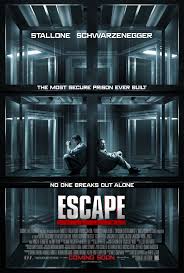
Close your eyes for a moment and imagine what a movie starring Sylvester Stallone and Arnold Schwarzenegger, both in their 60’s and both enjoying a modest resurgence, would be like. The movie you just thought of is Escape Plan, and I don’t really mean that as an insult either. The film, directed by Mikael Hafstrom, knows exactly what its audience wants and delivers it. The stars are recognized as old, or at least past their prime, though that by no means diminishes their badassery, and scales back most of the big time action set pieces, until the end of course. There is also a glorious lack of the tired “we’re so old” jokes that have been saturating the recent movies of the two actors in their twilight years. But let’s be honest: you’re going to see this movie because you’ve been dreaming of a Stallone/Schwarzenegger team up all your life and it’s finally here, and no, The Expendables movies don’t really count. This is not the movie they would have made together in the 80’s, it’s not a John Rambo and John Matrix team-up, but it’s still exactly what it should be at this stage in their careers. It’s an action movie, light on character, and heavy on dudes getting punched and cheesy one-liners.

The story is that Ray Breslin (Stallone) is the best there is at breaking out of prisons and runs a business with his partner Lester (Vincent D’Onofrio), pointing out the flaws in jails. Ray is hired try to break out of the world’s most secret and secure prison, run by the sadistic warden Hobbes (Jim Caviezel). Naturally, he’s betrayed and the incarceration is real. While on the inside, he meets Emil Rottmayer (Schwarzenegger), a fellow inmate who is imprisoned for the knowledge he has about a famous criminal. They become friends, of sorts, and together plot to break out of The Tomb, as the prison is called. There are the necessary twists in the plot designed to keep the audience guessing, but the only thing that really matters *spoiler alert* is that Schwarzenegger at one point grabs a fucking minigun off a helicopter and mows a shit ton of bad guys down.

Stallone has slipped into the haunted old bad ass role a lot over the last decade and brings it out again here. He brings his dead-eyed “I’ll kill you but I kind of wish I didn’t have to” glare and the plot wisely leaves out any romance. Well, mostly, there’s something alluded to but it’s not important. Stallone’s biggest problem has always been that he’s just not particularly funny, and these kinds of movies require plenty of snappy one-liners to remind us that we’re having fun and not just watching people graphically beat the living hell out of each other. Schwarzenegger, on the other hand, despite whatever shortcomings he may have as an actor, actually has a pretty well-tuned sense of comedic timing. The man delivers the one-liner like no one in movie history, arguably. Escape Plan lets Arnold get most of the laughs, and even gives him a monologue in his native Austrian. The two stars are always at the center of this movie and the secondary roles are just that. Caviezel gets a decent amount of screen time and makes some odd acting choices. His warden never quite comes off as a legitimate threat to Stallone, who could obviously wipe the floor with him in any physical contest and also seems infinitely smarter than the villain. A good bad guy is essential to an action film and Hobbes comes up a bit short.

Escape Plan is what it is, though I suppose some social commentary about the danger of privatized prisons could be theoretically read into the script, and the movie certainly has no love for the rich either, but both of those things are a pretty big reach. This movie doesn’t offer up complex problems because it’s mission is to take us back to our more innocent days when we could call on the likes of Stallone and Schwarzenegger to take care of our evils for us in uncomplicated ways and without any moral ambiguity. Plus, did I mention Schwarzenegger fires a fucking minigun?

Heckler

heckler1

Directed by Michael Addis

Grade: C+

One of the most universally despised person in all of the creative world is the heckler. Contrary to some odd misguided belief, comedians do not like hecklers even though their take downs of the offenders often get big laughs. People who yell out asinine things at shows completely ruin them and they’re best served to just keep their mouths shut. The documentary Heckler is Jamie Kennedy’s attempt at understanding the mind, the effects, and even the origin of these dumbasses. At least it starts off that way, a little less than halfway in the movie turns into a bunch of comedians and directors and actors whining about unfair criticism of their work. The performers and artists come off as petulant children, well not all of them but enough that it’s a problem, who can’t understand why anybody should ever challenge what they’re trying to do. After all, they’re just trying to entertain people, right? What kind of sick, soulless human being could ever dare criticize someone for attempting something so pure and good? The movie falls apart in this section because it equates critics to hecklers.

The film centers around Jamie Kennedy, who just released Son of the Mask to critical and commercial failure, as he explores an increasingly critical world. He interviews artists, critics, and even “professional” hecklers. The latter of this group come off just as pathetic as you’d think, as though they are owed something from comedians and feel obligated to inform them, loudly, when they’re not being entertained sufficiently. The first third, or the good third, of this movie centers around comedians of varying ages, styles, and success sharing stories of being heckled. Comedians are naturally great storytellers and them ripping apart hecklers and the nature of people that heckle is highly entertaining and engaging. To hear David Cross, Lewis Black, Louis Anderson, Dave Attell and many others offer up their experiences on stage is something I could sit and listen to all day, or at least for a two hour running time.

The problem is that there is a complete misunderstanding of the purpose of criticism in this movie. Kennedy, and many of the other artists, seem to think that critics are a wholly unhappy people who only live to rip apart others creations (there is even a quote from George Lucas who equates critics to “destroyers”) and make themselves sound smarter than everybody else. Are there some critics who do this? Of course, but that’s not really relevant to what the job is. Criticism is part of art, it always has been, and always will be. It’s not so simple to just reduce it to creators and destroyers, or the clichéd those who can do, those who can’t teach. This is wrong and it reeks of sour grapes. Yes, I’ll agree that criticism is wrong when it slams the actual people in a movie/performance rather than the piece itself. Good criticism should always try to separate the person from the art. However, a critics job is not to just simply echo what the popular culture seems to believe. Just because Transformers made a lot of money should the critics of the world just simply say, “Yeah it was great.” No, that would be disingenuous and stupid and a complete disservice to film. Like it or not, film and comedy and literature are an integral part of the human experience and people are going to respond strongly to it. Critics, the good ones, don’t need you to agree with them, they only ask you to think about what they’ve said and respond to it. There is a section where they make fun of Roger Ebert a bit because the one time he tried to write a movie it kind of sucked. They offer this up as proof that they’re better than him and all critics should just shut their goddamn mouths. Unfortunately, what they miss is that Ebert’s skill wasn’t in making movies, it was in understanding movies and responding to them in ways his readers enjoyed, and increased their enjoyment and understanding of films. That is the true value of the critic.

In one disturbing section of Heckler, Lewis Black, who I have the utmost respect for, offers up the tired analogy of the blogger sitting at home in his parents’ basement, writing whatever drivel they want to without consequence. Black is better than this and unfortunately took an easy joke there. People who make fun of bloggers forget that, despite the indisputable fact that many, many bloggers are truly terrible and offer no insight or opinion and can sometimes be morally and intellectually bankrupt, a lot of the best journalism, in news, sports and arts, come from the blogosphere. Bloggers are not owned by corporations or special interest groups, and what they lack in resources they make up for in fresh opinions and honest agendas.

Another problematic rant is when Jon Lovitz explains that despite his knowledge of baseball he would make a terrible manager. This analogy attempt to explain that just because someone can write about movies doesn’t mean they can make movies. That analogy falls apart because it assumes that the only job in Major League Baseball is the manager. It takes a huge staff to run a team successfully. Also, there are these people called journalists who write about the sport every day, and without them public interest would in all likelihood fade a great deal.

I don’t want this to be all negative, and obviously I have a bit of a personal stake in this as a blogging critic myself, so I should point out that many of the comics featured in this documentary, namely David Cross and Patton Oswalt, go out of their way to clarify that they appreciate a well thought out criticism of their work, as long as it’s just not slanderous bullshit. That’s completely fair and I have no problem with that. Most artists do have that understanding and can get along with critics. The only real problem I have is that this movie is called Heckler and the majority of the film seems to center on critics which is naturally going to lead to the viewer equating them as one and the same.

Captain Phillips

captain phillips

Directed by Paul Greengrass
Starring Tom Hanks and Barkhad Abdi

Grade: A

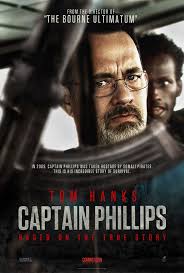
There are two men and each have a plan. One of them needs to board a ship, take the crew hostage and demand ransom money, while the other needs to stop that from happening. Both succeed to a degree and both fail spectacularly. Captain Phillips is about the building desperation of best laid plans gone awry. Many of you will remember this story from the news a few years ago and bring expectations because of it, especially since we kind of already know how it ends, but director Paul Greengrass keeps the tension level up so high, while giving us plenty of moments of real humanity, to get around whatever preconceived expectations we bring with us.

Philips is played by Tom Hanks, who is at his best, at least in dramatic roles, when he’s playing an everyman. This is his best acting work in years. He is not an action hero, and don’t expect him to be here, but he is a seasoned ship captain who understands the very real risk of piracy, even when his men don’t. Phillips is a bit of a hard-ass boss, with no patience for laziness or extending breaks longer than the allotted time. He plays by the book at all costs, and when pirates led by Muse (Barkhad Abdi) raid his ship, the book works. He defeats the pirates on the first run, and very nearly defeats them on the second. But Phillips’ plan can’t work forever. The moment is perfectly executed when Muse leaps from his small boat and latches onto the ladder connecting to the ship, the soundtrack cuts and we see, for the first time, Phillips understands the trouble they’re in.
Captain Phillips wisely stays mostly apolitical. It’s not interested in good guys and bad guys, and Abdi shines in his role as a young man accepting of his life and his obligations, but carrying a certain sadness. He’s smarter than all of his associates, meaning he understands the folly of their actions, not just from a moral standpoint, but a practical one. He knows that even if he brings back millions of dollars, he and his friends will only see the smallest percentage of that. “I have bosses,” he tells Phillips, and that one line tells us everything we need to know. Muse’s plan goes wrong and he shows a knack for improvising his way through situations, but the world is far bigger and more powerful than he is, and he knows it, but his circumstances will not let him back down.

This film, despite all action scenes and tension building, is really just about these two men. They both understand that things are going to go poorly for Muse and his friends, the only wild card is what happens to Phillips in the process. Hanks brings a world weariness and a certain naiveté to the title role. He’s a man who understands the threat of piracy, and instinctively knows what to do in the grim situations, but he is also completely unprepared to deal with the fact that, even in the face of hopeless odds, these pirates won’t back down. The consequences of these young men simply giving up and running back home with their tail between their legs is far more dire than whatever the American military can give them. In the last scene in the movie, a beautifully acted one, Hanks is reduced to bumbling tears and the state of a child as his first world upbringing has failed to prepare him for the violence and trauma he just experienced.

There is no real subtext here, just story. Greengrass can’t resist making a couple statements, like the fact that giant western commercial fishing boats catch all the fish from the ocean, taking away fisherman’s livelihoods, and then being surprised when they turn to piracy. But mostly, it’s just these two men, decent people trying to ride the wave as best they can, and their plans and their desperation in the face of failure.

Gravity

gravity

Directed by Alfonso Cuaron
Starring Sandra Bullock and George Clooney

Grade: A

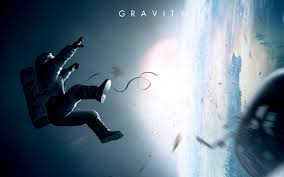
Gravity is about life and death, birth and rebirth, and isolation and community. It’s also about the visceral fear of survival in an environment that doesn’t permit life. This film, directed by Alfonso Cuaron, succeeds in both stated objectives, entertainment and subtext are both given equal attention. I imagine the physics can be picked apart, though the science felt very real and plausible to me, but if you’re focusing on the believability of a movie set in space then I would suggest you’re doing yourself a disservice. Gravity is not interested in being the most accurate scientific movie of all time, though it takes care to make it passable, it’s goal is to thrill the audience and remind that even we’re literally cut off from the world and surrounded by millions of miles of emptiness, we’re never truly alone. The lack of cynicism in this movie, without passing into sentimentality, is its greatest achievement.

The plot is simple. There is an accident on a satellite and Doctor Ryan Stone (Sandra Bullock), on her first trip to the space, is cast off into space along with seasoned veteran Matt Kowalski (George Clooney) and together they must survive and make it back to Earth. In some ways, I suppose, it’s Open Water set in space, though there are no space sharks (new movie idea: Space Sharks!). They’re forced to use their limited resources and fall back on every small piece of training they received in order to get home. Obviously, there are many setbacks and hardships along the way. A lesser movie would be mostly concerned with awesome looking set pieces and visual graphics, while offering a foregone conclusion of their safe return, but Gravity actually cares about whether they survive or not and each set piece is constructed with that in mind.

George Clooney has recently made a string of movies, namely The American and Up in the Air, where the lesson the protagonist learns is that no man is an island, that people need people, or as Ryan Bingham says in the latter movie: “Life is better with company.” Those movies, though, have a cynical edge in that the lesson is learned but too late to do anything about it. Gravity has the same lesson but doesn’t seem to suggest it’s ever too late to learn such a thing (whether they survive or not is not relevant to this lesson and you’ll get no spoilers from me as to the outcome of that). The final shot of this movie is gorgeous and life-affirming and all that shit I usually hate but it’s done so well here that I’m completely sold.

Sandra Bullock brings fear and a quiet desperation to this role. As Doctor Ryan Stone, a name that is representative of both man and woman, and yes she represents all of us, she is a grieving mother, who lost her daughter to an unfortunate and simple accident. She has severed all ties to the world and, both literally and figuratively, and doesn’t really seem to care whether she lives or dies. This is until, of course, she is actually faced with death and must confront all that it means to live and to die. Maybe it’s a simple plot device, force a miserable person to fight for their life and thus teach them to live, I mean it’s been done a shit ton of times, sure, but it works so well here that it feels new and fresh despite the cliché. I don’t know that Bullock or Clooney deserve any acting awards for these performances, the movie itself seems like the star to me, but Bullock in particular, who I usually am not a huge fan of, brings her A game and sells the role to near perfection. There are a couple of cringe worthy lines of dialogue and a very heavy handed scene where she resembles a fetus in a womb, but they are small gripes overall. Clooney, meanwhile, brings his usual sleazy charm that provides levity and experience, and Stone’s last chance at a human connection.

See this movie in IMAX if you can. I couldn’t because apparently the greater Phoenix area would rather play Elysium in its IMAX theaters rather than a space epic, but I did see it in 3D and thought for once it added a worthy element to the movie, rather than just looking vaguely cool. The depth of space seems more infinite and terrifying and wonderful in three dimensions. I was so engrossed by the end of this film that I walked out to my car still wearing my 3D glasses. I probably looked like an idiot, but I feel that proves how good this movie was, and I’m pretty used to looking like an idiot, so no big deal.