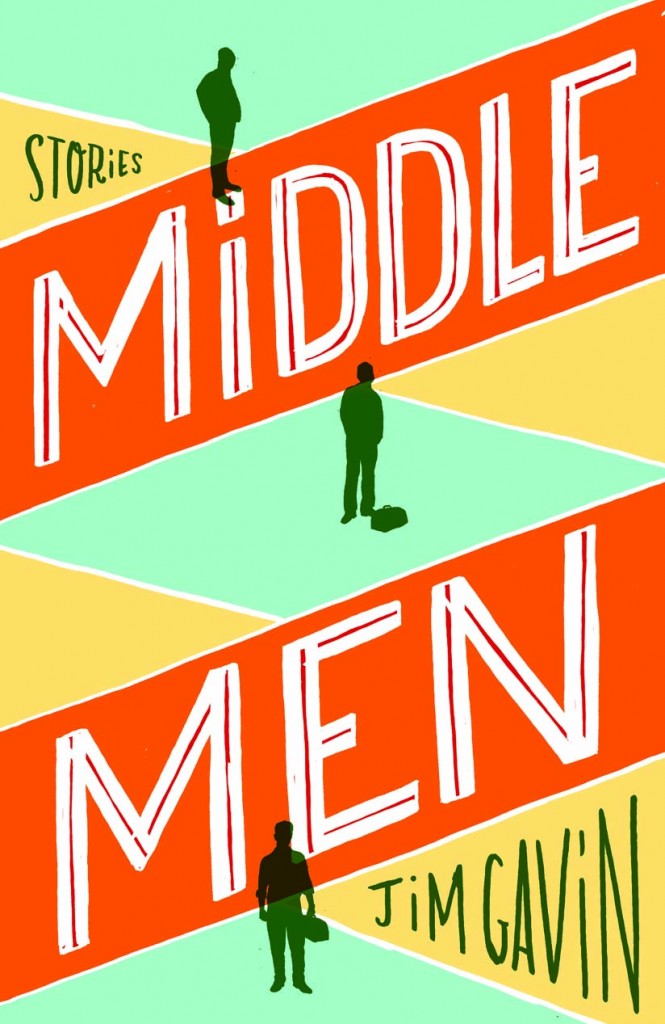
Middle Men by Jim Gavin

Release Date:  February 19, 2013.  Simon and Schuster
middle men

I’m a fan of the short story.  A good short story can do more in 15 pages than an entire novel in 600.  There is nothing quite like that gut punch you receive, and the helplessness you feel, at the end of a Raymond Carver or John Fante story.  When I find a new collection, especially by an author I’ve never heard of, I get all giddy like a 15 year old Bieber fan (That’s what the kids are still listening to right?  I’m not quite in the loop).

Jim Gavin’s Middle Men is that new collection.  I’ll try to refrain from gushing too much in the interest of being viewed a serious critic, but this is the best collection I’ve read in the last year.  It’s both hilarious and devastating, and at times, at least for me, hits just a little bit too close to home for comfort.  The title refers specifically to a two part story at the end called “The Luau” and “Costello” about middle men in the sales world, but works to encompass the entire book as well.  The characters are stuck in that middle part of their lives, that frustrating and seemingly meaningless part where nothing seems to happen and personal and professional failures seem to mount endlessly.  The setting is in and around the city of Los Angeles, and if there is a better locale for people who are stuck in purgatory than Hollywood then I don’t know of it.

Then there is the time period.  All the stories are set in the 1990’s.  Gavin sums up the decade and the place with simple language, always a welcome tactic for me, with lines like.  “It was 1992.  Our shorts were getting baggy and Magic had AIDS.”  This direct prose, two short sentences, sum up everything you need to know.  It gives us the time period and we learn something of the narrators personality and humor.  Funny and cynical, it sums up the entire collection rather well.  Gavin’s a bit older than me, but I’m most definitely a child of the 90’s and that probably helps me identity with his characters.  It helps that I grew up in basically the same area.  I’ll be honest, it also helps that throughout this entire collection, characters are either listening to, or watching, Dodger games.

The two specific stories that got to me most are “Elephant Doors” and “Bewildered Decisions in Times of Mercantile Terror.”  The first is a story about Adam, a struggling stand-up comic who also works as a production assistant on a game show as his day job.  The story is framed around the game show host, Max, manipulating Adam into stealing his dog back from his ex-wife, while in between we get a glimpse of Adam’s non-existent career as a comedian.  In one of the most dead on renditions of life as a comic, Gavin gives us the true futility of standing on a stage in front of a bunch of drunks and other comics, who all hate you.  Adam’s set opens with “I finally found the self-help book that’s going to unlock my potential.  It’s called Mein Kampf.”  He then deals with the inevitable silence of opening with such a tasteless, and just not very funny, joke.  This story captures perfectly the feeling of being in on the fringes of show business.  That spot where you’re a nobody, and it’s worse because you’d like to be a somebody.  The story ends, fittingly, with Adam taking his place in the comedy club, ready to make a fool out of himself again, because what else is going to do with his life?

The other story I want to talk about, and I’ll be brief, “Bewildered” deals with bi-polar disorder.  The first serious short story I ever attempted writing was about more or less the same thing, and wow does Gavin do it better than me.  Using a mental illness to illustrate the failings of the world around us is not a new concept by any means, but here it’s used with enough sympathy and absolutely no sentimentality that it seems fresh and tragic and moving.

If this collection has a failing, it’s that some readers will find it a little on the boring side since it can be construed that nothing really happens.  I disagree, but if you’re more drawn to stories that have actual danger and action to them, then this probably isn’t the ideal fit.  It slides into the category of “bored suburban kids who suddenly realize they don’t have a place in the world.”  I put that in quotes because someday I feel that will be a real genre.

My final thoughts:

There are two basic narratives that continuously come up concerning L.A.  One focuses on the seediness and the underground sleaze that’s so ironic in such a city of supposed glamour.  These are your Bukowski’s and your crime noirs.  Then there are the stories that focus on the glitz itself, like every reality show ever created.  I will concede a third, that’s kind of derivative, and that’s where the glamour and glitz hides an inner seediness.  Death Becomes Her comes to mind, maybe?  I don’t know why that movie is what pops into my head, but I’ll go with it.  There is nothing wrong with these narratives, in fact a lot of times they can be quite well done, it’s just that we’ve seen them time and time again.  People tend to forget that Los Angeles is actually a really, if unforgiving, city with real people facing real struggles and have perfectly reasonable ambitions.  I think this is why it’s refreshing to see Gavin tackle the real city.  He shows us these people stuck in between the sleaze and the glamour, struggling through their daily lives.  Hollywood is ever present in their lives, but it’s not always the driving force.


Buy this book!

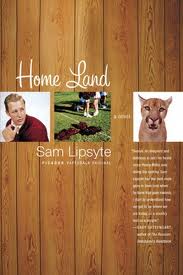
Home Land by Sam Lipsyte

homeland

Grade: A

There is a deep seeded fear in me, that increases with every year that passes, that being moderately intelligent and moderately creative is just not good enough. My concrete successes are few and far between where my victories seem more on the abstract end. In that respect Lewis Miner, or Teabag as he’ll forever be dubbed due to an unfortunate locker room incident that he mistakenly (but probably knowingly) mistook for an initiation rite, the protagonist of Home Land by Sam Lipsyte is me, in fact he is all of us, all of our fears and limitations and shortcomings and failures. He’s in his early thirties and he “didn’t pan out.”

His failures haven’t made him particularly wise or sagely and he doesn’t offer up any great advice, but the thing he does have is the truth, at least his version of it. He writes to his high school newsletter, giving updates of his life that go far beyond the typical nonsense found in such rags. He’s not there to share about his minor life achievements, rather his sexual depravities, his drinking, his financial woes and generally his stalled life. In the meantime he also exposes the truth of his old high school mates empty lives and odd perversions. I say his version of the truth because Teabag is a classic example of that lovely word we all fell in love with in English 101, the unreliable narrator. We only get his perspective and it’s clearly a warped one. He spins all kinds of tales, never romanticizing his own life, but absolutely destroys all the hopes and aspirations of the entire town. I call him unreliable because I’d be willing to listen to the argument that all the action in this book is imagined or an outright lie, but whether it’s the truth or not doesn’t feel important. What is important is that it feels true.

Plot wise, there’s not much. There are several mini-plots that all lead up to the looming high school reunion, or the Togethering, as it’s referred to. We know we’ll get some pay-offs when we get there, but it never really feels important. Home Land is all about the characters and spending some time with them. The entire town feels alive and poignant, a lot like the one I grew up in actually.

The voice is what drives this book. Teabag is funny and horrible, but so honest and pathetic that you can’t help but love him. He’s the kind of guy that will never amount to anything in the traditional sense but he’s accepted that and only maintains a just below the surface anger that is hard to see. He spends a great deal of the book obsessing over his ex-girlfriend but in one of the funniest, tragic, crass segments I’ve ever had the pleasure of reading, treats her like dog shit when he gets a chance to rekindle, though to be fair she doesn’t exactly merit nice treatment. He mocks the world around him and knows he’ll never be a part of it, but there will always be a touch of sadness about that. He fixates on his old principal, Fontana, and won’t stop until he’s dragged the man down to his level, but then redeems him in a beautiful, if warped, moment.

What makes Teabag so sympathetic and relatable is that in his own way he wants everyone to be happy and honest. He submits his updates to his fellow Catamounts, the school’s mascot, with the knowledge that they will never be published but in the hope that it reaches someone who is inspired to deny the lies their lives have become. In a way he’s taken all the shittiness of an entire town and placed the burden entirely on himself. Teabag’s not heroic, not by any reasonable standard, but he’s willing to stare the world in the face and call it for what it is, and that’s worth something. Teabag is the voice of our fear, that maybe we’re not really meant for great things after all.


Buy this book!

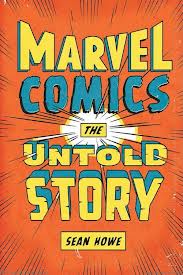
Marvel Comics: The Untold Story by Sean Howe

marvel comics the untold story

Grade: A

Lies, deceit, grandstanding, backroom deals, backstabbing, and the creation of some of the most iconic characters and story-lines in modern history. This is the history of Marvel Comics. Author Sean Howe takes us through over a century, starting with Martin Goodman and comic books starting to take shape in popular culture, all the way to present day with Marvel owned by the monster corporation Disney and pumping out movies and merchandise in addition to the comics themselves. Everybody knows the name Stan Lee, and he is the one figure that hovers throughout the entirety of the book, and even casual comic fans will recognize the names of Jack Kirby, Chris Claremont, Frank Miller and Grant Morrison, but Howe details the contributions, failings and personalities of dozens of other writers and artists that have come and gone over the years. What’s amazing about it is that Howe manages to actually bring all these people to life and get a sense of who they are/were. The strength of this book is that it’s interest is in the people behind the scenes rather than exhausting us with the history of the characters, which any good comic fan already knows anyway.

Regarding Stan Lee: It’s debatable how much, if anything, he actually had to do with any of the creative process throughout the years. He is officially credited with creating such characters as Spiderman, the Fantastic Four and the X-Men just to name a few, and many people take that at face value. This book details how Jack Kirby probably did most of that creating, if not all of it, and essentially got screwed both in a financial sense and a pop-culture sense. That comic book nerds know the legend of Jack Kirby is little comfort to a man who died bitter and resentful, and mostly broke. What makes this book unique is that it doesn’t try to take sides on these issues of creator vs. company. It acknowledges Stan Lee as an amazing salesman who took credit for all these things, but it hardly paints him as a villain. He’s his own tragic figure in fact, taken advantage of by the company while getting screwed in business deals with internet start-ups, while constantly dreaming of Marvel characters being turned into Hollywood movies. That he got his wish as an old man after trying to make it happen since the 1970’s is a testament to his ability to play the long game. Still, he’s something of a tragic figure in that he became a legend for something he really had little love for. He still pines for what might’ve been. He’s quoted saying “I wish I had the time to be a novelist. I think I could have done better. I mean, I would have loved to have written a great novel. I would have loved to have written a great bunch of screenplays. I would have loved to have written a Broadway show. I didn’t have any big compulsion to write comics. It was a way of making a living.” The great champion of comics over the years was just trying to make a buck. In fact, he originally took on the pen name Stan Lee only because he imagined himself becoming a serious writer one day.

This is not Stan Lee’s story though. It’s a story, as the name suggests, of Marvel. The artists, the business men, the presidents, the salesman and everyone in between, Sean Howe brings it all to life. He does it with a fan’s eye but without getting overly sentimental about anything. He freely acknowledges the lack of quality certain eras contained and details the reasons why it went downhill. Each generation brought with it new ideas and new shortcomings. This is not a book about how after a rough road everything is now fine in Marvel land. The company still has its problems, especially in comic sales, and the royalties paid to the artists has still never been solved in any kind of satisfactory way. But it’s the characters that will live on. The artists and the writers come, they leave, and come back. They quit in grand gestures, as stances against the exploitation of the creative staff, sometimes solitary and sometimes in groups, but then they come back because they make comics and there are just not that many paying gigs for comic book writers and artists. Their professional lives parallel the comics they write. The superheroes that die and come back and are stuck in stasis are really the creators who keep telling their stories. There seems to be no permanence in their world, but really it’s only the illusion of change.


Buy this book!

A Memory of Light by Robert Jordan and Brandon Sanderson

A-Memory-of-Light
Grade: B

I started reading the Wheel of Time series ten years after the first book was published and it’s still been over a dozen years for me. That’s the kind of series we’re dealing with here. The Eye of the World was originally released in 1990 and in case some of you have been holed up in fear of the Mayans and missed it, it’s now 2013. The original author, Robert Jordan, died after 11 books and an ill-advised prequel, and Brandon Sanderson took over for the last three. 14 books, 23 years, and we finally get to read about Rand’s fight with the Dark One. To be honest, I haven’t really enjoyed the series for a long time now. I loved the first three, liked the next three, and then due to a progression of mediocre books and a waning interest in fantasy as a whole on my part, I just read the following books out of a sense of obligation. I’ve anxiously awaited the end of this series more just to be rid of it than a burning curiosity of what the outcome of the Last Battle would be. And because of this I’ve never reread any of the books, meaning I read the first one 13 years ago and the subsequent titles not much after and for the life of me I can’t remember what the fuck happened other than the main plot points and even some of those can be a bit fuzzy at times.

With all this in mind, how do I give this final installment a fair review? I probably don’t, but I’ll try my best. First off, it’s long, and it probably has to be, but it’s entertaining pretty much the whole way through. It clocks in at just over 900 pages and I read it in a couple weeks which is the time it usually takes me to read a novel less than half that. So obviously it’s a page-turner. Most of the book is a battle between the forces of light and dark and Sanderson handles it well. He obviously knows his military tactics and it shows without the narrative getting too bogged down in the details. The main characters are all well-represented and get great moments of redemption or heroism or whatever it is they’ve been building towards throughout the series. There are deaths, a series like this absolutely has to kill some people you love or it just feels dishonest. But I’d argue not quite enough. Despite all the carnage and pain and suffering everybody goes through over the course of the series, it sort of feels like most of them get off just a bit too easy, at least from a dramatic standpoint. There are specific details but I’m trying to avoid spoilers because this is the kind of series with passionate fans and I imagine they will be offended if they stumbled upon this blog and read the details of the plot.

Let’s see, what else? The dialogue’s terrible, I mean really terrible. It sounds like a 13 year old who just watched Willow for the first time wrote it. But that’s been true of pretty much the whole series if I recall. The final confrontation between Rand and the Dark One is odd, though kind of interesting. Instead of an all out magic war of fireballs and lightning and frog plagues we get sort of a philosophical discussion on the nature of good and evil and their respective places in the world. I saw that as kind of a ballsy move considering a lot of people probably would’ve rather had the fireballs. The final message of the series seems to be along the lines of evil’s not really our enemy, so much as something for human beings to rise above. Or something a lot more poetic than that maybe.

The last thing I’ll talk about is that it just feels rushed. This is probably caused by the size of the series more than this particular novel though. After slowly building plots, subplots, tensions and conflicts over 13 books, finishing them all in one, albeit very long, book just doesn’t seem quite possible. This is particularly true of the ending. The middle section stretches out and allows itself to capture the enormity of a battle between millions of people and beasts. There are battle tactics that work and some that don’t. There are betrayals and victories and defeats and twists and it feels pretty authentic. Then the end comes and the last hundred or so pages comes and goes so quickly I started questioning why the lengthy, drawn out middle was so necessary. Then after the battle’s over there is virtually no epilogue (after an 80 page or so fucking prologue you can’t write a 10 page goddamn epilogue to tie up some loose ends and see off these characters?) , it’s just over.

I guess that point brings me to my final critique of this novel. It’s too long, but it felt rushed. How do you fix that? Don’t write a 14 book series.


Buy this book!

Grow Up by Ben Brooks

growup

Grade: B

Jasper J Wolf is detached, horny, disenchanted and distrustful of authority figures. He also does a lot of drugs, drinks and smokes. In short, he’s an updated, shallow, British Holden Caulfield. Don’t worry, author Ben Brooks saves us from having to figure that out on our own. In the second to last chapter of the book, just in case we’re incredibly dense, Jasper says “I am Holden Caulfield, only less reckless, and more attractive. “ As Jasper’s gearing up for his end of the year exams, he’s trying to prove his stepfather is a murderer, avoid any responsibility in regards to having possibly impregnated a chubby girl, have sex with his dream girl, and maybe even pass those tests. Other stuff is going on too, namely a possibly suicidal friend that he attempts to console.

The problem here is that this book never feels like a story. It just feels like a group of semi-likeable, at best, people are meandering from one place to another, getting high, drunk, laid, etc. That’s not always a bad thing, hell Bukowski made a pretty good career out of the same thing, but there just didn’t ever seem like much of a point. Jasper’s detached voice, the book is in first person, works sometimes, but most of the time it’s just too mechanical. It’s hard to believe that this kid could be the way it is and still be highly functional, especially to the point of pretty regularly having sex. Though to be fair, the sex he does have is either while incredibly inebriated and once he borderline rapes a girl. To be honest, as I was reading it I figured Jasper was autistic, or had aspergers. The bottom line is that this kid is way too socially awkward for the action of this book to be believable. I was that fucking kid for Christ’s sake. Trust me, kids like Jasper don’t just walk into sex in high school. We fight tooth and nail for every nipple and handjob we get until college. The old high school loser in me gets a little offended at these kind of stories.

One other minor thing I had a problem with is the fact that Jasper seems infinitely smarter than every adult in this novel. I hate that. Teenagers are dumb, all of them. Adults are always smarter than them. Always. Teenagers always think they’re smarter and that can work well in fiction, as long as it’s clear that it’s only in the kid’s mind that he’s smarter when in fact we, the reader, know that he’s full of shit. Ben Brooks seems to want us to think that Jasper is actually smarter than all the adults around him. This isn’t a deal breaker, but it does annoy me.
I’ve said an awful lot of negative things about this book, I realize that. Some might be wondering why then would I give it a B? Mostly because it’s funny. This book had me laughing through most of it. You can open randomly to almost any page and find something pretty hilarious. Watch, I’ll do it now (you’ll just have to believe I’m actually opening the book randomly right now). Page 41: “I stand up. There is blood on and in the immediate vicinity of my penis. This is the most disgusting I have felt ever in my life. Ever. The immediate future will only prove at all bearable, provided Abby Hall remains sleeping. Plump Abby Hall with her obnoxious breasts and acne.” I don’t know if everyone will necessarily find that funny, but I do. And it pretty much perfectly sums up the character of Jasper. He’s crude and selfish, but he’s pretty articulate about it, which I guess works as enough of a redeemable trait to make him enjoyable enough to hang out with for a few hundred pages.

Final thoughts: This is a quick read, so I would definitely recommend it for that reason. It aims to be something profound and I feel it fails, but it’s entertaining and you’ll get a couple good laughs and a couple good cringes out of it. If you like crass humor, designer drugs and teenage sex (come on, who doesn’t?) then you should have a good time with this.


Buy this book!