The Mirage by Matt Ruff

mirage-by-matt-ruff-final-cover

Grade: C

At this point, September 11th stories have practically become their own genre. We have Sci-Fi, Horror, Mystery, Appalachaian Lesbian, and 9/11 stories. The idea, I suppose, is that those attacks will conjure up enough emotional memory in the audience that the impact of the story will be that much greater. It’s a pretty cheap tactic, one that I can’t think of a single instance where it felt honest and not manipulative. Matt Ruff uses this new genre, along with the tried and tested Sci-Fi branch off The Alternate Universe, in his novel The Mirage.

In this novel, the alternate reality is that on November 9th (get it? 11/9?) a group of Christian extremists from the third world region of America hijack some planes and fly them into the twin towers of the United Arab States. Basically, the same thing happens, in reverse though, as happened in real life. The United Arab States declares a war on terror and bombs the shit out of America and frees them from their vicious tyrant, though all their efforts don’t really seem to stop the terrorist attacks, or make the war-torn region any safer. There are three main characters: Mustafa, the morally conflicted one who senses something is amiss about his world, Samir, the closeted homosexual, and Amal, the tough woman playing in a man’s world. Sound familiar? That’s because those are character tropes used in nearly every spy thriller ever written.

Anyway, those characters aren’t important. The ones the reader will flock to are Osama Bin Laden, Saddam Hussein, an unnamed but very clearly Dick Cheney, and a bunch of other people from our reality. What could have been fun about this world would be to make well known villains, like those listed above, into something heroic, or at least a conflicted source of good. Unfortunately Ruff is not interested in that. “A wicked prince in one world is a wicked prince in all worlds” is the sentiment used to justify keeping the villains as villains, and to be fair there is a plot reveal that justifies it dramatically as well. Still, I suspect the real reason is that the author, and maybe the publisher, doesn’t think the American public can tolerate Hussein or Bin Laden as anything but monsters. It feels like an opportunity for genuine and clever satire gone completely to waste.

I don’t mean to completely shit on this book though. It’s a perfectly serviceable espionage thriller, with a pretty exciting plot and well-written action. The characters may be a bit incomplete and feel like caricature at times, but that’s pretty true of the genre as a whole. The plot twists and battle scenes are what’s important in these works, not deep character insights. If it didn’t use 9/11 as a cheap way to add meaning to an otherwise perfectly fine, if unremarkable, story, I would probably grade it a bit higher. As it is, I’m not sure what this book has to say about the turmoil the world has been over the past decade-plus that hasn’t already been said. It doesn’t bring anything new to the conversation, it just makes us go “Oh, that’s George Bush they’re talking about!” Or “Holy shit, is that really Timothy McVeigh?” Merely employing the existence of these characters isn’t enough to tell a impactful story with them.

Please don’t read anything political into this review, or this book for that matter. This novel is neither Liberal propaganda, nor Conservative. Ruff is equally critical of both sides and never loses his sense of hope for a possible future. This story ends ambiguously, but optimistic in its way. Those looking for political, cultural, or philosophical insights will find it lacking. But those looking for some glimmer of hope through the shit cloud of crippling despair fed to us through the media outlets and the politicians we keep electing for some reason, might just find a reason to maintain some shred of hope in humanity.

Buy this book!

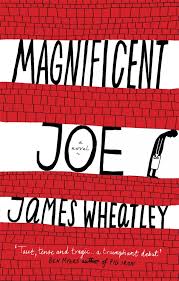
Magnificent Joe by James Wheatley

magnificent joe

Grade: A-

Centering a novel’s or a movie’s action around a mentally challenged person is inherently dangerous territory. The story quickly turns into Radio or something similar, that is to say overly simplistic sentimental bullshit meant to pull on heart strings and manipulate its way into relevancy. The lesson is, you see, that this “slow” human being is really the wisest sage among us and exists for the sole reason of teaching us all valuable lessons on life and allows us a glimpse, for once, into our own humanity. These selfless beings are our guardian angels, not actual, fully realized people with their own fears and ambitions and dreams and desires. Nope, the mentally challenged are normally relegated to the same proverbial corner that the Magical Negro has been stuck in since, well forever more or less. I bring this up because Magnificent Joe by James Wheatley, refreshingly, doesn’t do that. Joe is a fifty year old man with learning difficulties and that’s who he stays as for the entire book. He doesn’t suddenly break out of character to deliver key advice at a crucial time. He’s stuck in his own rut, that is in the process of being destroyed, the same as all the other characters in the novel. They’re all of them limited in life, Joe’s just another number among them.

The narrator, with the exception of a few chapters told in the third person, is Jim. Jim spent most of his teenage years and the first few of his adult years locked up for killing another kid in a fight. It wasn’t an intentional thing, just a lucky, or unlucky, punch that he landed. When he gets out he goes back to the same small town he grew up in, his family all dead, and is taken in by his old friends. With no options for an ex-con, he goes to work in construction with his buddies and ekes out a meager existence. In some vain attempt to atone for his sins, he takes up his father’s old role of caring for Mrs. Joe, an old widow and the mother of the title character. He lives basically in squalor, spending all his available cash on booze and spends most of his free time at the pub with his friends, Barry and Geoff. Through carefully guarded secrets, betrayal of friends, and an impactful death, the small town becomes even smaller, more restrictive and far more dangerous. The story exists for Jim to be redeemed, more or less, but it doesn’t let him off easy. Wheatley is perfectly content dragging this man through every gutter he can find, destroying him physically, mentally, spiritually and emotionally, until Jim is a broken man and has a chance to be rebuilt.

Written in stripped down, unpretentious language, Magnificent Joe feels authentic. Wheatley’s ear for dialogue is damn near pitch-perfect and his prose doesn’t waste time on flowery descriptions or rambling, abstract interior monologues. The only real flaw in this novel is that the end feels a bit rushed. It’s not exactly easy, but it wraps everything up very quickly. I greatly appreciate short novels and find the longer ones to be a little off-putting, but these characters are complex and enjoyable enough to warrant spending another 20 pages or so with them. The last chapter in particular feels very much tacked on just so we can get some semblance of a happy ending. In a novel that avoids the cliché very well throughout, for it to succumb to a tried and true, and a bit trite, image to end on was a bit insulting. Still, this is a very solid debut and worthy of a read. Wheatley’s a strong new voice and a talent that should definitely be watched.


Buy this book!

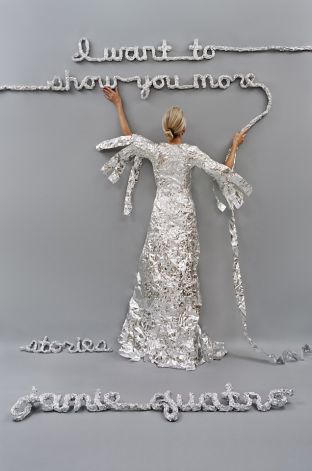
I Want to Show You More by Jamie Quatro

I want to show you more

Grade: A-

A sense of spiritual existentialism hovers throughout Jamie Quatro’s short story collection I Want to Show you More. The characters all feel an enormous amount of loneliness, stemming from things like guilt and fear but always coming back to being alone. An old woman goes to mail a letter protesting the war to President Bush, a girl attends a party with her newly paraplegic mother, and a teenage boy attempts to connect with a sick girl at a Christian camp. These stories are mostly about people seeking, and usually failing in some capacity, to forge some kind of connection to other human beings. Throughout the collection, we keep returning to a woman who has been unfaithful to her husband via a long distance relationship and her struggle to understand her feelings. These recurring stories, to be honest, I wasn’t as enthralled with as the others, but they are necessary in that they produce a thread of continuity and connectivity that ties the independent story lines into one cohesive theme.

In college creative writing courses I remember an exercise. It was simple, have a character walking somewhere, and make a story unfold around them as they go. It could be anything, walking down a driveway, down a street, the destination wasn’t important as much as keeping that forward momentum going. Quatro gives us the best example of this exercise I’ve read in “1.7 to Tennessee.” Eighty-nine year old Eva Brock has written George Bush a letter, informing him that she disagrees with sending young people to war, and is determined that she will walk the 1.7 miles to the post office and mail it herself. As she goes along we get a sense of the town and the people in it, without having to tell us too much about either. More importantly, during her journey, we learn everything we need to know about Eva. She gets confused and disoriented, losing her sense of time and direction, her memories both consume her and fail her, but all along she keeps plugging forward even though her destination becomes increasingly abstract. The story ends tragically, though in very much a non-melodramatic way, and the form letter from the white house received by the post office reminds me of About Schmidt and Jack Nicholson’s realization that none of it matters and connections aren’t real.

In “Better to Lose an Eye,” Quatro masterfully dances on the line of sentimentality. Lindsey’s mother was shot by her boyfriend and is now paralyzed. With her religious grandmother, Lindsey and her mother attend a birthday pool party. Lindsey is embarrassed of her mother and terrified of all the situations where she has to explain her condition. By the end, so upset over everyone’s tendency to ignore her mother, she accepts it herself in a beautiful moment. There is nothing necessarily groundbreaking about this story, just that it’s perfectly constructed. It serves as a reminder just how good a simple, well told story can be and how much it can resonate with a reader.

Quatro crafts her stories with style and all the mystical aspects of southern Christianity. There is tragedy around every corner but she never leaves the reader, or her characters, hopeless. It’s great to drag these people through the gutters and do terrible things to them, but equally important not to abandon all things good, give us some reason to continue on. In this, the stories of I Want to Show you More are completely successful. She gets in a bit of trouble when she starts going too much into the quirky, fantastic worlds she creates. This collection is exponentially stronger when it tells simple, toned down and great stories. Some books of short stories tend to be a bit top-heavy, but this one is actually the opposite, it starts out a bit slow but by the fourth or fifth story you’re hooked. Once the stories get into their groove every one of them is firing on all cylinders and do all the amazing things short stories are capable of.


Buy this book!

Note: Jamie Quatro will be at Changing Hands bookstore in Tempe, Arizona this Thursday, March 28th. Come meet her and get a book signed. Support literary authors and independent bookstores.

A Maze of Death by Philip K Dick

a maze of death

Grade: B+

Science fiction at its best plays with our fears and anxieties and flips them into a plot about robots and space and crazy technology so we can process everything safely. The genre lightens its social commentary into something that, ideally, entertains as well as challenges preconceived norms. The dystopia convention, for instance, works so well because we’re all scared of some “perfect” society where our freedoms and identities are taken away in order to maintain the guise of perfection. The fears are prevalent, just look at the current fears of Obamacare, or the gay marriage issue, or go back a few years and look at the reaction to the Patriot Act. The passionate reaction comes from the idea that the powers that be are setting up their own society and pulling us all with them, while leaving our true selves behind. This dread and distrust of authority is consistent in any good science fiction story. Philip K Dick is often considered one of the masters of the genre, both in terms of talent and output. Even if you’ve never read him, you’ve seen movies based on his writing, either loosely or directly. I am a newcomer to him, and Maze of Death is in fact the first novel by Dick that I’ve read. This particular book sort of ushers in his later years, where he became much more spiritual in his writing. The transition is evident, if crude, as he wrestles with all kinds of questions of god and faith, and the role they play the universe.

The story follows Seth Morley, mainly, and a cast of other characters called to work on Delmak-O for reasons that are not made clear to any of them. Morley is happy though because he prayed for a transfer and is content with the notion that his prayers have been answered. In this reality, deities are accessible via prayer transmitters and are a physical presence in the universe. Once on this seemingly uninhabited planet, the new residents don’t find it too welcoming. In the now familiar trope, they are trapped on an unfamiliar area with a malevolent force killing them off one by one, or at least they assume it’s a malevolent force, the one their beliefs call the form-destroyer. The characters rely on their faith and individual intelligences to attempt to band together and stay alive and hopefully escape the planet. If you know anything about science fiction, you know there’s a twist, and you probably know that the twist somehow involves the twisted nature of man rather than some god-being with a grudge against his creations. The twist is fun, but it’s not really the most important part of the book. The theme that is most significant is the idea that, on this world, for whatever reason, God has abandoned these people, and the truly special part of this book is the wrestling match these characters have with their faith and their loyalty and duty to each other. Dick, in his early spiritual journey, seems to have trouble believing that man, left to his own devices, is capable of surviving. In fact, beyond even that, he seems to suggest that without God, man will resort to murder and abandonment of his humanity.

Dick writes in a simple, but articulate style. Though he seems to have a basic understanding of it, he’s not interested in bogging the reader down with the nature of the technology this universe possesses, just that it works. I find it refreshing that there are no long passages over-explaining the various concepts that might seem foreign to us because we don’t live in a society that has mastered space travel. These people can travel across galaxies, we can’t. Good, got it. What this allows him to do, is to focus on the story and make the action accessible without detracting from the believability. The same logic is followed with the characters. None of them are developed too much, though I’m glad he resisted the urge to paint them as caricatures since he’ll be killing most of them off anyway, and are given just enough personality to move the plot forward. This is not a character study, this is a meditation on man’s relationship with God and needs to keep the action constantly moving in order to achieve its goals. Normally, I would be slightly irritated at the lack of character development but here it feels natural, after all if his thesis is that man is defined by his relationship with the divine, then painting fairly hollow characters makes complete sense.

This being my first Philip K Dick novel, I feel I’ve finally earned the right to stand among the ranks of the nerds. My new plan is to read two of his novels every year for the rest of my life. There’s like 46 of them or something, so assuming I don’t live an annoying long time, this should keep me occupied.

Note: This novel was originally published in 1971 and is currently out of print. It is due to be re-released on April 16. If you want to read it, I recommend you go to your local used bookstore, or preorder it from this website.


Preorder this Book!

Ex-Heroes

Ex-Heroes

Written by Peter Clines

Grade: C+

The nerds have won, people. Gone are the days when the acne-riddled, asthma-infused, coke-bottle-glasses-wearing, obese kid in a Land of the Giants T-shirt was regulated to the collective corner of our society. Mainstream audiences are now well versed in subjects such as Batman, Star Wars, Star Trek and all kinds of other estrogen-repulsing things. This isn’t a bad thing. We now get high-budget stories from quality writers and directors and actors and a guy that writes a blog nobody really reads is allowed to have a relationship with a real-live girl. Of course there is a problem, otherwise I wouldn’t have written the last few sentences. That problem is oversaturation. We’ve finally gotten to a point where we can simply reference pop-culture and that is enough to appease the crowds. To be fair, Peter Clines Ex-Heroes isn’t completely guilty of this, he just falls a little short of something better.

This premise of this novel is simple: Superheroes vs. zombies. It’s an awesome enough set-up, and well-written too, though some of the dialogue is a little forced. It’s set in a Los Angeles where super powered beings have risen up and started doing super hero like things, protecting the populace and forming alliances and rivalries that are amazingly destructive. There’s St. George, or The Mighty Dragon, Stealth, Gorgon, Cairax, Cerberus, Zzzapp, and a few others that are of varying degrees of importance. Then the zombie apocalypse comes and the heroes, at least the ones that survive the onslaught, are forced to carve out a slice of the city and protect their new civilization, naturally in the safety of a movie studio lot, they call The Mount. Things go about as well as you can hope, the citizens are mostly safe other than a few minor incidents, until a gang builds up power in another end of the city. They want the resources of The Mount, and they might have a few tricks up their sleeves, including some super-powered beings of their own.

Clines offers up some new additions to the two respective mythologies. The origin of the zombies intertwines with the rise of the superheroes and is a pretty compelling angle. The survivors of the apocalypse, since they’re in Los Angeles, have a running game of who can kill the most famous celebrity zombie. These feel fresh and bring something new to well-worn concepts. This is where the novel shines, but unfortunately it just doesn’t do enough of this kind of thing. For one thing, anybody who knows a decent amount of superhero lore, will be able to spot variations on both DC and Marvel characters in these original heroes. With a few tweaks St. George is Superman, Stealth is Batman, and their relationship is nearly identical to the classic heroes though admittedly with a nice twist of sexual tension. Among others, The Hulk and Iron Man are both essentially there and Captain America is even teased at in the preview for the second book in the series. There’s nothing wrong with this necessarily, except for the fact that I don’t think I would’ve picked up on these similarities if I wasn’t such a nerdlinger myself, which feels a little dishonest to me.

Zombies have had a rough go in pop-culture of late. They’ve never enjoyed more popularity than they do now, but they’ve lost something in the process. Gone are the mindless, soulless nightmares that are terrifying metaphors of ourselves and what we could all become, and in their place are mindless monsters who want to eat humans. They’re more gory, but less scary. Superheroes fighting zombies has the potential to be an amazing allegory for this contemporary world. Gods have come down to protect us from the monsters threatening to turn us completely into a mindless consumer society. Our very souls are at stake. What is too often missed is that it’s not our lives that are on the line in a zombie apocalypse, but our humanity. And to be fair, Clines does address this, and at times he does it well, but it feels like an afterthought for the most part, and just an excuse to lend a story some weight that’s really just fixated on how hard a super strong guy can punch a zombie.

Overall this is an enjoyable, if kind forgettable, read. It’s apparently the first book in a series, and I liked it enough where I will probably read the next book when it comes out.


Buy this book!