In the House Upon the Dirt Between the Lake and the Woods by Matt Bell

In the House

Grade: B-

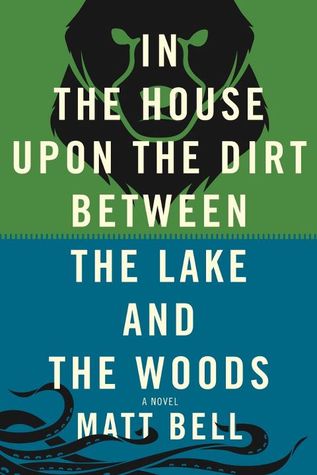
Metaphors are the building blocks of writing, or one of the building blocks anyway. Metaphor gives us symbolism and symbolism gives us meaning. The problem arises when a writer leans on metaphors too hard and they become murky and convoluted. You stack metaphor on top of metaphor until you lose all meaning and you’re left with a Dio song, a great ride but ultimately just confusing. Matt Bell’s debut novel In the House Upon the Dirt Between the Lake and the Woods reads like an allegory, a fable meant to instill in us some moral that will enrich us in some way, but is just too fucking weird for its own good most of the time. In playing too many themes too close to the vest, it just becomes a frustrating exercise in deciphering meaning that may or may not be there.

The novel follows a man and a woman, whom we never learn the names of, who move away from the city and into the woods where they build a cabin to live in and hope to have a child. This proves first difficult and then downright impossible. The wife has a series of miscarriages and it becomes clear that she cannot bring a pregnancy to term. In desperation, the husband eats the tiny, dead fetus of one of the miscarriages and it begins to grow inside him. The fetus begins to speak to him and corrupt him against his wife. Then the wife steals a cub from a bear and turns it into a human son, and lies to her husband about the origins. She claims the child is his, but he suspects otherwise. Also, the bear wants revenge and there is a squid/whale monster in the lake that wants to take possession of the husband. The through line is actually a lot more understandable than it sounds. Bell writes in clear enough language that the action is easy to follow and builds suspense and a sense of dread effectively.

There are things done right in this novel, in fact things that are downright awesome. Bell is a master with language and great at creating vivid imagery. The action scenes, particularly ones where the man crafts his own suit of armor out of raw hides and fights The Bear, feel immediate and dangerous. The first half of the novel keeps the suspense amped up to where you won’t feel very comfortable but you will want to keep reading, though that aspect peters off some in the second half. Bell is, in a way, a victim of his own talent. He’s a very good writer, but too often the story suffers from Bell feeling the need to prove it and the book devolves into overly long segments of “look how well I can write these sentences and describe things.”

The message I suppose, if there is one, is that the pressure of childrearing can bring out the worst in people. The refreshing thing here is that it’s from the paternal side rather than maternal. More often than not, it’s the other way around. Overall, I liked this book, though the second half dragged quite a bit, but ultimately wasn’t sure what I was supposed to get out of it. Ambiguity is fine, even an asset a lot of the time, but this just seems simultaneously convoluted and vague. There is a lot more to writing than just proving how smart you are. Bell is a good writer, but not, at least in this book, a great storyteller.


Buy this book!

Boys in the Boat by Daniel James Brown

boys in the boat

Grade: D

In 1936 a rowing team consisting of nine young men from Washington State swept through the national competition against boys much more privileged than them and represented, and won the gold for, their country in the Olympic games held in Nazi Germany. Set against the backdrop of the Great Depression and a looming World War II, The Boys in the Boat by Daniel James Brown is the story of these boys, their coach and a British rowing guru, and their journeys and trials as they face seemingly unbeatable odds. Some of this book is exciting and thrilling, usually when Brown allows the story to breathe on its own, but for the most part it descends into what feels like mushy propaganda.

Most of the book centers on Joe Rantz, a young man who had a tough upbringing. He was poor, his mother died, his stepmother hated him and forced his father to abandon him. A self-made man, more or less, Joe gets himself into college in Seattle and joins the rowing team more for material benefits it might bring than any love of the sport. His journey is one of learning to trust his teammates, overcoming his fear of loss, and losing himself in camaraderie. Sadly, Joe is so punishingly uninteresting that we’re not really sure why his teammates are so devoted to him. He comes off as that guy you work with that’s nice enough, but you never really invite him out for beers because you know, even with plenty of booze, it’ll be a painfully boring night. A few other team members are given some attention, though drawn pretty broadly with only basic characteristics expected to carry the weight of bringing them to life. The rest of the team is barely even mentioned except to acknowledge they were there. A decent amount of attention is given to the coach, Al Ubrickson, and the master boat builder, George Pocock. Again, there are some interesting facts about them, but Brown insists on keeping them at arm’s length the entire time.

Other than a lack of people we care anything for, this book fails for two reasons. The first is that Brown desperately wants us to understand just how hard a sport rowing is. It’s like he already accepted that most people reading this book are going to think the sport is kind of lame and for silly rich people, so he overcompensates by dedicating huge portions of the book to explain the toll it can take on a body. It’s interesting enough information, I suppose, but so much effort spent on this tends to make me doubt the sincerity. The second failing is that Brown seems to think that this story should make me feel proud to be an American just by reading it. There is a real ra-ra patriotic vibe that’s totally unnecessary. Instead of just making it a great underdog story, Brown creates a scenario where pure American gumption and can-do attitude prevails against the rigid, robotic Germans. If there’s any doubt as to what point he’s trying to make, he lays it on thick enough to choke on in the final passages of the book. He puts himself into the story, stands in the same spot Hitler watched the fateful race, and boasts “Standing there, watching them, it occurred to me that when Hitler watched Joe and the boys fight their way back from the rear of the field to sweep ahead of Italy and Germany seventy-five years ago, he saw, but did not recognize, heralds of his doom. He could not have known that one day hundreds of thousands of boys just like them, boys who shared their essential natures – decent and unassuming, not privileged or favored by anything in particular, just loyal, committed, and perseverant – would return to Germany dressed in olive drab, hunting him down.” This is pure manipulation, pure bullshit. Brown doesn’t trust his story enough, so he bends into something it isn’t, a forced poignancy that robs Joe and his teammates of their hard-earned, pure victory, by pushing the same ignorant theory that Hitler did in his day. That our boys were better because of where they came from, the spirit that only hard-working, good-natured Americans can own.

Sports are inherently exciting, it’s in their very nature. It’s why we love them and keep coming back for more and tell story of championships and defeats for generations after the events. Manipulating them into something bigger is unnecessary and harmful. Bask in the victory, revel in the amazing narratives a championship, especially an underdog one, can produce, and always search for the essential humanity in the storylines. But never use a game to push your own agendas. There is a great story here, one of perseverance and overcoming all sorts of tribulations, but sadly the one that is written cares more about what these boys are metaphors for than their humanity.

Superman: The Unauthorized Biography by Glen Weldon

Superman The Unauthorized Biography

Grade: B

In some circles it’s not a secret, insight or revelation to suggest that superheroes are our modern day mythology. That idea has been explored, and widely accepted, in the greater geek and nerd cultures. To some, though, it will probably seem silly. These are just stories of men and women running around in capes and tights punching other ridiculously dressed beings. The book Superman: The Unauthorized Biography by Glen Weldon is probably for the latter group. For the initiated it’s more a detailed examination of what we already knew, though still a fun read I should point out. The book, obviously, focuses on Superman, and what superhero has more sacred, and godlike, a feel than him? Superman is essentially Zeus and Jesus and probably a lot of other really important God figures in mythology, that is to say, he’s the God of the superheroes. Weldon traces the evolution of Kal-El throughout his 80-plus years, from his socialist, working-class days of protecting the poor from the corrupt rich of his early days, to his stern, but loving Republican father figure that he’s usually perceived as today. Superman is exactly what we need him to be, whenever we need him to be it. The book is essentially a decade by decade examination of the character, and doesn’t just stick to the comic pages. Every incarnation of pop-culture Superman is represented, including the obvious like newspaper comic strips, television, radio and feature film, but also goes into some detail about how the Last Son of Krypton has been merchandised within an inch of his life over the years.

Accepting that Superman has not been the same boring boy scout figure his entire existence, Weldon boils down the two things that are constant, two traits that make Superman, well, Superman:
“1. He puts the needs of others over those of himself.
2. He never gives up.”

These are pretty simple ideas, easy tenets to base a superhero on, but they are utterly unshakeable, with a few notable exceptions over the years that Weldon is eager to point out. With that in mind, as his powers change from an incredibly strong guy who can jump really far to an indestructible demigod to a weird electromagnetic being and back again, Superman changes with each generation. Sometimes he’s moody, sometimes he’s boring, sometimes he’s square and sometimes he’s just kind of a dick. During the depression he stuck up for the working class Joe, while during the Second World War he turned into an uber-patriot, in fact that’s when the phrase “Truth justice and the American way” came about. That catchphrase was deliberately created by the radio show in order to sell patriotism to a fearful audience. The fact is Superman is the most time tested superhero because he has the ability to be what we can’t be, will, in all likelihood, never be. He is who we aspire to be, “…he is not the hero with whom we identify; he is the hero in whom we believe.” This idea comes in the first few pages and Weldon sticks with this thesis throughout the book, as America changes so too does the Ma of Steel. Sometimes crass, sometimes preachy, sometimes hopelessly out of touch, Superman is the ideal we all strive for, as do his fictional peers.

In Superman, Weldon details what’s going on behind the scenes at DC comics throughout the years in order to add life to the book. This makes it an excellent companion piece of sorts to Marvel Comics: The Untold Story, as many of the same writers and artists are given a look. Where Weldon stumbles at times is when he can’t seem to decide whether he wants to be snarky about the Big Blue Boy Scout or not. His knowledge is detailed but he seems to get more enjoyment from making fun of the character than he does celebrating him. It’s okay to be unsentimental about a topic like this and just give a rather straightforward history, but Weldon often seems to only enjoy Superman as a concept rather than a literary figure, except of course when Grant Morrison is writing him.

Superman is often considered a boring character, one who is just too powerful, too good, too white-washed. This book won’t change that perception, but it will give insight to those who know him only through mainstream pop-culture. For those of us who already know why Superman matters, it mostly serves as a fun journey through his existence and an excellent source of trivia fodder. This book doesn’t bring a whole lot new to the table, nor will it likely bring any new fans, but it stands as a solid addition to the Superman cannon and another worthy footnote in The Man of Tomorrow’s life. It’s not a permanent biography, as the character will exist far longer than any of us, enduring is sort of his thing, but a firm reminder of why a fictional alien, an immigrant, captures the ideals of a free world so much better than anything in reality ever could.


Buy this book!

The Summer of Beer and Whiskey by Edward Achorn

the_summer_of_beer_and_whiskey

Grade: A

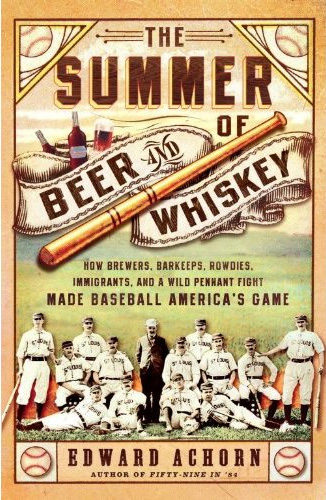
A lot is said today about the tradition and sanctity of baseball. What people tend to forget is that traditionally, the game was played by drunks, brawlers and cheaters. The cheating, in fact, got so bad toward the end of the 1870’s that the American public all but abandoned the game as the major leagues became controlled by bookies and fixed games. Combine that with the lone honest National League pricing the middle class out of games, and baseball, our national pastime, nearly died. Enter a group of ragtag clubs, ran by renegade owners, led by Chris Von Der Ahe, a German immigrant who knew almost nothing about baseball and used his team mostly as an avenue to sell beer, and somehow these guys saved the game. The Summer of Beer and Whiskey by Edward Achorn tells the story of the season of 1883, and how this new league, The American Association, through an unforgettable pennant race, a cast of drunks and outcasts, affordable ticket prices, and all the booze you could want, brought the people back to the stadiums and reignited the passion for baseball.

The action of the story mainly follows Von Der Ahe and Lew Simmons, owners of the St. Louis Browns and Philadelphia Athletics, respectively. Some time is spent with the Cincinnati Reds as well, but the focus remains on the other two. Achorn details the construction of the league and the teams, with a wonderfully nerdy amount of time spent on the personal histories of various players, and then the battles throughout the season and the transactions made to beef up the squads for a pennant run. The Summer of Beer and Whiskey is meticulously researched and written in a mostly unromantic style, and is just as much a history of American city life in the late 19th century as it is a love letter to the national pastime.

This is not one of those history books that “read like a novel.” There is certainly a constant thread and through line, but Achorn isn’t interested in simply entertaining. The book will occasionally go off on tangents that have little to do with the actual season of 1883, like the chapter about the legendary Cap Anson who was not really the great man that we baseball fans grew up thinking he was. He was a vicious racist and was so offended that he had to share a field with a black man, Fleetwood Walker, that he launched a campaign to keep black players out and was almost single-handedly responsible for establishing the color barrier that Jackie Robinson would become famous for breaking more than sixty years later. It’s these asides that breathe life into the book and lend it an air of credibility. It reads like a real history book, relying on direct quotes from players, journalists and owners, as well as directly from press releases and newspaper articles. Achorn is there to provide the prose that turns it into a narrative, but he comes off as much of an observer as we, the readers, do. These aspects can make the read seem a bit dry at times but I personally love that there is no fluffing up of the story in order to create more drama and more romance, just a fascinating look at a game still in its early development.

This book strikes me as incredibly relevant when compared to the criticisms of baseball in today’s world. Steroids, free agency and the mega-contracts it causes, and a perceived coddling of the most expensive players by the clubs seems like a small complaint when compared to fixed games, open racism, and violence against umpires. Still, the core of the game remains unchanged. Sure, there are rule changes and new and improved strategies and methods of talent evaluation, but baseball as a whole remains the same and the passion it creates is every bit as powerful. This book reminds us that it’s not just the tradition that makes us love baseball, but it’s the characters that have populated the fields and grandstands for the last 150 years.


Buy this book!

World War Z by Max Brooks

World_War_Z_book_cover

Grade: A

Editor’s note: I realize I’m way late on this one as this book came out years ago, but with the movie coming out soon, I thought it would be fun to compare the two.

One of the most primal fears that the concept of zombies preys upon is the idea that our world, as it exists today and without being destroyed by something like a bomb or meteor, can become a hostile, dangerous and even uninhabitable place. The cities themselves become our enemies, our own homes death traps. The limit of the genre, historically speaking, is in the desire to give us a consistent protagonist or protagonists, and therefore reducing the danger to an immediate survival story. The world wide apocalypse, while recognized, is more of an abstract thing that doesn’t necessarily feel real. Max Brooks throws all that away in his novel World War Z. By not having a main character to latch onto, except a nameless man conducting interviews and providing the through line, it allows the action to take on a fully global scale.

Since it is written as an oral history, there isn’t necessarily a plot, but there is a clear narrative that runs throughout. The individual stories, with a few exceptions, are completely engaging and capable of standing on their own, but all remarkably add up to something bigger and complete. The basic story, told from just about every point of view you could want, is that the zombies rise, slowly at first with isolated outbreaks. The government scrambles to contain them and keep them quiet. This obviously fails and pretty soon The Great Panic sets in, which is exactly what it sounds like. The people of the world lose their collective shit and society explodes into a fury of chaos and zombie snacks. Our first attempts at fighting back go embarrassingly bad and soon enough the world as we know it is over, Israel has quarantined itself, nuclear war breaks out between two countries, and not any of the two you’re thinking, and general anarchy begins to reign. In desperation, the leaders of the world turn to a South African man known for having plans for catastrophic plans like these but are hard to stomach due to their sheer coldness in terms of loss of human life. They follow his plan, basically willingly sacrificing a good chunk of the world’s population in order to save the rest and soon begin to see the tide of the war turning.

This is not a scary book, though it is frightening. What I mean by that is World War Z is not going to give the reader nightmares of face-eating, gross-looking zombies, but it does serve as a reminder of how fragile everything we rely on really is. The walking dead are merely a pop-culture vehicle used to demonstrate just how easily our governments, societies, cultures, and morals can be torn down. At the end of the day, human beings will do what is necessary in order to continue the species. That sounds pretty bleak and whereas this is no breezy beach read of a novel, Brooks isn’t only interested in bleak. He makes sure to give us a spark of hope at all times and does seem to say that humankind’s resiliency is a good thing, a powerful and unbreakable thing.

In addition to bringing a fresh trope to the zombie fiction genre, Max Brooks proves that he’s truly his father’s son (little known filmmaker named Mel) and brings wit and a sense of satire throughout the novel. He seems to know that zombies are really a pretty ridiculous thing and this kind of book has to laugh at itself before the reader starts laughing at it. Gags go from big picture odd, like millions of zombies swarming the oceans, to low-brow gut laughs like a monkey peeing on a lone survivor of a zombie attack/bridge explosion. It’s these aspects that make this story stand out and transcend an otherwise pretty tired genre. If this book took itself completely seriously it would be a long forgotten, perfectly serviceable, horror novel.


Buy this book!