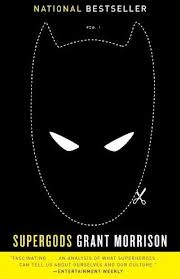
Supergods by Grant Morrison

supergods

Grade: B+

If superheroes are the mythology of modern times, and it’s been suggested enough times including on this blog that they are, then why? That seems a simple enough question, but mostly this idea is either accepted as an absolute or dismissed as juvenile nonsense, either way without an argument. The why is important though, and further, the why it matters that we have a mythology. Grant Morrison attempts to tackle this subject in his book Supergods. Part history, part criticism, part memoir, and part spiritual exploration, Morrison attempts to have it all, and mostly succeeds. Parts of it may drag a bit and parts may be a bit self-indulgent, but when Grant Morrison is talking comics, no matter how long winded it is, it will behoove you to listen. You will learn a lot.

The history and the criticism aspect of the book display Morrison’s immense and thorough knowledge of the comic book world. He shares insights into the styles of various writers and artists as well as the evolution of specific characters and teams over the decades. Non comic book fans will probably find this a bit tedious, though to be fair they probably won’t be reading this book anyway, sadly. Unfortunately, to the target audience, a lot of this is stuff we already know. It’s great to hear Morrison’s take on them but the background details of characters like Superman and Batman as well as artists like Jack Kirby probably don’t need quite the amount of ink they’re given, if only because it’s a little redundant. The tradeoff is worthwhile in many ways, though, because his take on modern comics, including the Dark Ages from the 80’s through the current world of superheroes, is nothing short of brilliant. This is where he shines because he’s able to come off, not as a historian or fanboy, but as an insider, someone who knows the process and the talent involved in creating these stories.

The memoir and the spiritual exploration tie into each other pretty closely. Morrison is very interested in telling his own story, from shy pacifist to punk artist to comic book guru. The narrative is actually very typical and vanilla through the first half of the book, then Grant Morrison’s weirdness starts coming out, and I mean that in every good way possible. His exploration into fiction versus reality, including a possible alien, or angel, abduction, a chat with a cosplayer he convinces himself is the actual Superman, and lots and lots of drugs. This is where the book begins to claim its own identity as a defense and manifesto of what roles superheroes play in our culture. He argues that superheroes are real, but exist in a 2D world and are therefore outside of our own reality. He traces the polar reversal of the solar magnetic field to show how society changes in our moods and thought and the superheroes change with that. This latter bit he has used to his advantage to stay ahead of the curve in relevancy.

The second half of Supergods is better than the first half, or at least it’s what we we’re waiting for when we heard Grant Morrison wrote a book dissecting the superhero. Still, the second half could not exist without the solid foundation he builds and establishes in the first. By laying out a concrete history and criticism of the superhero canon, Morrison is able to launch into a whole new universe where anything is possible and caped supermen and women are waiting to show us the way to something bigger and better than we ever thought possible. If that sounds a little on the sentimental side, well that’s part of the takeaway from this book. The cynical age of superheroes has passed and it’s time to move on to the height of human potential where mutants and gods and masked vigilantes will be or guides, and we will be theirs.
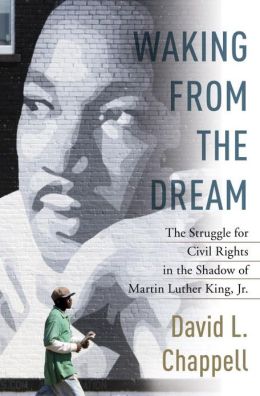
Waking from the Dream by David L. Chappell

waking from the dream

Grade: B+

Note: This book’s release date is January 14th, 2014.

Not to take anything away from the man and his life and his deeds, but the true power of Martin Luther King Jr. seems to be in his name. Just think of what invoking his name can do for a cause. Too often, we forget that the civil rights battle in this country didn’t end with King, but still rages on to this day. And further, his battle didn’t end when he was killed either. His name and legacy have been channeled for five decades now in his absence. In the book Waking from the Dream: The Struggle for Civil Rights in the Shadow of Martin Luther King, Jr. author David L. Chappell examines and details this unfortunately oft overlooked concept. Throughout the book, Chappell takes us through the Civil Rights Act of 1968, the black political conventions of the 70’s, battles for employment bills, the idea of a holiday in King’s honor, Jesse Jackson’s rise, and even the controversial, and almost never discussed, failings of King’s character. Waking from the Dream makes for an interesting read as it shines a light on recent history in just unique enough of a way to drive the narrative and come off fresh.

The controversy over King’s character relates to his marital infidelity, something most people are vaguely aware of. It’s interesting that, as a society, we’ve simply agreed it’s not something we want to talk about. Americans cannot tolerate their heroes being tainted in any way. What is less known, even on that same casual level, is that King, in all likelihood, plagiarized his doctorate dissertation. Chappell tackles this the only way he can, with a detached honesty. He remains a historian throughout, and doesn’t let, for the most part, his own personal feelings get in the way of the facts. It is not an easy thing to discuss the failings of such an iconic man, but Chappell handles it admirably and factually. In fact, an argument is presented, though not dwelled on because that’s not the author’s agenda, that King disliked the idea of lionizing public figures to such an extent that maybe this discredit to his character is not such a terrible thing. It can keep us honest about the deeds of the person rather than the aura of a hero.

Time is spent on the Reverend Jesse Jackson throughout this book, and Jackson does not come off looking great in this book, though it’s hardly an attack on him either. The man is polarizing, he’s charismatic in ways that rivaled King himself, but seems to understand the power of charisma too. Jackson used his influence and power to become an icon in the Democratic Party rather than a pure force for equality. Other figures central in the fight for civil rights are presented too, though none get nearly as much ink as the Reverend.

One of the, possibly unintended, truly fascinating aspects of this book is how little politics have really changed over the past few decades. Chappell, taking us into congressional debates on the Housing Act and King’s national holiday, shows us that the same rhetoric and ideology, with some variation admittedly, has saturated our government throughout modern history. The people change, sort of, and the arguments focus on different angles, but they never really change. Though, easily, the most refreshing thing about this book is that Chappell details his research extensively. A third of the book is citations. In other words, this isn’t bullshit mainstream history in the vein of Bill O’reilly’s Killing Famous People series, but series academic history.

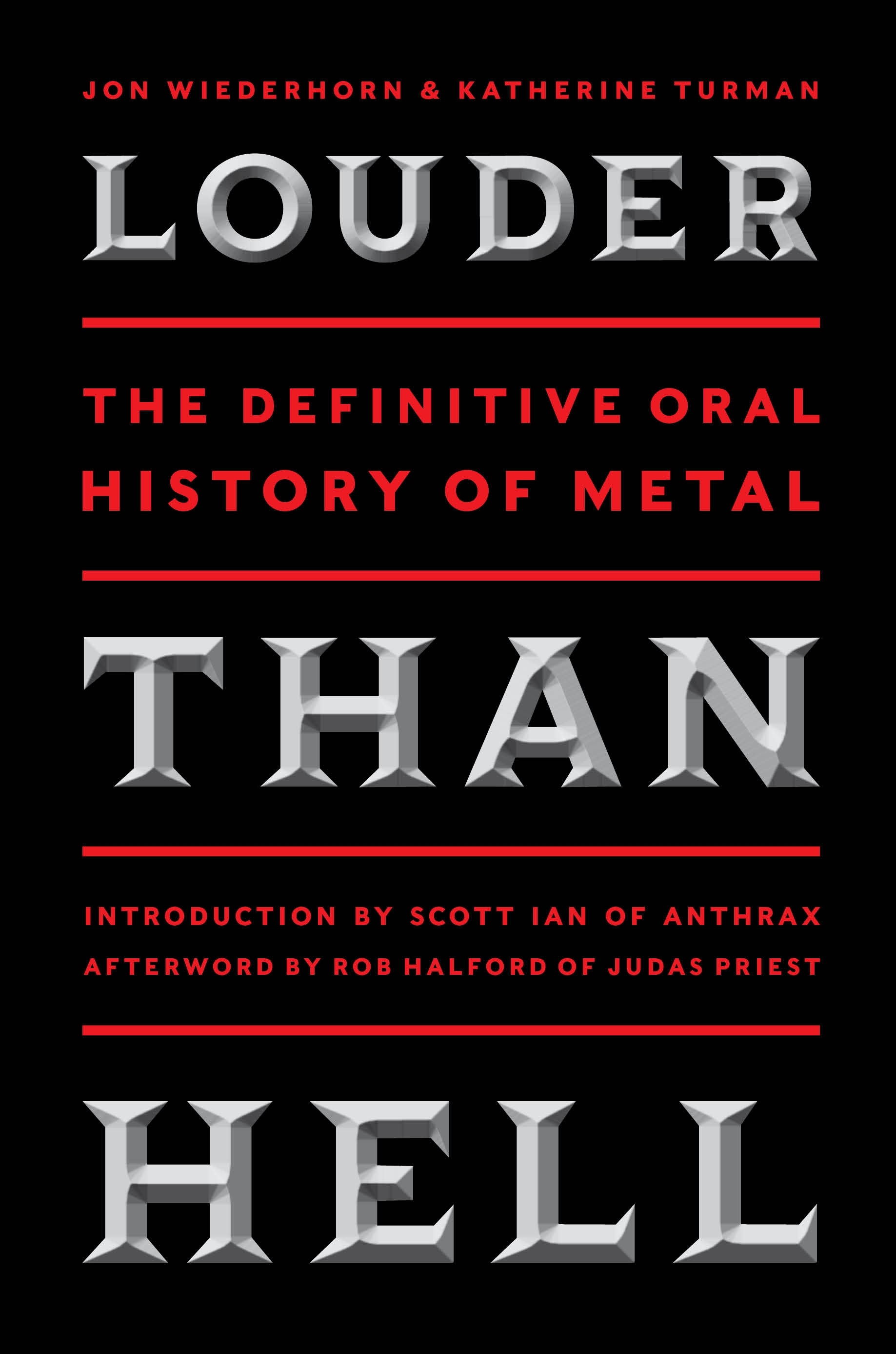
Louder Than Hell

LouderThanHell_cover

Edited by Jon Wiederhorn and Katherine Turman

Grade: C-

Heavy metal, as an art form, has it pretty tough. It’s often dismissed as juvenile and silly on one end, and evil and corrupting on the other. People assume because it’s loud and obtrusive and abrasive and, yes, kind of obnoxious, that it lacks any sort of artistic merit. This is, needless to say, not true. It’s a different essay (maybe that I’ll write sometime in the near future?), so I won’t go too far into it here, but Heavy Metal connects with its audience in a unique way and offers something that other genres lack. So when the book Louder Than Hell: The Definitive Oral History of Metal, collected by Jon Wiederhorn and Katherine Turman was released, it became a chance to give the musical genre a shot of legitimacy. Unfortunately, it fails to do this. This book is far more interested in a bunch of machismo dudes talking about how many chicks they’ve banged and how many drugs they’ve taken and how much ass they’ve kicked. There is almost no attempt to tackle the musicality of these, in many cases, very talented bands. No journey into the song-writing minds or insight into the heavy metal experience. Here’s a hint: If you want to read about sex with groupies and getting super wasted you can read a mediocre biography or history of literally any musical genre ever. These things are not unique to metal, no matter how much some want to pretend they are. Whatever chance the genre has of being viewed seriously was seriously blown by this collection of bullshit quotes.

For someone who is new to heavy metal, maybe a new fan or somebody who’s just trying to learn a bit about the music, there is some good information here. Louder Than Hell does offer a decent chronology of metal, tracing the lineage from Black Sabbath all the way through the various groups started in the new millennium. Since it’s an oral history, you get to hear stories and anecdotes and insights directly from the source, and a few different perspectives from their peers. The problem is, for the already initiated, which most reading this book will be, the stories are already familiar. There aren’t a lot of new tales, no lost musings from Ozzy, or Mustaine, or Dio. For metal fans, those of us that thirst for new details of the genre, this comes as a disappointment. Instead of focusing on how much coke Ozzy could consume, can we maybe talk about why they felt compelled to craft nihilistic lyrics about the absence of God and the hopelessness of the world? It’s not enough to just acknowledge how talented most of these guys are/were as musicians, let’s discuss just what made them great. Unfortunately, Louder Than Hell isn’t really interested in any deep insight, only the wildness of the lifestyle of rockstars. Frankly, it’s kind of boring. The one mildly fascinating thing that comes out of this book, which clocks in at 683 pages, is that every generation of metal, no matter how they think they’ve grown and matured from their predecessors, are really just an updated model of the same thing.

Heavy Metal is an angry art form. It arose out of poverty, isolation, and a distrust of all authority, including and especially God. Yes, there are also wizards and dragons and such, but nerds can be pissed off too. A good history of the genre would focus on why it’s a necessary subsection of Rock n’ Roll, why the anger still burns just as fierce as it ever did, and how Dio used dragons and Vikings as metaphors for celebrating the outcasts of the world (at least I think that’s what he was doing, the dude used a shit ton of metaphors). Instead, what we get is Jonathan Davis talking about how many chicks he banged in a single night and how none of these guys seems to have one ounce of respect for any woman they’ve ever met. As we get older, we all kind of suspect our childhood heroes were severe douchebags all along, but maybe give us some of their redeeming qualities as well. The thing is, I know these guys aren’t all bad, because I’m a fan and a nerd and have read an awful lot about these bands. Widerhorn and Turman just picked the quotes and interviews that painted them to look like really shitty and uninteresting human beings. I’m not saying ignore the debauchery, because that’s clearly a big part of being a metal star, or any rock star for that matter, but maybe keep the focus on the power and the uniqueness of Heavy Metal.


Buy this book!

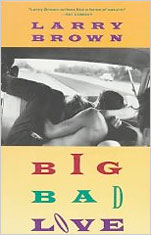
Big Bad Love by Larry Brown

big-bad-love-151

Grade: A

It’s not my intention to pigeonhole anything here, but when I think of the American Short Story my mind goes straight to Hemingway and his spawn. Writers of a dark masculinity that create poorly concealed autobiographical fiction where the men desperately search for their place in the world while acting terribly. They are womanizers and boozers, some are violent and most are emotionally unstable, but the catch is that they’re smart enough to understand the damage of their actions. The writing is unrefined and coarse, reflecting their working class characters. These are the Bukowski’s and the Carver’s of the world and Larry Brown deserves his place among them, both in style and skill. His collection Big Bad Love contains stories of men who are desperate for love and a human connection but will never get it because their understanding of it is so flawed and their choices so awful.

The stories themselves are all set in the south and all are written in first person. They have ever-present themes like poverty and violence and desperation. Most of the men in the stories are married, though some are divorced, and most of them too are either looking to cheat or are cheating, though some just live in agony as they try to figure out how to make their women happy. In “The Apprentice” the man’s wife is a struggling writer who he supports financially but secretly thinks she’s terrible at it and should give up, but he continues to support her through some obligation or maybe love. In the title story “Big Bad Love,” it’s less subtle. The protagonist can’t please with wife for physical reasons. The man spends time in the bar alone and laments “I just couldn’t do anything with her big Tunnel of Love. I could hit one side at a time, but not both sides.” If man’s inadequacy and inability to conquer the new world is your central theme than what better metaphor exists than a cavernous vagina? Sure, some could argue this collection is a bit on the sexist side, and they wouldn’t be wrong, but it’s honest in the portrayal of the existential crisis of these men.

The last half of the book is sort of a novella titled “92 Days” that is about a divorced man who dreams of being a writer. He sits at home alone and writes and writes and sends manuscripts out and awaits the rejections slips. If this sounds like Bukowski to anybody, it did to me too, but there’s one key difference. Bukowski never doubts his writing or his genius. Rejection slips mean nothing to him because being misunderstood is actually a good thing to him. Brown feels the horrible pain of every rejection, he’s honest that some of the things he writes are terrible. This is not a story about sticking with your dream and everything will work out fine (I’m not trying to say that’s what Bukowski was trying to do, for the record, but there’s a sort of inevitability to his writing that suggests eventually he will be recognized as great), but instead reads as a treatise on writing. About how it’s a passion that doesn’t go away simply because you’re not successful or it’s not really the smart way to live your life. Rejection slips pile up and the only solace is in the nicely written denial letters.

Larry Brown was one of our great writers. His stories, and novels, are dark and gritty and dangerous and punch you right in the gut. But there is also a humor in his writing that really makes it jump off the page. It’s as if he knows just how ridiculous the people in his world are but can’t help the fact that he loves them anyway. Nobody is all good, okay nobody is really very good at all, but nobody is all bad either. People are complicated and so are Brown’s characters, and all just desperately want to connect to another human being. If you haven’t read any Larry Brown, do yourself a favor and get on that. This collection and his debut novel Dirty Work are literary masterpieces that show both the ugliness and beauty of people.

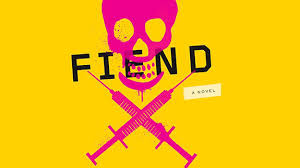
Fiend by Peter Stenson

Fiend

Grade: A

The zombie apocalypse is a pretty bleak affair. Not just because of the walking corpses perpetually trying to eat you, but because the entire world has turned on us. The nurturing planet we look to as our home and safe house has become hostile and bent on our destruction, the wonderful concept of humanity being created in god’s own image becomes only a cruel joke. The world has changed, forever, and has removed all hope. All that’s left is survival in the immediate, just a life of going from place to place. But none of this is new, we already knew all that, it’s been done. So how do you make the zombie plague even more soul-crushingly depressing? How about populating the world with drug addicts. In Fiend, author Peter Stenson uses the walking dead as a metaphor for the nature of addiction, in this case meth. The result is a terrifying look into not just addiction, but what people are capable of when survival is the only thing left worth anything.

The book follows Chase Daniels as he comes out of the tail end of a meth bender and, slowly, realizes that the people of the world are dead and have been replaced by zombies. He flees with his fellow tweaker Typewriter as they try to navigate the new hellish world while also trying to stay high. Their addict instincts take them to a cook known as The Albino, then to rescue Chase’s ex-girlfriend KK and her new dude. Things go badly and they flee to the Hmong end of town and hook up briefly with another cook, things go badly there and they flee yet again to find another safe house with yet another cook. These tropes are incredibly familiar within both the zombie genre and the druggie genre, yet nobody, to my knowledge, has ever thought to combine these two things before. Think about it for a second, there are really only two types of people in this world who truly exist only on a moment by moment basis: Drug addicts and those trying to survive a zombie apocalypse. Why not throw them together? The big twist on this book is that somehow the chemicals in meth are what keep the zombie plague at bay. This sets up an interesting scenario in that the only way to survive is to stay high. The junkies dream, and nightmare come true.

Fiend is written in the first-person, present tense, creating an immediacy and danger that makes the reader feel the same anxiety the characters feel. Stenson intimately understands the junkie’s mind and, refreshingly, cares little for zombie lore. We don’t know much about the living dead, and we don’t care, because they’re not really the point. His protagonist Chase comes off a little too educated for a druggie dropout, though. He consistently makes literary and classical allusions in his narrative to things like F. Scott Fitzgerald and Hephaestus, respectively. These come off a little insincere and seem more like Stenson than Chase. Don’t get me wrong, Chase is intelligent, it’s why we’re able to follow him on his journey despite the horrible and despicable things he does to survive, both before and after the zombie outbreak, but intelligence and education are two different things. This guy would not have knowledge of literary greats and mythical figures.

Zombies terrify us because in them we see what we can become. They’re mindless creatures that only exist for one thing, their next fix. The junkie is obviously the same, and because these two shadows of humanity are all that’s left in the world, this novel contains zero hope. It strips all things good and triumphant away and leaves us with the true nature of the junkie: truly alone, with only their dope to keep them company. The threat of zombies is just one more thing they have to deal with in their quest to get spun. Love and friendship and human connection are only important when they don’t interfere with the procurement of drugs. When given the choice, the junkie will freely enter a world of zombies with no hope of survival just for the vague promise that he might be able to keep getting high for just a little while longer. For an already bleak genre, Fiend is a disturbing, terrifying, and soul-destroying addition.