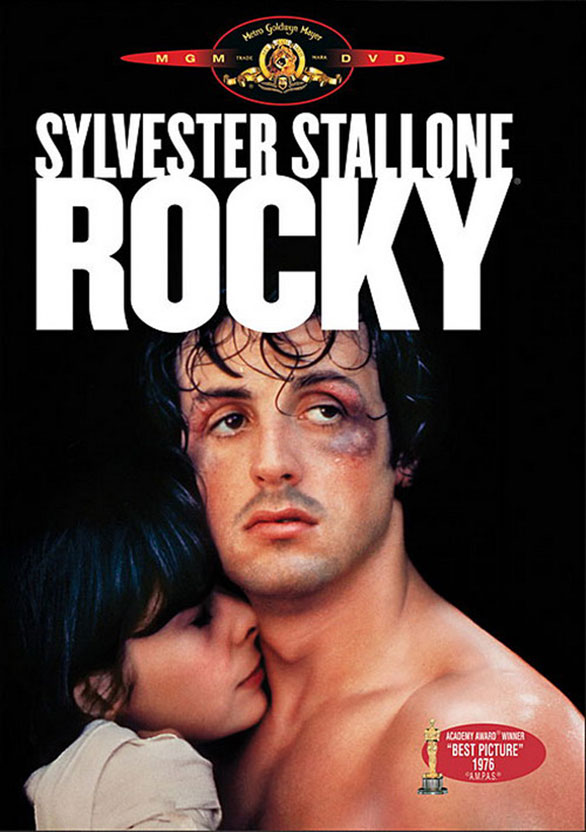
Rocky as a commentary on class in America

rocky-2

Rocky has entered the public vernacular to such a degree that a traditional review is both unnecessary and irrelevant. We all know the story: a nobody, never-was fighter gets a shot at the title and goes the distance against the world champion, Apollo Creed. What needs to be discussed is the perception of Rocky as a celebration of the American Dream. Generally, people always remember the film as the ultimate underdog story, an example of how anybody, with dedication and hard work, can make it in America. The problem is, that’s not what this movie is about. In fact, it’s quite the opposite. Rocky is a cynical attack on the American Dream, out to prove the whole concept as a sham.

Think about this for a second, Rocky was never going to win the fight. There was never a chance of it, and nobody, even and especially himself, ever believed he might. In a moment of vulnerability he tells Adrian that he can’t win, finally saying out loud what was already well established throughout the film. If this was truly an inspirational tale, Adrian would come back with something along the lines of “I believe in you” or “Miracles can happen.” But instead she agrees and just asks him what he’s going to do. His reply? To go the distance, because nobody ever has against Creed. Think about what that means. There is no American Dream, he can’t win, his life won’t change in any meaningful way. All he can do to fight the world is stay on his feet. He’ll still lose, is destined to do so, but he won’t let them knock him down. That’s some seriously cynical shit.

Rocky is very much about the haves and the have-nots. Balboa, being a poor nobody is paraded around like a clown by the rich class. Apollo and the promoters see this as a side show. They laugh at him, make fun of him, and never register him as any kind of threat. Hell, Apollo doesn’t even take the fight even remotely seriously until Rocky has the audacity to knock him down. The fact that this peasant thinks he’s really being given a shot at the title enrages Apollo and his team. Sure, this could be a set up to a classic underdog story, where the peasant rises up and beats the ruling class by sheer force of will, but that doesn’t happen here. In fact, the only reason Rocky goes the distance is because Apollo is kind of out of shape. Rocky had to work his ass off. He worked harder for this fight than he has for anything in his life, while Apollo barely trained, and he still is only able to fight him to a standstill. The lesson? It will take everything you’ve got to go toe to toe with the powerful elite, and you’ll still lose.

Some might respond with “but he made a shit ton of money off the fight, that’ll change his life.” Yes, he did achieve a good pay day. Rocky makes $120,000 off the fight. The problem is, that money won’t last forever. When it’s gone he’ll still be an under-educated, under-skilled, washed-up fighter. And how much do you think Creed made off the fight? Millions, easily.

So why then, does this movie work? Why is it remembered as such an inspiration film? Two reasons. The first is that the sequels completely bought into the American Dream and went into full patriotic mode, thus white washing the original movie. The second reason is that Rocky is a good and intelligent film. It has affection for all its characters, even those that should be villains. Loan sharks and drunks are shown to be full human beings who have depth. We grow to care about Pauly, and love him, even though he is horrible to his sister Adrian. Even Apollo, set up as the movie’s villain more or less, is not painted as evil. He’s exploiting a situation, yes, but he never seems like a bad guy, just kind of obnoxious. Finally, there’s Rocky. A lesser film would either make fun of him or turn him into some sort of martyr. Rocky is neither, he’s just a guy who’s in way over his head and doesn’t know how to back down from a fight. He continually tries, and mostly fails, to do the right and moral thing. He’s nice to people because he’s genuinely a nice man. He respects Apollo, his opponent, even though even Rocky isn’t stupid enough to not realize he’s being exploited. Balboa understands what’s happening to him and refuses to be a clown for the masses. He accepts his loss as a fundamental necessity of his role in life, but he won’t give them the satisfaction of humiliating him. He’ll stay on his feet, because that’s the only power he has in this life. Oh, and he gets the girl.
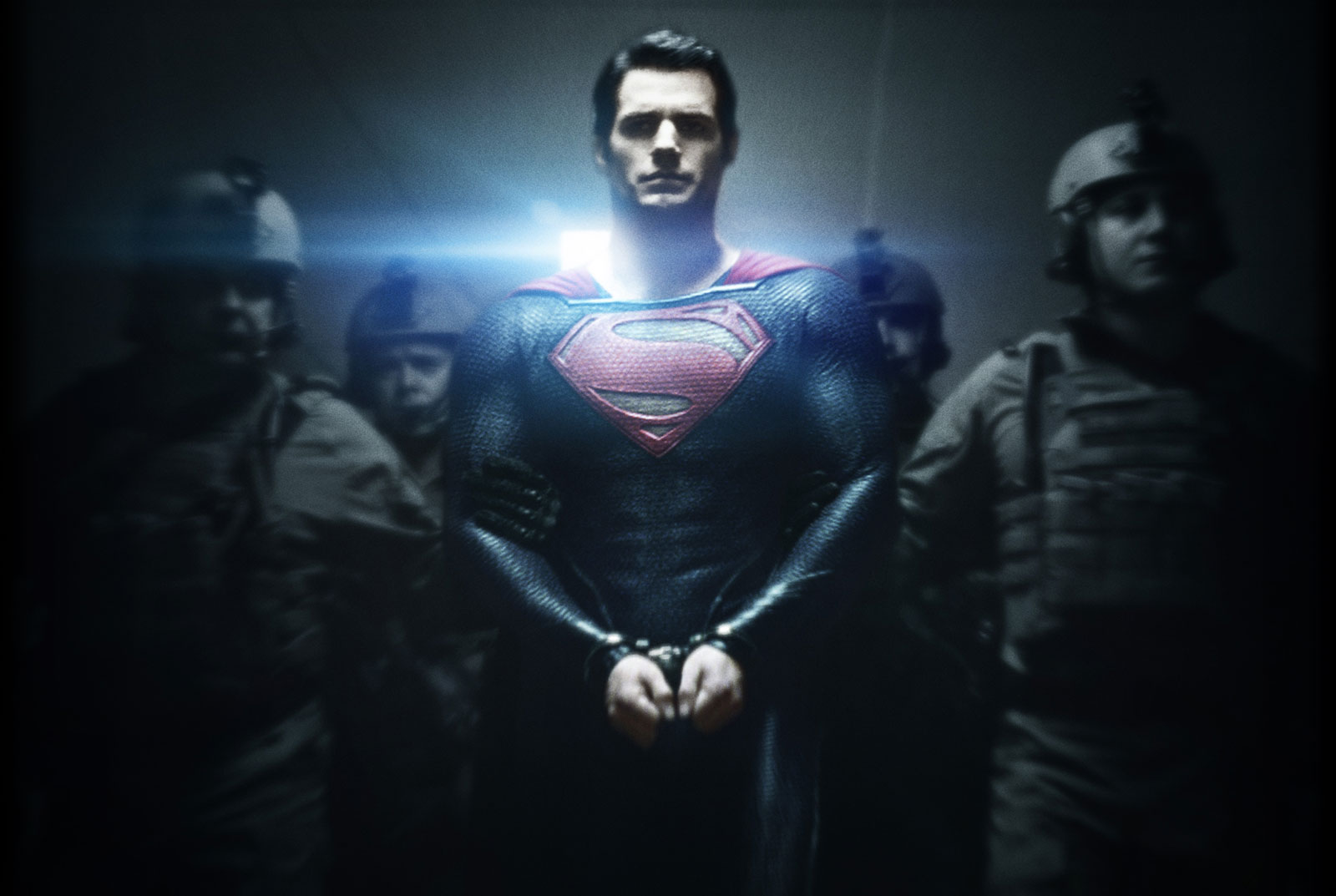
Man of Steel

man of steel

Directed by Zack Snyder
Starring Henry Cavill, Amy Adams, Michael Shannon

Grade: B-

Superman is a serious character. The go to criticism of Man of Steel is going to be that Superman is supposed to be lighter, more whimsical. I know this because that criticism had already started from the moment it was announced that Christopher Nolan would serve as a producer. The internet was upset because, as they would say, dark and serious tones work for Batman but not the Last Son of Krypton. The problem is, that’s not true. As I said, Superman is a serious character, every bit as serious as Batman. Superman: The Movie was more parody than anything, a very well made and entertaining one, but a parody nonetheless. Unfortunately that film has essentially defined the character for mainstream audiences. But Superman and Batman are in some ways the flip sides of the same coin. Think about it, they’re both orphans, both abide by an unwavering moral code, and both are alone in this world. The difference is that Batman fights the darkness with a darkness of his own, while Superman fights it with light. He serves as an inspiration to what humanity should aspire to. That doesn’t make him any less serious, just more awe-inspiring.

With that out of the way, Man of Steel has its flaws. The action sequences tend to drag on far too long, namely the climactic battle between Superman and General Zod where two super powered beings punch and throw each other with enough force to destroy skyscrapers, yet do no harm to either of them. Filmmakers don’t seem to understand that this kind of action gets boring really quickly. If your characters can’t get hurt by conventional means than it’s your job to find a way to raise the stakes in a fight. On that note, the collateral damage in this movie is just far too severe. General Zod and his army essentially destroy the entire city of Metropolis. By the end it looks like a post apocalyptic wasteland (though the Daily Planet building naturally seems fine in the very last scene). A conservative estimate of casualties has to lie in the hundreds of thousands. I understand the desire to make this movie epic as Superman Returns was panned for not having enough action, but if the whole point of the story arch is to establish Superman as an ally, and potential savior, of humanity, this is really a failure. There is absolutely no believable way that people of earth would trust this alien after seeing all the destruction him and his fellow Kryptonians caused. They would be terrified of him.

The changes to the Superman mythos I didn’t mind too much for the most part, with one exception. That is the Lois Lane relationship. The allure of Lois Land and Superman is the cat and mouse game, the constant flirting, the deceiving, the impossible conundrum that she thinks Clark Kent is a doofus while being in love with Superman. This is what makes the relationship fun. Here, there’s no banter, just instant love. There is nothing more dramatically boring than instant love.

My last major complaint is that the opening sequence is far too long. We see too much of Krypton. This is not a movie about the demise of another world, it’s about that world’s lone survivor and his adaptation to earth. The overly lengthy segment just feels like director Zack Snyder wanted to show how cool he could make Krypton look. We really didn’t need to see Jor-El flying through the sky on the back of some kind of winged monster as he races to save his son from General Zod. A scene on Krypton needs to be in the movie, but it needs to be quick and to the point. In the words of Grant Morrison, “Doomed Planet, Desperate Scientists, Last Hope…”

I don’t mean to totally shit on this movie though. It got some things right. Superman comes off as an outsider, desperate for acceptance from his new world while still pining for his old one. It feels very much earned when the film forces him to choose where his true loyalties are, and produces probably the best moment of the movie. Henry Cavill is good in the role, though the script forgot to give his character much in the way of personality. There are two essentials to the character of Superman, other than his origin and powers of course, and those are the two facts that he never gives up and he puts the needs of others ahead of himself. Cavill captures this very well. He gets knocked down, he gets back up. He’s overmatched, he keeps fighting. He brings a quiet determination to the role that speaks to an all powerful alien trying to find a way to use his powers to save humanity, and at the same time blend in with them, and live among them.

As an origin film, Man of Steel simultaneously drags on for too long and tries to do too much in a relative short amount of time. Still, there is enough good here that has me hopeful for the sequel. I’m in the camp of superhero fans who are tired of origin stories. We all know who Superman, Batman, and Spiderman are, so forget where they came from. Just tell us a good story about them. Hopefully the inevitable follow up to this movie can move on and just tell a great Superman story.

The Trouble with Trouble with the Curve

1354895031_trouble-with-the-curve

Directed by Robert Lorenz
Starring Clint Eastwood, Amy Adams, Justin Timberlake, Matthew Lillard, John Goodman
Grade: F

Most people don’t know this and therefore might think this a crazy statement, but the game of baseball is at the forefront of a new war between the young and the old, the newcomers versus the old guard. The old are, understandably, wary of relinquishing their post so they reject the new methods as robbery of the world’s humanity. Meanwhile, the young are overzealous in all their newfound knowledge and can come off a bit pompous. In baseball, specifically, the information age has given us seemingly infinite amounts of data and with it countless new stats and metrics, all designed to further understanding of the game. This terrifies and then enrages, as one tends to follow the other, the old guard. Trouble with the Curve, directed by Robert Lorenz, is the horribly biased movie version of this argument. The film hates technology and anybody who believes it can be used for good is automatically a villain. Insulting to baseball fans, movie watchers, and every single member of this cast, Trouble with the Curve is a manipulative, self-serving, and entirely dishonest film.

The action follows Gus (Clint Eastwood), an aging scout with failing eyesight. He once was the best scout in the business, we know this because we are told this repeatedly just in case we ever doubted. He’s grumpy and dismissive to everyone he meets, though nobody seems bothered by it except his daughter Mickey (Amy Adams), whom he has neglected ever since her mother died when she was six. A big reveal late in the movie, and a disgusting piece of audience manipulation, is that Gus caught some random baseball guy molesting Mickey in a woodshed after a game when she was six and sent her away in order to protect her. Mickey, named after Mickey Mantle because this is a way to establish both that Gus is obsessed with baseball and has no idea to relate to a daughter, is up for a promotion to partner at the law firm she works at. Sound familiar? Probably because that’s the go to premise of any shitty movie where the young, overworked professional must learn a valuable lesson about loving something simple. Anyway, she takes a vacation in the middle of a crucial case, which spoiler alert will cost her that fancy partnership before the movie’s through, to accompany Gus as he scouts a young high school ballplayer. While on this trip, Mickey meets Johnny (Justin Timberlake), a former player who was drafted by her father but after blowing his arm out is trying his hand at scouting. Naturally, they fall in love, though she resists because she must put her career ahead of all relationships. Also, the player they’re scouting is a total piece of shit who has no appreciation for anything, and in the film’s climax Mickey and Gus prove that he has “trouble with the curve,” thus rendering those computer-stat nerds-geeks-assholes-queers into complete frauds and failures and the most vile one of them all gets fired.

As far as the performances go, there is nothing really impressive going on either. Eastwood is clearly on autopilot, grunting and growling his way through every scene. I suspect that Eastwood did this movie as a favor as Lorenz worked as his assistant director for many years and this was his directorial debut. Amy Adams is supposed to be the emotional center of the film, and to her credit she does what she can with the role, but the character is so stock and clichéd that it comes up empty. Timberlake is his usual charming self but only exists in this movie as a plot device. John Goodman is a welcome relief and in his small role as the scouting director of the Atlanta Braves easily gives the best performance. Matthew Lillard is only there to be snaky and I suppose he does that pretty well. You might be thinking to yourself, “hey this is a pretty good cast,” and you’d be right and that’s what makes this movie so infuriating. To assemble a talented and charismatic cast and then reduce them to uninteresting movie clichés is just a bummer.

I won’t go into all the ways this movie also gets the baseball details wrong too, as I’m sure many readers won’t care, but rest assured the way that the talent is scouted and drafted in this movie is absolutely not the way it works in real life (and in what fucking world do the Red Sox get the first overall draft pick? They’d never be bad enough for that). All I’ll say is that this movie fails on virtually every conceivable angle and does not bode well for Robert Lorenz’s directing career. It seems Trouble with the Curve was simply made to be the anti Moneyball, which is fine in its own right, I suppose, but whereas Moneyball certainly had issues of baseball accuracy of its own, at least it was a good movie.

Boys in the Boat by Daniel James Brown

boys in the boat

Grade: D

In 1936 a rowing team consisting of nine young men from Washington State swept through the national competition against boys much more privileged than them and represented, and won the gold for, their country in the Olympic games held in Nazi Germany. Set against the backdrop of the Great Depression and a looming World War II, The Boys in the Boat by Daniel James Brown is the story of these boys, their coach and a British rowing guru, and their journeys and trials as they face seemingly unbeatable odds. Some of this book is exciting and thrilling, usually when Brown allows the story to breathe on its own, but for the most part it descends into what feels like mushy propaganda.

Most of the book centers on Joe Rantz, a young man who had a tough upbringing. He was poor, his mother died, his stepmother hated him and forced his father to abandon him. A self-made man, more or less, Joe gets himself into college in Seattle and joins the rowing team more for material benefits it might bring than any love of the sport. His journey is one of learning to trust his teammates, overcoming his fear of loss, and losing himself in camaraderie. Sadly, Joe is so punishingly uninteresting that we’re not really sure why his teammates are so devoted to him. He comes off as that guy you work with that’s nice enough, but you never really invite him out for beers because you know, even with plenty of booze, it’ll be a painfully boring night. A few other team members are given some attention, though drawn pretty broadly with only basic characteristics expected to carry the weight of bringing them to life. The rest of the team is barely even mentioned except to acknowledge they were there. A decent amount of attention is given to the coach, Al Ubrickson, and the master boat builder, George Pocock. Again, there are some interesting facts about them, but Brown insists on keeping them at arm’s length the entire time.

Other than a lack of people we care anything for, this book fails for two reasons. The first is that Brown desperately wants us to understand just how hard a sport rowing is. It’s like he already accepted that most people reading this book are going to think the sport is kind of lame and for silly rich people, so he overcompensates by dedicating huge portions of the book to explain the toll it can take on a body. It’s interesting enough information, I suppose, but so much effort spent on this tends to make me doubt the sincerity. The second failing is that Brown seems to think that this story should make me feel proud to be an American just by reading it. There is a real ra-ra patriotic vibe that’s totally unnecessary. Instead of just making it a great underdog story, Brown creates a scenario where pure American gumption and can-do attitude prevails against the rigid, robotic Germans. If there’s any doubt as to what point he’s trying to make, he lays it on thick enough to choke on in the final passages of the book. He puts himself into the story, stands in the same spot Hitler watched the fateful race, and boasts “Standing there, watching them, it occurred to me that when Hitler watched Joe and the boys fight their way back from the rear of the field to sweep ahead of Italy and Germany seventy-five years ago, he saw, but did not recognize, heralds of his doom. He could not have known that one day hundreds of thousands of boys just like them, boys who shared their essential natures – decent and unassuming, not privileged or favored by anything in particular, just loyal, committed, and perseverant – would return to Germany dressed in olive drab, hunting him down.” This is pure manipulation, pure bullshit. Brown doesn’t trust his story enough, so he bends into something it isn’t, a forced poignancy that robs Joe and his teammates of their hard-earned, pure victory, by pushing the same ignorant theory that Hitler did in his day. That our boys were better because of where they came from, the spirit that only hard-working, good-natured Americans can own.

Sports are inherently exciting, it’s in their very nature. It’s why we love them and keep coming back for more and tell story of championships and defeats for generations after the events. Manipulating them into something bigger is unnecessary and harmful. Bask in the victory, revel in the amazing narratives a championship, especially an underdog one, can produce, and always search for the essential humanity in the storylines. But never use a game to push your own agendas. There is a great story here, one of perseverance and overcoming all sorts of tribulations, but sadly the one that is written cares more about what these boys are metaphors for than their humanity.