Amour

(Editor’s note: I’m currently on vacation and will be back to post after the weekend. The following review is by the writer of The Roost and her contributions are greatly appreciated here at Some Damn Fool.)
amour-movie-poster-2

Grade: A+

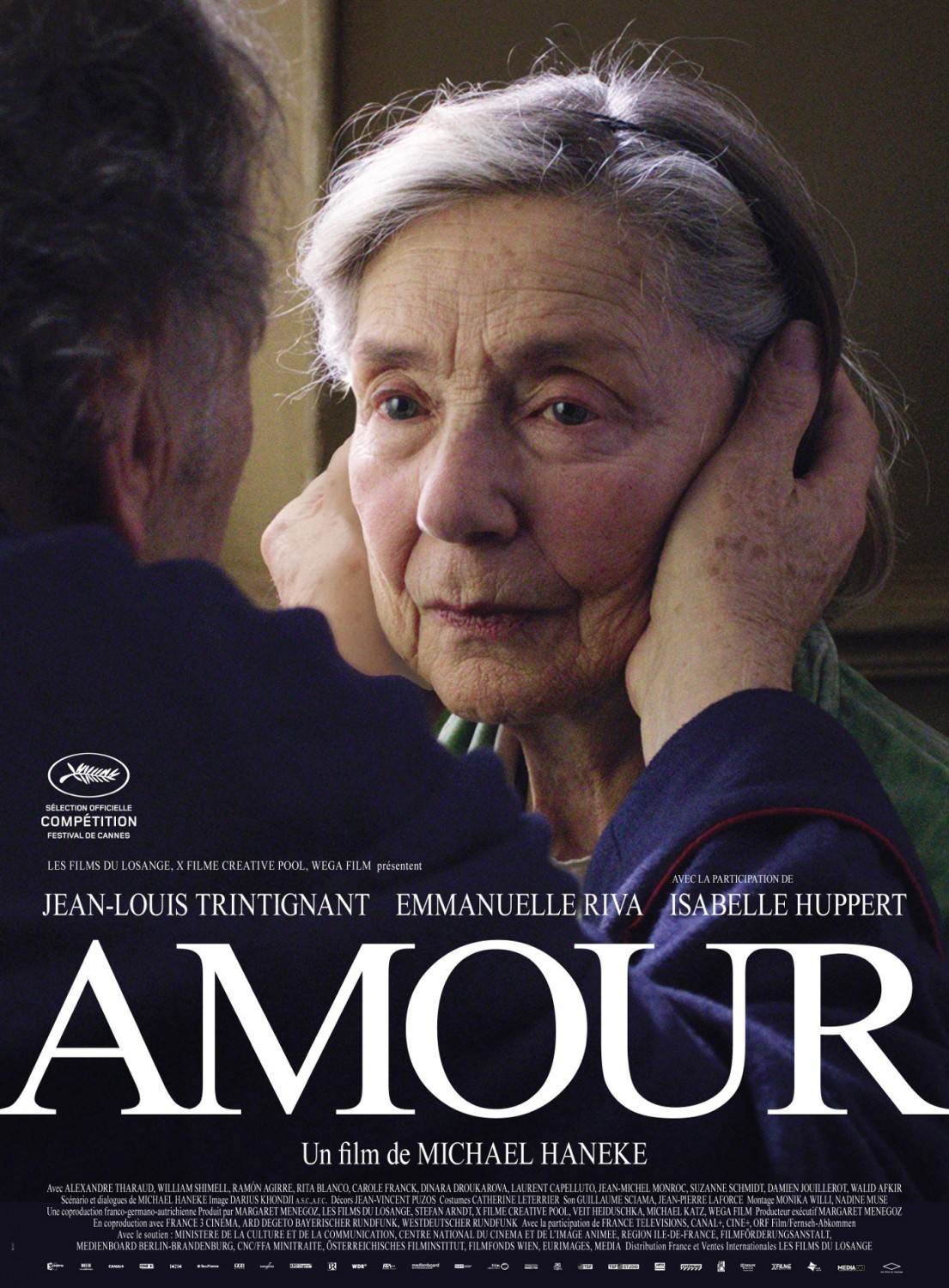
The Oscars are on Sunday, and if “Amour” goes home with nothing, the Academy doesn’t know a damn thing about film. Michael Haneke has created a gorgeous piece of art, with raw emotion that filters through every scene – start to finish. Death and dying are not topics our society has an easy time looking at with honesty. We like to sugar coat it, wrap it in wry remarks and humorous anecdotes, hoping to distance ourselves from the inevitable reality we will all face. “Amour” doesn’t do that. It “bares all” in its examination of dying, and the effects that it has on our loved ones. More importantly, it “bares all” when it comes to what love truly means.

From the onset, it is clear that the movie deserves it’s title. In the opening pre-credit scene, police barge into the apartment find the bedroom sealed off, a carefully laid to rest Anne inside. The care and consideration taken with her body are just a glimpse into the loving relationship Anne and George have. The chemistry between Emmanuelle Riva and Jean-Louis Trintignant enriches the script and reverberates off the screen, leaving the daughter’s marriage to a philandering English musician in stark contrast. Snippets throughout the movie of George’s care of the infirmed Anne – from helping her get out of her chair, to aiding her with the toilet, feeding her when she can no longer feed herself, washing her, taking her through her exercises – show a man unable to even consider a life without his wife; loving her even when her mind is too deteriorated to return that love.

Anne and George Laurent are retired music teachers, an elderly couple who still find comfort in each other’s company. Anne suffers from a stroke, leaving her paralyzed on the right side of her body. At first, George takes care of her by himself, cutting up her food so that she can still feed herself, helping her with the nuances of using the bathroom or taking a bath, and taking her through her daily exercises. She can still read, still talk, still move around in her automated wheel chair, but this changes. It is inferred that Anne has suffered a second stroke, and finally George must get a nurse to come in – three times a week. The remaining time, he is still her primary care taker, a role that ages him considerably throughout the movie. Anne’s mind is slipping, she is unable to do even the most basic of tasks, and the two of them start to remove themselves from the outside world.

Much like the pigeon that keeps flying through the courtyard window, their daughter flutters in and out of their apartment, unwilling or unable to leave her parents to simply die, even when it is requested. A nurse is let go for attempting to show Anne a mirror, so that she might see the hairstyle the nurse has roughly brushed out. A letter from a former student, remarking upon the sadness of Anne’s condition, changes their tiny moment of excitement back into depression. The young do not understand what it is to die. While well-meaning, their interruptions and sentiments are not acts of selflessness, but of an inability to relate; a reflection of their own needs and not the needs of the couple. George’s final interaction with Anne may be construed by society as murder, but for them, it was release. Love is acknowledging the needs of another.

Trintignant is superb as a man completely devoted to his wife. Every expression, every movement, every line delivered reflects the progressing toll Anne’s condition has on George. His wife is suffering her way to death, and it is killing him. The Oscar nod was truly deserved for Riva, however. Her performance was heartbreaking. Frustration, resentment, depression, dignity, mental deterioration – there are very few actresses that could act with such grace and subtlety. Riva doesn’t just show us the emotional turmoil Anne is going through, she makes us feel it.

We talk a lot about what defines marriage and love, our proclamations of “in sickness and in health” and “’til death do us part” often ring hollow. Haneke’s “Amour” is more than just a couple dealing with death. It is a movie about love beyond youth, beyond romance, beyond the good times. Love through sickness and frustration. Love that is devoted and respectful and forgiving. While looking through family photo albums, Anne remarks in sad reflection “C’est beau – la vie.” Haneke’s exploration of love and dying are equally beautiful – and devastating. Bring your tissue boxes.


Silver Linings Playbook

silver linings playbook

Grade: A-

Bi-polar disorder is something that is never really handled well in story-telling. It’s either played for laughs or makes the afflicted person such a crazy, bat-shit mess that it’s hard to root for them and even harder to understand why the characters around them tolerate their bag-shittiness. Silver Linings Playbook does it better, in fact I daresay it gets it right. Pat Solitano (Bradley Cooper) is mostly a good and nice man, however he has no filter from his thoughts to his speech and he’s prone to explosions of extreme rage and violence. All the while he maintains a tragically positive attitude towards life and believes that if he just tries hard enough he will get a happy ending, a silver lining if you will. The result of this is a tragic and darkly funny movie that has earned the mostly positive reviews it’s getting.

Pat’s just getting released from a mental hospital after serving a court ordered eight months there, and is ready to get his ex-wife back. This proves difficult because she has a restraining order on him for beating her lover half to death after he catches them in the shower together. Pat has a support group, his father Pat Senior (Robert Deniro) who suffers from a pretty intense bout of OCD that centers around the Philadelphia Eagles, his mother Dolores (the unsung hero of this movie Jacki Weaver) and a supporting cast of character actors that add life to the film. Nobody can quite get through to him that his wife, Nicki, has moved on and wants nothing to do with him and that maybe they weren’t really right for each other in the first place anyway. Pat doesn’t want to hear any of this and reacts very poorly when it’s even mildly suggested, like when he becomes consumed with rage and becomes a danger to his parents because he can’t find his wedding video.

Cue the hot girl. Tiffany (Jennifer Lawrence) is a recent widow, sex-addict and might have a spot of bi-polar herself. Tiffany shows up and is introduced to Pat through mutual friends because they probably figure it would be easiest to just pawn off the two crazies on each other. The movie then pretends it’s not a romance even though we’re well aware that it is, and the climax revolves around a big dance scene and the result of the big football game, finally resolving itself in a somewhat easy manner. But more to that in a second.

The acting is what drives this film. Cooper, Lawrence, Deniro and Weaver are all outstanding. All the major roles received Oscar nominations and all deservedly so. I wrote about a week ago about Deniro in Being Flynn and how he just doesn’t seem to play an unhinged character all that well anymore, and in this he finds the right role for himself at this stage. In fact, he’s a man so hinged that anything disrupting it causes complete chaos. Deniro proves that I was wrong about him and he’s still got the goods when given a script that works. Jennifer Lawrence plays a quietly haunted character perfectly, though she’s less good during her big explosions. Cooper finds just the right note of a bi-polar man, not crazy, just struggling to maintain his composure and adjust himself to a world with too much stress for him to handle. Jacki Weaver is awesome in this movie. I’m incredibly happy she got a nomination, and I hope she wins. Hers is a thankless role, the long suffering mother. She’s endlessly nice, but has a son with bi-polar and a husband with OCD. She loves them both and is clearly holding on to her composure by the skin of her teeth. Weaver’s performance is the emotional center of this film in my eyes.

Now let’s get to the ending. I didn’t love it. This movie was great because it didn’t try to deny that the problems the characters faced were complicated. It feels honest and it doesn’t mess with the audience’s head just to get a cheap emotional point. But then the ending feels a little coy, and employs a ton of clichés, some of which to be honest I’m okay with because they used them in new and refreshing ways, and makes this otherwise very complicated situation resolve itself a little too easily. The final few minutes, while satisfying in a way, just doesn’t resonate as well as I would hope. It’s a minor gripe, but it prevents Silver Linings Playbook from being a borderline masterpiece.

Bill Volume 2: Reborn

Continuing MacDougal Drive

Bill left the bar and lit a cigarette. Larry was a good sort, even picked up the tab. Bill resolved that he would buy beer the next time they were out, though he’d have to figure out a way to make some money first. Once he’d been full of ideas, some ridiculous sure, but there was never a short of inspiration. Then the dark times, the waiting around for his mother to die had taken something from him. He felt now that it was coming back though, that a spark had been relit somehow. A change had occurred, there was no denying it. Since the letter from the writer’s conference he’d been smoking too much, had started boozing again. The fragile illusion of control he had so carefully cultivated was becoming impossible to maintain. The nicotine shot through his brain and focused his thoughts, sent his drunkenness away to hide in a corner. He walked up the street towards home where he’d check on his mother, who would probably yell at him for leaving her alone. It had become clear that she was clinging onto life only to burden him, keep him down until he knew, and would never forget, what a rotten son he was to her.

The skies were an unnatural black above him. No, not unnatural he told himself, just cloudy, the threat of rain looming. He thought of how badly the city needed a good rain. Not for the drought, that was perpetual, but to give a feeling of being washed. That kid that had been killed made everything and everybody feel dirty and tainted, guilty over their own small roles in the evil. Murders were rare in this town, child murders almost unheard of. He’d given a lot of credit to that awful letter, but this sensational act of violence was just as much responsible for the change. A dark energy had fallen over the town, something sinister yet potentially beautiful.

He picked up his pace to beat the rain, felt the booze creeping its way back into his consciousness. Bill felt awful about the dead kid, the one that lived too, to live is sometimes worse. He was pretty sure that kid was a neighbor, but he had little memory for faces. But he had to admit a certain excitement too. Finally something worth talking about, something maybe even worth writing about again. He could follow the case, interview the victims and suspects, turn it into a narrative. He could be like Truman Capote, except he wouldn’t be gay. Well, he’d be willing to fake it if it meant selling the book. Bill didn’t have a lot of sexual urges one way or another anymore. But what a story, what a writer!

The drunk was back in full now and he had to piss. He stopped and whipped out in front of a brick wall, tried writing the first sentence of his new book with his stream. He became vaguely aware of someone shouting. He turned to see an officer of the law getting out of his car and coming at him.
“What’s going on here?”
Bill looked down at his exposed member. “Couldn’t wait.”
“Put it away.” The officer approached him and sniffed the air. “Drunk?”
“Boy howdy.”
“Alright, come on.” He led Bill into the backseat of his cruiser, but didn’t cuff him. “You’re gonna sleep this one off in the tank.”
Bill laughed in delight, he was back. Yes, he was losing control of himself. He could be a writer again. He watched the neighborhood fly by through the window and thought only of his new masterpiece.

Read the rest of the series of MacDougal Drive:

Bill

Jimmy

Dolores

Harley

Home Land by Sam Lipsyte

homeland

Grade: A

There is a deep seeded fear in me, that increases with every year that passes, that being moderately intelligent and moderately creative is just not good enough. My concrete successes are few and far between where my victories seem more on the abstract end. In that respect Lewis Miner, or Teabag as he’ll forever be dubbed due to an unfortunate locker room incident that he mistakenly (but probably knowingly) mistook for an initiation rite, the protagonist of Home Land by Sam Lipsyte is me, in fact he is all of us, all of our fears and limitations and shortcomings and failures. He’s in his early thirties and he “didn’t pan out.”

His failures haven’t made him particularly wise or sagely and he doesn’t offer up any great advice, but the thing he does have is the truth, at least his version of it. He writes to his high school newsletter, giving updates of his life that go far beyond the typical nonsense found in such rags. He’s not there to share about his minor life achievements, rather his sexual depravities, his drinking, his financial woes and generally his stalled life. In the meantime he also exposes the truth of his old high school mates empty lives and odd perversions. I say his version of the truth because Teabag is a classic example of that lovely word we all fell in love with in English 101, the unreliable narrator. We only get his perspective and it’s clearly a warped one. He spins all kinds of tales, never romanticizing his own life, but absolutely destroys all the hopes and aspirations of the entire town. I call him unreliable because I’d be willing to listen to the argument that all the action in this book is imagined or an outright lie, but whether it’s the truth or not doesn’t feel important. What is important is that it feels true.

Plot wise, there’s not much. There are several mini-plots that all lead up to the looming high school reunion, or the Togethering, as it’s referred to. We know we’ll get some pay-offs when we get there, but it never really feels important. Home Land is all about the characters and spending some time with them. The entire town feels alive and poignant, a lot like the one I grew up in actually.

The voice is what drives this book. Teabag is funny and horrible, but so honest and pathetic that you can’t help but love him. He’s the kind of guy that will never amount to anything in the traditional sense but he’s accepted that and only maintains a just below the surface anger that is hard to see. He spends a great deal of the book obsessing over his ex-girlfriend but in one of the funniest, tragic, crass segments I’ve ever had the pleasure of reading, treats her like dog shit when he gets a chance to rekindle, though to be fair she doesn’t exactly merit nice treatment. He mocks the world around him and knows he’ll never be a part of it, but there will always be a touch of sadness about that. He fixates on his old principal, Fontana, and won’t stop until he’s dragged the man down to his level, but then redeems him in a beautiful, if warped, moment.

What makes Teabag so sympathetic and relatable is that in his own way he wants everyone to be happy and honest. He submits his updates to his fellow Catamounts, the school’s mascot, with the knowledge that they will never be published but in the hope that it reaches someone who is inspired to deny the lies their lives have become. In a way he’s taken all the shittiness of an entire town and placed the burden entirely on himself. Teabag’s not heroic, not by any reasonable standard, but he’s willing to stare the world in the face and call it for what it is, and that’s worth something. Teabag is the voice of our fear, that maybe we’re not really meant for great things after all.


Buy this book!

Being Flynn

Being-Flynn

Grade: B-

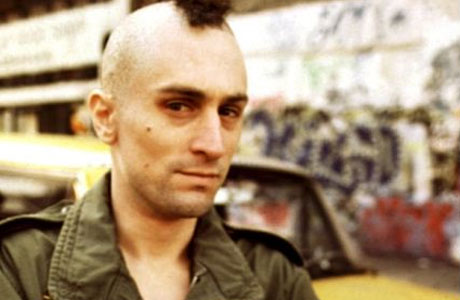
Few actors can go unhinged like Robert Deniro. He can terrify us with nothing more than a look. It was never the violence of his movies that unnerved the audience, it was the glint in his eye like he was enjoying himself on a level we’d never fully understand. Deniro characters were people we want desperately not to exist, because the alternative is too terrifying to face. That’s why people often refer to him as one of the greatest actors, if not the greatest, of his generation, or any generation. The problem is, and this is no surprise to anyone who’s watched movies for the last 15 years or so, that Deniro, that dark mirror into our world, has seemed to disappear. He’s been replaced by a loveable spoof of the tough-guy gangster. Oh, he intimates Ben Stiller just fine in Meet the Parents, but he never intimates us, because the character is a cartoon, a ridiculous concoction created only for laughs. He’s an enjoyable presence to watch on screen, but that’s the problem, I don’t want to have an enjoyable experience with a Deniro movie. I want to be uncomfortable, nervous and worried about what insane thing he’s going to do next. I think the problem is that the self-parodying, caricature Deniro has now replaced the dangerous actor he used to be. When we see him on screen, we expect him to do his Deniro schtick with his faux-tough guy talk and self-aware smile.

I once dressed up like this for Halloween.  I did not intimidate anybody.

I once dressed up like this for Halloween. I did not intimidate anybody.

In Being Flynn Deniro is attempting to find that old Scorcese-starring rage-filled method actor. And he doesn’t do an awful job either. Any other actor giving the same performance, I would probably just say “that was pretty good” and be done with it. But seeing Deniro try to go for the subtly unstable, unpredictable and dangerous character, and coming up short is jarring. In fact, he goes a bit over the top in a lot of scenes, choosing to yell his way through vulgar, racist and homophobic monologues, rather than letting that anger fester within him until it bubbles to the surface. There’s little danger to his character, just the standard crazy, delusional stuff. Crazy’s not what we want though, crazy’s boring. We want to be scared of Deniro again, but it seems to be getting clearer and clearer that he just might not have it in him anymore.

Deniro just remembered Rocky and Bulwinkle

Deniro just remembered Rocky and Bulwinkle

I didn’t hate this movie though. There were redeeming qualities, Julianne Moore’s performance comes to mind, as the depressed, ever suffering mother. Paul Dano is steady, though doesn’t dig quite deep enough for my tastes. And Deniro, despite the above criticism, did have a couple of inspired moments.

The movie is based off the book Another Bullshit Night in Suck City by, you guessed it, Nick Flynn. I haven’t read the book myself, but all accounts it’s awesome and worth a read. The story follows Nick, estranged from his father his entire life, who’s drifting along, dealing with drug addiction and daddy issues. He gets a job at a homeless shelter where his father, recently kicked out of his apartment and cab because of his drinking and craziness, shows up. They’re both aspiring writers and Nick fears he will end up just like his father. A lesser movie would aim for a redemption ending or at least give us some sense of finality, but Being Flynn, to its credit, isn’t interested in either of those things. Sure, Nick seems to have a lot figured out, too much in fact but back to that in a second, but his father is stuck permanently in a static state, forever believing that Viking is ready to publish his novel. Nick’s story isn’t quite earned. He gets addicted to cocaine too easily, then gets off it too easily, then seems to launch a successful writing career much too easily (trust me, it’s fucking hard). Everything just seems to happen to him and I never got the feeling he was actually working toward anything. The most interesting plot in this movie is the bits and pieces of Julianne Moore’s character, the big reveal of her death and the way it’s played. It might come off a bit like melodrama, but in my mind it works. She is the film’s emotional center and probably could’ve been used even more while scaling back Deniro’s performance a bit.

This movie wasn’t a total failure, in fact it was pretty good. But it had the opportunity to be something more and it came up short. This is the kind of movie I would rather be awful than pretty good. I don’t know if that makes sense, but the worst thing I can say about a movie starring an unhinged Robert Deniro is that I’ll most likely forget it in a couple months.