Ex-Heroes

Ex-Heroes

Written by Peter Clines

Grade: C+

The nerds have won, people. Gone are the days when the acne-riddled, asthma-infused, coke-bottle-glasses-wearing, obese kid in a Land of the Giants T-shirt was regulated to the collective corner of our society. Mainstream audiences are now well versed in subjects such as Batman, Star Wars, Star Trek and all kinds of other estrogen-repulsing things. This isn’t a bad thing. We now get high-budget stories from quality writers and directors and actors and a guy that writes a blog nobody really reads is allowed to have a relationship with a real-live girl. Of course there is a problem, otherwise I wouldn’t have written the last few sentences. That problem is oversaturation. We’ve finally gotten to a point where we can simply reference pop-culture and that is enough to appease the crowds. To be fair, Peter Clines Ex-Heroes isn’t completely guilty of this, he just falls a little short of something better.

This premise of this novel is simple: Superheroes vs. zombies. It’s an awesome enough set-up, and well-written too, though some of the dialogue is a little forced. It’s set in a Los Angeles where super powered beings have risen up and started doing super hero like things, protecting the populace and forming alliances and rivalries that are amazingly destructive. There’s St. George, or The Mighty Dragon, Stealth, Gorgon, Cairax, Cerberus, Zzzapp, and a few others that are of varying degrees of importance. Then the zombie apocalypse comes and the heroes, at least the ones that survive the onslaught, are forced to carve out a slice of the city and protect their new civilization, naturally in the safety of a movie studio lot, they call The Mount. Things go about as well as you can hope, the citizens are mostly safe other than a few minor incidents, until a gang builds up power in another end of the city. They want the resources of The Mount, and they might have a few tricks up their sleeves, including some super-powered beings of their own.

Clines offers up some new additions to the two respective mythologies. The origin of the zombies intertwines with the rise of the superheroes and is a pretty compelling angle. The survivors of the apocalypse, since they’re in Los Angeles, have a running game of who can kill the most famous celebrity zombie. These feel fresh and bring something new to well-worn concepts. This is where the novel shines, but unfortunately it just doesn’t do enough of this kind of thing. For one thing, anybody who knows a decent amount of superhero lore, will be able to spot variations on both DC and Marvel characters in these original heroes. With a few tweaks St. George is Superman, Stealth is Batman, and their relationship is nearly identical to the classic heroes though admittedly with a nice twist of sexual tension. Among others, The Hulk and Iron Man are both essentially there and Captain America is even teased at in the preview for the second book in the series. There’s nothing wrong with this necessarily, except for the fact that I don’t think I would’ve picked up on these similarities if I wasn’t such a nerdlinger myself, which feels a little dishonest to me.

Zombies have had a rough go in pop-culture of late. They’ve never enjoyed more popularity than they do now, but they’ve lost something in the process. Gone are the mindless, soulless nightmares that are terrifying metaphors of ourselves and what we could all become, and in their place are mindless monsters who want to eat humans. They’re more gory, but less scary. Superheroes fighting zombies has the potential to be an amazing allegory for this contemporary world. Gods have come down to protect us from the monsters threatening to turn us completely into a mindless consumer society. Our very souls are at stake. What is too often missed is that it’s not our lives that are on the line in a zombie apocalypse, but our humanity. And to be fair, Clines does address this, and at times he does it well, but it feels like an afterthought for the most part, and just an excuse to lend a story some weight that’s really just fixated on how hard a super strong guy can punch a zombie.

Overall this is an enjoyable, if kind forgettable, read. It’s apparently the first book in a series, and I liked it enough where I will probably read the next book when it comes out.

Buy this book!

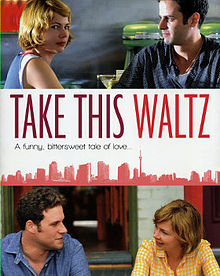
Take This Waltz

Take This Waltz

Directed by Sarah Polley
Starring: Michelle Williams, Luke Kirby, Seth Rogen

Grade: B+

Let’s face it, character studies do not make good popcorn movies. They don’t tend to be terribly exciting and they’re not particularly funny either. Long stretches of quiet drag out followed by moments where you have to rush for the control to turn the volume down because you’re suddenly completely started by the noise, thus spilling greasy popcorn all over your new ironically phrased T-shirt you just scored from the Salvation Army. What these kind of movies do though, at least the good ones, is find a tense note and push it all the way to the brink until you can’t stand it any longer. Take This Waltz, directed by Sarah Polley, uses sexual tension to this effect, and does it well. The meat of the film revolves around an emotional extramarital affair in which the two characters use every ounce of restraint they possess to not physically touch each other, though it’s clear that symbolically the deed is already done. The tension these two feel is so palpable it becomes too much for the audience to stand, much less the two characters on screen.

The film centers around Margot (Michelle Williams) who has a good marriage in seemingly every facet except for a lack of sex. I wouldn’t even say there is a lack of intimacy, because Margot and her husband Lou (Seth Rogen in a rare dramatic turn) are very affectionate in a quirky, demented way. But the lack of action between the sheets is all too apparent and every attempt at rectifying that ends in failure and resentment on both parts. Enter dreamy Daniel (Luke Kirby). He’s everything Lou is not: cynical, mysterious and far better looking. Margot meets Daniel on a trip to Toronto, shares a plane with him and they are both surprised to learn he lives virtually right across the street from her. Convenient, yes, but the film is good enough to overlook this impracticality. The two begin having secret rendezvous where they flirt and even talk bluntly about all the sex they would have if she wasn’t married, but they never act on it. Lou meets Daniel and likes him. He invites him over to their house for a party. He pieces together what’s been happening eventually but is far too nice of a guy to have the explosion moment we’re used to getting in these kinds of movies, instead he backs off. Lou is not willing to fight for her, and Daniel is. Maybe that’s the message here, but it’s a lot more complicated than that.

Michelle Williams is fast becoming one of the best young actresses working right now. People who only remember her as the girl from Dawson’s Creek are doing themselves a disservice. She turns in an amazing performance in this movie as a character so full of angst, toward just about everything in this world, that she has to work up courage in order to seduce her own husband. Seth Rogen, meanwhile, definitely has limits. He’s an incredibly funny man and plays a great everyman. Most of this movie requires him to simply a sweeter version of the same character he usually plays, but when the script calls for him to do some heavy lifting, Williams is acting circles around him. Luke Kirby is good in his thankless role. It’s thankless because it’s virtually impossible not to dislike this guy. He’s a decent enough guy going through his own moral quandaries, but the fact that he’s leading Margot away from Lou, who’s just so fucking nice, makes us resent him.

A standout performance comes from Sarah Silverman. She only shows up in a few scenes, probably a good thing. A recovering alcoholic, she dreads the inevitable relapse that always seems to come to the afflicted, and provides virtually all the insight in the film. She sort of serves as the voice of the audience in some ways as she spells out the subtleties that we might not have picked up on. “New things get old,” she tells Margo at one point. It’s fairly early in the movie, but by the end we realize this is probably the most important piece of dialogue. It might seem heavy handed but the rest of the film plays it so close to the vest that it’s nice to have something concrete to latch onto.

Overall this is not a story interested in satisfying conclusions. It’s also not a love story, not really. It’s about unsatisfied lives and trying to find happiness wherever you can.

Buy this movie!
http://www.cduniverse.com/productinfo.asp?pid=8587887&style=movie&frm=lk_Somedamnfool

First Date

Julia and Michael are sitting on opposite ends of a couch, each with a glass of wine in their hands.

Michael
And then I said (in a bad Borat voice) Very nice!

Julia
Oh my god. That is so funny.

Michael
(Laughing) Thanks.

Julia
Really, that’s really funny..

Michael
(Still laughing) Thanks. Sometimes crazy thing just happen to me, you know?

Michael scoots a couple inches closer to Julia.

Julia
How ‘bout some more wine there, Chief?

Julia doesn’t wait for him to respond before pouring more wine into his glass. She also takes this time to refill her glass.

Michael
Oh, thanks. Listen, I’m really happy you came over to me at the bar because I was staring at you all night. I don’t mean staring. What I mean is, it wasn’t in a creepy way or anything, I just noticed you a lot. (Takes deep breath.) I just think you’re really hot.

Julia
What, you don’t get approached by girls? I find that hard to believe.

Michael
No, it’s not that. I mean, I do pretty well with the ladies. (Michael scoots a little closer again.) It’s just that girls don’t usually approach guys in my experience.

Julia
Well, then I’m glad I approached you too.

They both drink from their respective glasses. Michael puts his arm around Julia but he’s still a little too far away to pull it off perfectly and he has to fully extend his arm just to get his hand on the back of her neck.

Julia
You don’t do this very much, do you?

Michael
(Fidgeting.) No, it’s not like I never have though. Like I said, I do alright with the ladies, but I guess I’m not Wilt Chamberlain or anything like that.

Julie leans in and they kiss.

Charlie
(offstage) Somebody help me!

Michael
Who the hell’s that?

Charlie enters. He is walking quickly and seems to have blood all over his shirt.

Charlie
You guys, you gotta help me. I was attacked.

Julia
What happened?

Michael
Wait, who is this guy?

Charlie
I’m really sorry to intrude on you guys, but I got a terrible situation here and I could really use some pointers.

Julia
It’s okay, Michael. Charlie’s my neighbor. (To Charlie.) Okay, what happened?

Charlie
Like I said, I was attacked, right? But I fought back.

Julia
And are you okay?

Michael
Is that…blood?

Charlie
So I’m walking home from the bar, and this guy comes at me with a knife. He probably wanted my money, but the joke was on him because, what money? I was ready for him though. When he lunged at me with that knife of his I just grabbed his wrist from behind and turned it around on him. (Charlie acts this out.)

Julia
How were you ready for him?

Charlie
What? Oh I don’t really know I guess. Anyway, he screams out “I’ve been stabbed!” And so I gotta shut him up, you know? So I grabbed a rock and just smashed his skull. (Beat.) He’s dead now.

Michael
Oh god.

Julia
Dead? And you’re sure?

Charlie
Oh yeah, he’s definitely dead. I mean, I haven’t seen that many dead things, mostly squirrels and small animals like that, but this guy was dead.

Julia
Okay, let’s everybody calm down and figure this out.

Michael
What are we figuring out?

Charlie
The weird thing is, I think I kind of enjoyed it. I mean, I’m pretty amped over here.

Michael
Oh shit.

Julia
Okay, why don’t you sit down, Charlie, and try to calm down.

Charlie sits down on the couch next to Michael.

Julia
Did anybody see you?

Charlie
I don’t think so.

Michael
Are you guys insane? Julia, we need to call the cops.

Charlie
(Standing back up) Cops? Are you crazy? I just killed a man, in a fairly brutal fashion I might add. How could I possibly explain this to the fuzz?

Michael
Jesus, this isn’t happening.

Julia
Okay, no cops. Charlie, you can stay here until things die down a little. You can sleep on the couch.

Michael
Stay here? That can’t happen. Look at this guy, he’s clearly unstable.

Julia
I can’t abandon my friend. What kind of person would I be?

Charlie
You won’t even know I’m here, I swear.

Michael
Listen, I’m not staying here with a killer.

Charlie
Dude, you’re starting to really agitate me. (Puts his arm around Michael) Julia’s got plenty of rocks in her backyard.

Michael
Oh shit. I gotta go, Julia.

Michael gets up and runs off stage without looking back. Charlie starts laughing quietly.

Julia
That’s a shame. I really did kind of like him, it’s too bad he got away.

Charlie
Huh? Oh man, Julia it was like we were dancing. (Sits back down on the couch.)

Julia
Well at least now it’s out in the open.

Charlie
Yeah, that’s a good thing, I think. I’m sorry I just barged in on you guys like that. He seemed like a decent dude and all.

Julia
Yeah, he was okay.

Charlie
It’s just that I got tired of seeing you bring all these guys home all the time.

Julia
Well…

Charlie
That’s not to say that you bring a lot of guys home or anything. I’m not saying that at all, please believe me. I mean it’s not like promiscuity is a sin or anything right? I’ve gotten around myself a bit too, so I’m no nun myself.

Julia
I’m starting to think we’re not talking about the same thing here.

Charlie
I guess what I’m trying to tell you is that I just wish those guys were me sometimes.

Julia
Oh god. What about tonight?

Charlie
Look, let’s just start from square one. I don’t want to freak you out or anything but I’ve been in love with you for like two years now. I don’t mean that in a weird way, I just watch your house sometimes.

Julia
Okay, let’s just relax here. We have to get you out of here before the cops come.

Charlie
Why would the cops come? Unless that little prick calls them or something, but I’m pretty sure he’s too scared at this point.

Julia
Well, the body’s going to raise some suspicions, right?

Charlie
Body? There’s no body.

Julia
You didn’t kill anybody.

Charlie
No, of course not. I understand I’m a little unstable but I’m not a psychopath or anything.

Julia
Oh god. What about the blood on your shirt.

Charlie
This? It’s just that fake stuff you get from the Halloween store. I just wanted to scare that guy away so I could finally tell you how I feel.

Julia
Now you’ve got me really pissed off.

Charlie
I’m sorry I lied to you, but I couldn’t figure out any other way.

Julia
The problem is that he got away and now what am I gonna do? I worked hard to get him over here and set everything up. Now I really am back to square one. It’s too bad, I thought you and I could’ve really connected.

Charlie
Now I’m a little confused. What are we talking about?

Julia
I can’t let you leave.

Charlie
I thought I was sleeping on the couch. I mean, I’m perfectly okay with taking things slow.

Julia
God, you’re dumber than the last one, but you’ll have to do. Why don’t I pour you a glass of wine?

Julia sits back down on the couch and pours wine into Michael’s abandoned glass.

Charlie
Yeah, okay. I could use another drink. (Takes a drink and begins to visibly relax.)

Julia
Tell me a joke.

Bernie

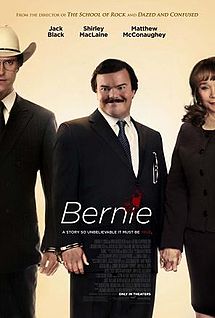
215px-Bernie_film_poster

Grade: A

Is murder ever justifiable? Should a man be condemned for his entire life because of one bad moment? These don’t sound like questions a comedy would normally tackle, but Bernie is a question of moral ambiguity disguised as a screwball, black comedy. The movie is based on a true story, for whatever that’s worth anymore, and because of that it doesn’t pretend to have any definitive answers. We know a murder took place and who committed the act, but we don’t know for sure what the motivations were or what the relationship between the murderer and the murderee was. This forces us to tackle these questions with our own logic, our own morality and our own experiences.

The title role is played by Jack Black in one of his most restrained performances. Gone are all the boisterous and obnoxious qualities that have made him famous, and instead we get an effeminate, awkward man who seems to spread good will wherever he goes. He is a mortician who caters to every need and whim of both the deceased and the bereaved. The town of Carthage, Texas adores him for his kind spirit. Most seem to either think he’s gay or asexual, though some seem to have quiet theories about what he does with the old widows that he comforts.

Enter Marjorie Nugent (Shirley Maclaine), a recent widow whose wealth is only outdone by her malice. Bernie befriends her, much the same way he does all the women, and starts enjoying the perks of being a rich, lonely woman’s friend. They go on exotic vacations together, staying in first class hotels, he learns to fly a private airplane and spends a great deal of his time and her money up in the air. He finally even obtains power of attorney so he can spend her money at his leisure. Then he kills her and hides her body for nine weeks, only being discovered when her granddaughter leads the police in a search of her home when Bernie isn’t around, in an icebox.

This seems mostly cut and dry, and to the town sheriff (Matthew McConaughey) it is. A gold-digger gained the trust of a rich old widow, gained power of attorney, then killed her and enjoyed her wealth all to himself. Except the movie gives us enough evidence that it might not be that simple. Bernie might’ve been a genuinely good guy who snapped after being harassed by a mean old woman for far too long. The town refuses to believe he’s capable of such a thing, and even if he did do it, which he did, he admits it freely once caught, he should be forgiven because of all the good he did for the community.

Black and Maclaine bring humanity to what could have been stock characters. If we don’t know who exactly Bernie is, then that’s okay, because this is the kind of movie that could inspire passionate debates over several rounds of beers.

I’ve talked about three of the characters in the movie but I’ve failed to mention the fourth and maybe the most important one: The city of Carthage. The structure of the movie moves through a compilation of interviews with the citizens of the small town. They are eerily realistic and though they employ all the clichés of typical southern small town people as seen by Hollywood, they come off as real viable human beings. They’re probably the best part of the movie, at once hilarious and a bit terrifying. Their faith in Bernie goes beyond any possible atrocity he may have committed because he’s one of them and they’ve seen the good he’s capable of.

The last thing I want to point out is that this movie is in fact a comedy, and it succeeds there too. So forget all that shit about moral dilemmas and conundrums and whatever other pretentious things I said, and just know that it’s pretty goddamned hilarious.

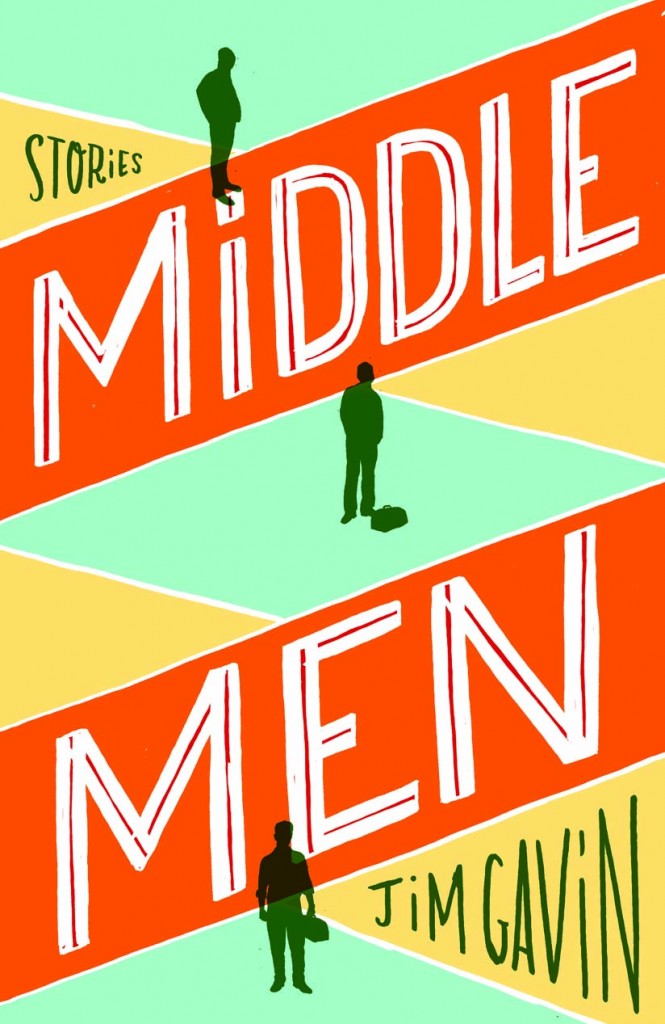
Middle Men by Jim Gavin

Release Date:  February 19, 2013.  Simon and Schuster

middle men

I’m a fan of the short story.  A good short story can do more in 15 pages than an entire novel in 600.  There is nothing quite like that gut punch you receive, and the helplessness you feel, at the end of a Raymond Carver or John Fante story.  When I find a new collection, especially by an author I’ve never heard of, I get all giddy like a 15 year old Bieber fan (That’s what the kids are still listening to right?  I’m not quite in the loop).

Jim Gavin’s Middle Men is that new collection.  I’ll try to refrain from gushing too much in the interest of being viewed a serious critic, but this is the best collection I’ve read in the last year.  It’s both hilarious and devastating, and at times, at least for me, hits just a little bit too close to home for comfort.  The title refers specifically to a two part story at the end called “The Luau” and “Costello” about middle men in the sales world, but works to encompass the entire book as well.  The characters are stuck in that middle part of their lives, that frustrating and seemingly meaningless part where nothing seems to happen and personal and professional failures seem to mount endlessly.  The setting is in and around the city of Los Angeles, and if there is a better locale for people who are stuck in purgatory than Hollywood then I don’t know of it.

Then there is the time period.  All the stories are set in the 1990’s.  Gavin sums up the decade and the place with simple language, always a welcome tactic for me, with lines like.  “It was 1992.  Our shorts were getting baggy and Magic had AIDS.”  This direct prose, two short sentences, sum up everything you need to know.  It gives us the time period and we learn something of the narrators personality and humor.  Funny and cynical, it sums up the entire collection rather well.  Gavin’s a bit older than me, but I’m most definitely a child of the 90’s and that probably helps me identity with his characters.  It helps that I grew up in basically the same area.  I’ll be honest, it also helps that throughout this entire collection, characters are either listening to, or watching, Dodger games.

The two specific stories that got to me most are “Elephant Doors” and “Bewildered Decisions in Times of Mercantile Terror.”  The first is a story about Adam, a struggling stand-up comic who also works as a production assistant on a game show as his day job.  The story is framed around the game show host, Max, manipulating Adam into stealing his dog back from his ex-wife, while in between we get a glimpse of Adam’s non-existent career as a comedian.  In one of the most dead on renditions of life as a comic, Gavin gives us the true futility of standing on a stage in front of a bunch of drunks and other comics, who all hate you.  Adam’s set opens with “I finally found the self-help book that’s going to unlock my potential.  It’s called Mein Kampf.”  He then deals with the inevitable silence of opening with such a tasteless, and just not very funny, joke.  This story captures perfectly the feeling of being in on the fringes of show business.  That spot where you’re a nobody, and it’s worse because you’d like to be a somebody.  The story ends, fittingly, with Adam taking his place in the comedy club, ready to make a fool out of himself again, because what else is going to do with his life?

The other story I want to talk about, and I’ll be brief, “Bewildered” deals with bi-polar disorder.  The first serious short story I ever attempted writing was about more or less the same thing, and wow does Gavin do it better than me.  Using a mental illness to illustrate the failings of the world around us is not a new concept by any means, but here it’s used with enough sympathy and absolutely no sentimentality that it seems fresh and tragic and moving.

If this collection has a failing, it’s that some readers will find it a little on the boring side since it can be construed that nothing really happens.  I disagree, but if you’re more drawn to stories that have actual danger and action to them, then this probably isn’t the ideal fit.  It slides into the category of “bored suburban kids who suddenly realize they don’t have a place in the world.”  I put that in quotes because someday I feel that will be a real genre.

My final thoughts:

There are two basic narratives that continuously come up concerning L.A.  One focuses on the seediness and the underground sleaze that’s so ironic in such a city of supposed glamour.  These are your Bukowski’s and your crime noirs.  Then there are the stories that focus on the glitz itself, like every reality show ever created.  I will concede a third, that’s kind of derivative, and that’s where the glamour and glitz hides an inner seediness.  Death Becomes Her comes to mind, maybe?  I don’t know why that movie is what pops into my head, but I’ll go with it.  There is nothing wrong with these narratives, in fact a lot of times they can be quite well done, it’s just that we’ve seen them time and time again.  People tend to forget that Los Angeles is actually a really, if unforgiving, city with real people facing real struggles and have perfectly reasonable ambitions.  I think this is why it’s refreshing to see Gavin tackle the real city.  He shows us these people stuck in between the sleaze and the glamour, struggling through their daily lives.  Hollywood is ever present in their lives, but it’s not always the driving force.


Buy this book!