The Progressive Nature of Judas Priest

I'm terribly sorry that i'm breaking the law but I wasn't consulted when those laws were established

Contrary to popular belief (my parents), heavy metal and hard rock tend to be conservatively minded genres. No, Ted Nugent is not an outlier, he is the norm. A very outspoken norm granted, but the norm nonetheless. Look no further than Axl Rose’s distrust of immigrants, or Megadeth’s well known born again beliefs, and I’m still not totally sure if Ozzy’s “Thank God for the Bomb” is meant to be ironic or not. Iron Maiden glorifies war, at least the British ones, and even fall into the odd conservative belief that criminals have more rights than the innocent in modern society. These bands are rebellious for sure, but as the Tea Party has showed us (maybe?), conservatives can be rebels too. So then, why is the song “Breaking the Law” by Judas Priest so unique? At first listen, it simply sounds like an empty, clichéd anthem for teen angst and misguided rebellion. But if examined a bit more closely, you might find that it’s one of the most liberal-minded popular heavy metal songs out there.

There aren’t a ton of lyrics, two verses and a repeating one-line chorus, so this shouldn’t take too long.

“There I was completely wasting, out of work and down.
All inside, it’s so frustrating as I drift from town to town.”

Right away, the first thing you should notice is that these are grown up problems. Out of work? What skeezy metal kid gives a shit about being out of work? It’s kind of hard to be anti-establishment when you’re bagging groceries at the Safeway. No, these first two lines are establishing a certain desperation in our protagonist.

“Feel as though nobody cares if I live or die
So I might as well begin to put some action in my life.
Breaking the law, breaking the law.”

Okay, that first line is pretty angsty. But justifiably angsty. We’ve got an out of work drifter who’s got no prospects and nobody who cares about him. His reaction? Turn to crime. At least then there’s some action, and furthermore, there’s potentially food and shelter as well. Judas Priest is actually saying that poverty creates crime. Holy shit. What a radical notion.

The second verse delves deeper, though staying simplistic, into the band’s critique of a class-based society.

“So much for the golden future, I can’t even start.
I’ve had every promise broken, there’s anger in my heart.
You don’t know what it’s like, you don’t have a clue.
If you did you’d find yourself doing the same thing too.
Breaking the law, breaking the law.”

The “golden future” doesn’t exist for the poor, only the wealthy. The song is suggesting that people who criticize criminals don’t understand, because they’re fundamentally incapable of understanding. If you’ve never been poverty stricken, you’ve never been truly desperate, then how can you hope to relate to the mind of the criminal? “Breaking the Law’s” uniqueness stems from it’s recognition that not all criminals are crazy or psychopaths, but people who feel they have no other choice. What an incredibly civil minded notion from the same band that sang “Turbo Lover.”

Musically, this song has more in common with punk than metal. It’s closer to The Ramones than Dio. Note that there’s no guitar solo, only a police siren and breaking bottles playing over hanging power chords. “Breaking the Law” is stripped down, angry, and not interested in any fluff or frills. The only point is to get across just how angry they are about the class warfare they perceive being waged.

Why is Judas Priest more liberally minded then their contemporaries? It’s tough to say, though a lot of it might be that they’re not really the contemporaries of a lot of heavy metal bands. Priest and Black Sabbath, the more liberal of the genre come from the 1970’s, while heavy metal as a whole really reached it’s zenith in popularity in the 1980’s, when conservatism reigned supreme. (A brief side note, I know that Iron Maiden was formed in the 70’s as well, but for this purpose I’m referencing Bruce Dickinson era Maiden which started in the 80’s.) Another explanation, I suppose, could be that Rob Halford, Judas Priest’s singer, is the only openly gay singer from a mega successful heavy metal band. Though I hesitate to say that has anything to do with it because I’m hesitant to say that all gay people are liberals. I’m sure there are plenty that don’t give a shit about the unholy marriage of poverty and crime.

So then what is it? Me reading too much into this? Yeah, probably.

At any rate, the video certainly doesn’t help my argument.

True Detective Summons an Old God, But Maybe Not the One You Think

true-detective-poster-636-380-01

This won’t be a long post, just two quick thoughts. I just finished the season finale of True Detective, season 1. I’m not going to offer up a full review because I’m late to the party and it’s already been done, and far more thoroughly than I could. Also, SPOILER ALERT.

First off, Rust Cohle (Matthew McConaughey) ends the season with this quote: “You’re looking at it wrong. Once there was only dark. If you ask me, the light’s winning.” I’ve seen this quote heralded as a generic good vs evil mantra as well as a more specific God vs Satan, but I see in this bit of dialogue a bit of Zoroastrianism. The idea of the light vs dark, good vs evil, and that good will, is destined to, win. Too universal? Okay, maybe you’re right. But in addition, Zoroastrianism teaches that the reason good will triumph over evil, and the good God is Ahura Mazda, is through the good works that we as people do. Tie this in with the fact that Rust and Marty just defeated a very evil man, though hardly evil itself, and it fits. Think about that for a second, True Detective does not want you to believe that everything is grand at the end, there is still a far bigger conspiracy in play than these two ordinary men will ever be able to tackle, but the world is a little better. That’s the only kind of victory that counts because eventually these little victories end in Ahura Mazda’s triumph and paradise on earth. Is this what Nic Pizzolatto was going for? Probably not, but it’s nice to use a random bit of knowledge I learned in college that will likely never come up again.

My second thought is something I believe is called The Inverse Allegory of the Cave. It’s a darker look on Plato’s Allegory of the Cave. If you’re not familiar with this and can’t be bothered to click the link I just provided, it’s basically this: Man is in a cave, the light he sees are really only reflections. If he becomes enlightened enough, he will emerge from the cave and see the true light. Now that’s a really complex philosophical idea condensed into a simple thought, but you get the idea. The Inverse Allegory of the Cave is basically the same thing except when the enlightened man emerges from the cave, he only finds a deeper darkness. Sound a bit like ol’ Rust Cohle? When he tells Marty of his near death, when he let himself go into a deep darkness where he could only feel his daughter’s love, this is that inversion. True Detective has the nerve to suggest that not only will the enlightened man emerge from the cave to see, not a light but a darkness, but that maybe that darkness isn’t such a terrible thing. Love can exist in the black as well.

I guess maybe these two ideas aren’t all that compatible, what with the light and dark imagery and all, but at least maybe it’s some food for thought.

Planet of the Apes destroys the American Cynic

planet of the apes

What does it mean to be a cynic when there’s no world left to not believe in? This is the question at the core of 1968’s Planet of the Apes. This is by no means the only theme as racism, classism, ageism, and probably various other isms as well are abundant. Not to mention the timeless religion vs science argument combined with Cold War fear of nuclear annihilation. These are all important, but they’ve also been tackled elsewhere over the years as I’m four and a half decades late to this subject This film, in addition to all these other things, represents the end of both American idealism and the American cynic, and both of these are accomplished solely through the protagonist Taylor.

We all know the scene, right? A long shot of a single horse carrying two passengers trots along the coastline with waves crashing down and water running up towards its legs. The camera shifts slightly and suddenly obstructing our view is something eerily familiar, yet somehow we can’t quite place it, but it still fills us with a sense of dread. Finally, our hero Taylor (Charlton Heston) drops from the horse and stands before this rusted, seaweed covered object still kept in obscurity. First he stands in shock. “Oh my god, I’m back. I’m home.” Then he collapses and, in an overacting masterpiece that only Charlton Heston could pull off, shouts at his deceased ancestors: “You Maniacs! You blew it up! Damn you, God Damn you all to Hell!” The camera pans out and we see what he sees. It’s the Statue of Liberty. Holy shit. And scene.

Great twist ending, right? Not really, at least not if the twist is simply meant to shock and surprise. It’s not much of a gotcha, because I think, if we’re honest with ourselves, we all kind of saw that one coming. Maybe not the Statue of Liberty specifically but we at least suspected we were indeed on Earth all along. The real twist is in the fact that Taylor, who has already accepted that everyone he’s ever known and loved is gone, that his species, in all likelihood, time has past, is utterly destroyed by the reality of it all.

Let’s start with Taylor and who he is. He is disgusted with Earth and what humanity has become. His last words to the world he thinks he’s leaving behind are “Does man, that marvel of the universe, that glorious paradox who sent me to the stars, still make war against his brother? Keep his neighbor’s children starving?” This is a man who laughs maniacally when his companion plants an American flag in the soil of this new planet they’ve landed on. He mocks any idealism and anyone who dares to dream about Earth. He waxes philosophically with lines like “I’m a seeker too. But my dreams aren’t like yours. I can’t help thinking that somewhere in the universe there has to be something better than man. Has to be.” This is a man who has gleefully left his home world and cares nothing for those he left behind. He doesn’t identify himself as an American and only begrudgingly acknowledges his Earthling origins.

A shift, though, starts to happen in Taylor. When he’s forced to fight for his survival against the apes, he begins to sugarcoat humanity. He tells Dr Zaius, upon finding archaeological evidence of humans that predate apes, “He was a weak, fragile animal, but he was here before you were. And he was better than you are.” So why is he suddenly drinking the human Kool-aid? Because he’s now faced with the harsh reality that he’s a minority. He’s hated, and feared. His very existence is a threat to the establishment, to the culture. People like that can’t afford to be cynics. But look at his face when Dr Zaius tells him “You are right, I have always known about man. From the evidence, I believe his wisdom must walk hand and hand with his idiocy. His emotions must rule his brain. He must be a warlike creature who gives battle to everything around him, even himself.” He covers it up quickly, but there’s a flash of recognition, that Dr. Zaius is right. All the reasons Taylor left Earth come back to him, but he’s now too stubborn to admit it. Nothing in the Orangutan’s words are particularly new, we heard Taylor say similar things the entire first third of the film. Hell, Zaius practically tells him he’s on Earth but Taylor refuses to acknowledge it.

So then we get to the big scene. Taylor on his knees, cursing mankind, destroyed. The commentary on the dangers of nuclear warfare is not subtle, but the notion of national identity is. Taylor’s rejection of America is his identity, because he feels he’s better than his countrymen, that he’s evolved beyond them. But when faced with their demise, when it becomes irrefutable that we’ve destroyed ourselves, he hates them and weeps for them. He lost his world, his identity, and his humanity all in one instant.

Couldn’t find the video to embed, but for those of you would like to watch the ending, whether you have never seen it (shame on you) or just feel like watching it again, here it is.

https://www.facebook.com/video/video.php?v=1064577264634

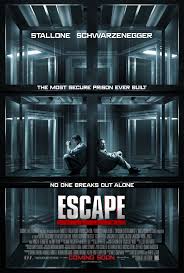
Escape Plan

escape plan

Directed by Mikael Hafstrom
Starring Sylvester Stallone, Arnold Schwarzenegger, Jim Caviezel

Grade: B

Close your eyes for a moment and imagine what a movie starring Sylvester Stallone and Arnold Schwarzenegger, both in their 60’s and both enjoying a modest resurgence, would be like. The movie you just thought of is Escape Plan, and I don’t really mean that as an insult either. The film, directed by Mikael Hafstrom, knows exactly what its audience wants and delivers it. The stars are recognized as old, or at least past their prime, though that by no means diminishes their badassery, and scales back most of the big time action set pieces, until the end of course. There is also a glorious lack of the tired “we’re so old” jokes that have been saturating the recent movies of the two actors in their twilight years. But let’s be honest: you’re going to see this movie because you’ve been dreaming of a Stallone/Schwarzenegger team up all your life and it’s finally here, and no, The Expendables movies don’t really count. This is not the movie they would have made together in the 80’s, it’s not a John Rambo and John Matrix team-up, but it’s still exactly what it should be at this stage in their careers. It’s an action movie, light on character, and heavy on dudes getting punched and cheesy one-liners.

The story is that Ray Breslin (Stallone) is the best there is at breaking out of prisons and runs a business with his partner Lester (Vincent D’Onofrio), pointing out the flaws in jails. Ray is hired try to break out of the world’s most secret and secure prison, run by the sadistic warden Hobbes (Jim Caviezel). Naturally, he’s betrayed and the incarceration is real. While on the inside, he meets Emil Rottmayer (Schwarzenegger), a fellow inmate who is imprisoned for the knowledge he has about a famous criminal. They become friends, of sorts, and together plot to break out of The Tomb, as the prison is called. There are the necessary twists in the plot designed to keep the audience guessing, but the only thing that really matters *spoiler alert* is that Schwarzenegger at one point grabs a fucking minigun off a helicopter and mows a shit ton of bad guys down.

Stallone has slipped into the haunted old bad ass role a lot over the last decade and brings it out again here. He brings his dead-eyed “I’ll kill you but I kind of wish I didn’t have to” glare and the plot wisely leaves out any romance. Well, mostly, there’s something alluded to but it’s not important. Stallone’s biggest problem has always been that he’s just not particularly funny, and these kinds of movies require plenty of snappy one-liners to remind us that we’re having fun and not just watching people graphically beat the living hell out of each other. Schwarzenegger, on the other hand, despite whatever shortcomings he may have as an actor, actually has a pretty well-tuned sense of comedic timing. The man delivers the one-liner like no one in movie history, arguably. Escape Plan lets Arnold get most of the laughs, and even gives him a monologue in his native Austrian. The two stars are always at the center of this movie and the secondary roles are just that. Caviezel gets a decent amount of screen time and makes some odd acting choices. His warden never quite comes off as a legitimate threat to Stallone, who could obviously wipe the floor with him in any physical contest and also seems infinitely smarter than the villain. A good bad guy is essential to an action film and Hobbes comes up a bit short.

Escape Plan is what it is, though I suppose some social commentary about the danger of privatized prisons could be theoretically read into the script, and the movie certainly has no love for the rich either, but both of those things are a pretty big reach. This movie doesn’t offer up complex problems because it’s mission is to take us back to our more innocent days when we could call on the likes of Stallone and Schwarzenegger to take care of our evils for us in uncomplicated ways and without any moral ambiguity. Plus, did I mention Schwarzenegger fires a fucking minigun?

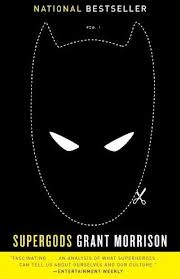
Supergods by Grant Morrison

supergods

Grade: B+

If superheroes are the mythology of modern times, and it’s been suggested enough times including on this blog that they are, then why? That seems a simple enough question, but mostly this idea is either accepted as an absolute or dismissed as juvenile nonsense, either way without an argument. The why is important though, and further, the why it matters that we have a mythology. Grant Morrison attempts to tackle this subject in his book Supergods. Part history, part criticism, part memoir, and part spiritual exploration, Morrison attempts to have it all, and mostly succeeds. Parts of it may drag a bit and parts may be a bit self-indulgent, but when Grant Morrison is talking comics, no matter how long winded it is, it will behoove you to listen. You will learn a lot.

The history and the criticism aspect of the book display Morrison’s immense and thorough knowledge of the comic book world. He shares insights into the styles of various writers and artists as well as the evolution of specific characters and teams over the decades. Non comic book fans will probably find this a bit tedious, though to be fair they probably won’t be reading this book anyway, sadly. Unfortunately, to the target audience, a lot of this is stuff we already know. It’s great to hear Morrison’s take on them but the background details of characters like Superman and Batman as well as artists like Jack Kirby probably don’t need quite the amount of ink they’re given, if only because it’s a little redundant. The tradeoff is worthwhile in many ways, though, because his take on modern comics, including the Dark Ages from the 80’s through the current world of superheroes, is nothing short of brilliant. This is where he shines because he’s able to come off, not as a historian or fanboy, but as an insider, someone who knows the process and the talent involved in creating these stories.

The memoir and the spiritual exploration tie into each other pretty closely. Morrison is very interested in telling his own story, from shy pacifist to punk artist to comic book guru. The narrative is actually very typical and vanilla through the first half of the book, then Grant Morrison’s weirdness starts coming out, and I mean that in every good way possible. His exploration into fiction versus reality, including a possible alien, or angel, abduction, a chat with a cosplayer he convinces himself is the actual Superman, and lots and lots of drugs. This is where the book begins to claim its own identity as a defense and manifesto of what roles superheroes play in our culture. He argues that superheroes are real, but exist in a 2D world and are therefore outside of our own reality. He traces the polar reversal of the solar magnetic field to show how society changes in our moods and thought and the superheroes change with that. This latter bit he has used to his advantage to stay ahead of the curve in relevancy.

The second half of Supergods is better than the first half, or at least it’s what we we’re waiting for when we heard Grant Morrison wrote a book dissecting the superhero. Still, the second half could not exist without the solid foundation he builds and establishes in the first. By laying out a concrete history and criticism of the superhero canon, Morrison is able to launch into a whole new universe where anything is possible and caped supermen and women are waiting to show us the way to something bigger and better than we ever thought possible. If that sounds a little on the sentimental side, well that’s part of the takeaway from this book. The cynical age of superheroes has passed and it’s time to move on to the height of human potential where mutants and gods and masked vigilantes will be or guides, and we will be theirs.