
Grade: B+
Note: This book’s release date is January 14th, 2014.
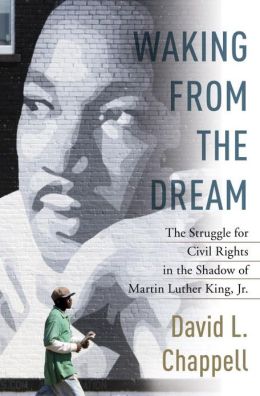
Not to take anything away from the man and his life and his deeds, but the true power of Martin Luther King Jr. seems to be in his name. Just think of what invoking his name can do for a cause. Too often, we forget that the civil rights battle in this country didn’t end with King, but still rages on to this day. And further, his battle didn’t end when he was killed either. His name and legacy have been channeled for five decades now in his absence. In the book Waking from the Dream: The Struggle for Civil Rights in the Shadow of Martin Luther King, Jr. author David L. Chappell examines and details this unfortunately oft overlooked concept. Throughout the book, Chappell takes us through the Civil Rights Act of 1968, the black political conventions of the 70’s, battles for employment bills, the idea of a holiday in King’s honor, Jesse Jackson’s rise, and even the controversial, and almost never discussed, failings of King’s character. Waking from the Dream makes for an interesting read as it shines a light on recent history in just unique enough of a way to drive the narrative and come off fresh.
The controversy over King’s character relates to his marital infidelity, something most people are vaguely aware of. It’s interesting that, as a society, we’ve simply agreed it’s not something we want to talk about. Americans cannot tolerate their heroes being tainted in any way. What is less known, even on that same casual level, is that King, in all likelihood, plagiarized his doctorate dissertation. Chappell tackles this the only way he can, with a detached honesty. He remains a historian throughout, and doesn’t let, for the most part, his own personal feelings get in the way of the facts. It is not an easy thing to discuss the failings of such an iconic man, but Chappell handles it admirably and factually. In fact, an argument is presented, though not dwelled on because that’s not the author’s agenda, that King disliked the idea of lionizing public figures to such an extent that maybe this discredit to his character is not such a terrible thing. It can keep us honest about the deeds of the person rather than the aura of a hero.
Time is spent on the Reverend Jesse Jackson throughout this book, and Jackson does not come off looking great in this book, though it’s hardly an attack on him either. The man is polarizing, he’s charismatic in ways that rivaled King himself, but seems to understand the power of charisma too. Jackson used his influence and power to become an icon in the Democratic Party rather than a pure force for equality. Other figures central in the fight for civil rights are presented too, though none get nearly as much ink as the Reverend.
One of the, possibly unintended, truly fascinating aspects of this book is how little politics have really changed over the past few decades. Chappell, taking us into congressional debates on the Housing Act and King’s national holiday, shows us that the same rhetoric and ideology, with some variation admittedly, has saturated our government throughout modern history. The people change, sort of, and the arguments focus on different angles, but they never really change. Though, easily, the most refreshing thing about this book is that Chappell details his research extensively. A third of the book is citations. In other words, this isn’t bullshit mainstream history in the vein of Bill O’reilly’s Killing Famous People series, but series academic history.
 Some Damn Fool's Thoughts