
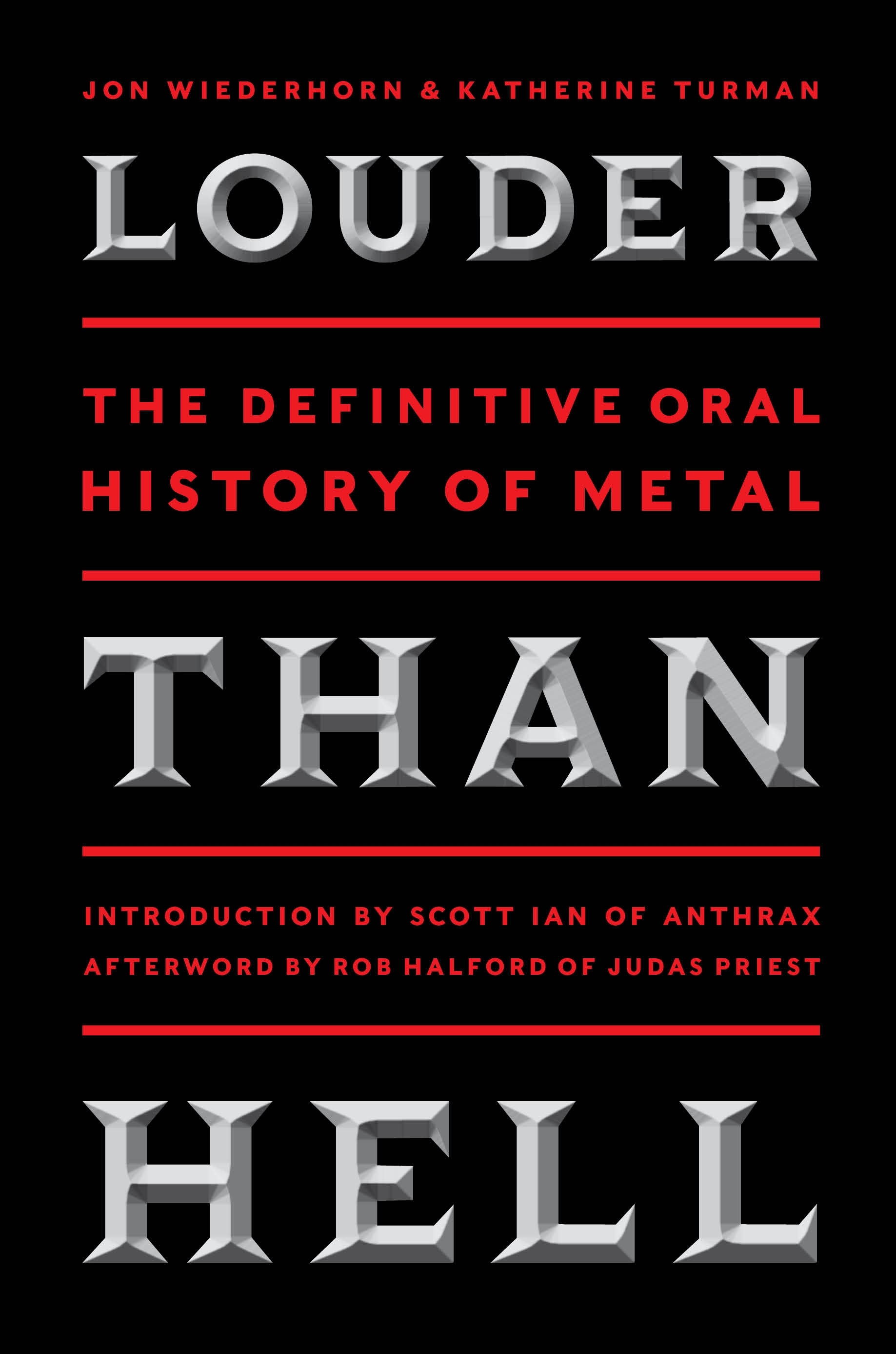
Edited by Jon Wiederhorn and Katherine Turman
Grade: C-
Heavy metal, as an art form, has it pretty tough. It’s often dismissed as juvenile and silly on one end, and evil and corrupting on the other. People assume because it’s loud and obtrusive and abrasive and, yes, kind of obnoxious, that it lacks any sort of artistic merit. This is, needless to say, not true. It’s a different essay (maybe that I’ll write sometime in the near future?), so I won’t go too far into it here, but Heavy Metal connects with its audience in a unique way and offers something that other genres lack. So when the book Louder Than Hell: The Definitive Oral History of Metal, collected by Jon Wiederhorn and Katherine Turman was released, it became a chance to give the musical genre a shot of legitimacy. Unfortunately, it fails to do this. This book is far more interested in a bunch of machismo dudes talking about how many chicks they’ve banged and how many drugs they’ve taken and how much ass they’ve kicked. There is almost no attempt to tackle the musicality of these, in many cases, very talented bands. No journey into the song-writing minds or insight into the heavy metal experience. Here’s a hint: If you want to read about sex with groupies and getting super wasted you can read a mediocre biography or history of literally any musical genre ever. These things are not unique to metal, no matter how much some want to pretend they are. Whatever chance the genre has of being viewed seriously was seriously blown by this collection of bullshit quotes.
For someone who is new to heavy metal, maybe a new fan or somebody who’s just trying to learn a bit about the music, there is some good information here. Louder Than Hell does offer a decent chronology of metal, tracing the lineage from Black Sabbath all the way through the various groups started in the new millennium. Since it’s an oral history, you get to hear stories and anecdotes and insights directly from the source, and a few different perspectives from their peers. The problem is, for the already initiated, which most reading this book will be, the stories are already familiar. There aren’t a lot of new tales, no lost musings from Ozzy, or Mustaine, or Dio. For metal fans, those of us that thirst for new details of the genre, this comes as a disappointment. Instead of focusing on how much coke Ozzy could consume, can we maybe talk about why they felt compelled to craft nihilistic lyrics about the absence of God and the hopelessness of the world? It’s not enough to just acknowledge how talented most of these guys are/were as musicians, let’s discuss just what made them great. Unfortunately, Louder Than Hell isn’t really interested in any deep insight, only the wildness of the lifestyle of rockstars. Frankly, it’s kind of boring. The one mildly fascinating thing that comes out of this book, which clocks in at 683 pages, is that every generation of metal, no matter how they think they’ve grown and matured from their predecessors, are really just an updated model of the same thing.
Heavy Metal is an angry art form. It arose out of poverty, isolation, and a distrust of all authority, including and especially God. Yes, there are also wizards and dragons and such, but nerds can be pissed off too. A good history of the genre would focus on why it’s a necessary subsection of Rock n’ Roll, why the anger still burns just as fierce as it ever did, and how Dio used dragons and Vikings as metaphors for celebrating the outcasts of the world (at least I think that’s what he was doing, the dude used a shit ton of metaphors). Instead, what we get is Jonathan Davis talking about how many chicks he banged in a single night and how none of these guys seems to have one ounce of respect for any woman they’ve ever met. As we get older, we all kind of suspect our childhood heroes were severe douchebags all along, but maybe give us some of their redeeming qualities as well. The thing is, I know these guys aren’t all bad, because I’m a fan and a nerd and have read an awful lot about these bands. Widerhorn and Turman just picked the quotes and interviews that painted them to look like really shitty and uninteresting human beings. I’m not saying ignore the debauchery, because that’s clearly a big part of being a metal star, or any rock star for that matter, but maybe keep the focus on the power and the uniqueness of Heavy Metal.


 Some Damn Fool's Thoughts