
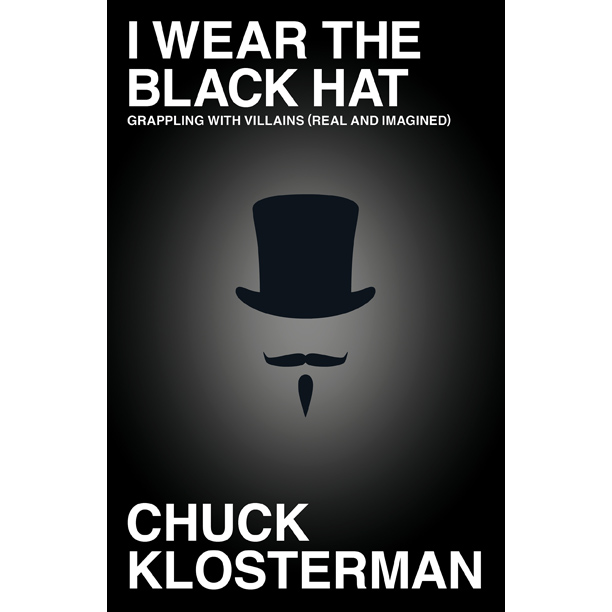
Grade: A
Why are the villains in stories so much more fascinating to us than heroes? A possible reason is because we have an easier time identifying with the villain as most of us aren’t particularly heroic ourselves. Don’t think for a second this is limited to fictional universes either. Nothing makes us happier than jumping on a real-life villain, or better yet dragging our heroes down into villainy so we can safely hate them. But it’s simple enough to state these facts, many people would be able to state what I just did and many additional people would agree with these sentiments. So then, back to the question of why. In I Wear the Black Hat, Chuck Klosterman, in a series of essays, attempts to offer some insights, though never answers because he accepts pretty quickly there are no perfect answers.
Anybody who has ever read Klosterman understands of his obsession with pop-culture. What sets him apart from some writers tackling the subject is that he’s highly intelligent and very funny, and gets that pop-culture works as a reflection of us rather than a gag that stands on its own. He goes up and down the pop-culture ladder, everywhere from sports to movies to comic books to politics, ridiculing as necessary but always turning a sympathetic eye towards his subjects. These references and allusions are mainly broad strokes, an effort to suck you in by wit and memorable references, used to reflect on his personal experiences and the nature of villainy in his own life. This makes for a remarkably intimate read when in the hands of lesser writers would feel silly and trite.
The specific topics include, but not limited to: comparing Batman with Bernard Goetz, Why OJ Simpson is really a villain (other than the obvious), why it’s basically required to hate The Eagles, and just why Andrew Dice Clay is still so looked down upon when acts just as vulgar as he ever was have become remembered as genius in retrospect. He also tackles Joe Paterno, Bill Clinton and Monica Lewinsky, Machiavelli, and even, though very reluctantly, Hitler. These essays obviously vary in topic but all aim for a greater purpose, and succeed far more often than not. These essays are concerned with the public’s relationship with villains and at what point we can no longer forgive and forget. Why can some come back (Bill Clinton) but others will never be welcome (Dice).
The answer is not easy, to say the least, because villainy, or evil if you want to take a very narrow look at it, is complicated. Think about some villains in pop-culture. Tony Soprano, Randall McMurphy, Charlie Sheen, all of these guys, to varying degrees, do deplorable things that would outrage us if they invaded our personal lives, yet we root for them every step of the way. We love to read books about serial killers, and they actually do exist in the real world, but so few of us can relate to the personal fear of being hunted by a Ted Bundy that they seem fictional. Are we so fascinated with the darkness that resides in ourselves that we care more about Darth Vader than we do about Luke Skywalker? Chuck Klosterman seems to think so, and thankfully he’s willing to take it on himself, by (ahem) wearing the black hat for all of us.



 Some Damn Fool's Thoughts