
Grade: B-
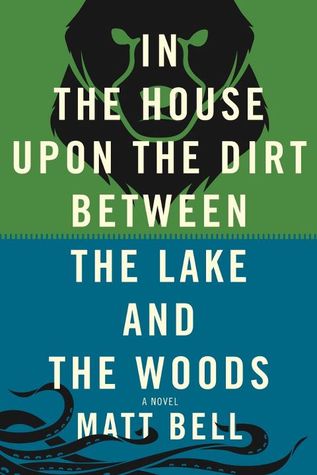
Metaphors are the building blocks of writing, or one of the building blocks anyway. Metaphor gives us symbolism and symbolism gives us meaning. The problem arises when a writer leans on metaphors too hard and they become murky and convoluted. You stack metaphor on top of metaphor until you lose all meaning and you’re left with a Dio song, a great ride but ultimately just confusing. Matt Bell’s debut novel In the House Upon the Dirt Between the Lake and the Woods reads like an allegory, a fable meant to instill in us some moral that will enrich us in some way, but is just too fucking weird for its own good most of the time. In playing too many themes too close to the vest, it just becomes a frustrating exercise in deciphering meaning that may or may not be there.
The novel follows a man and a woman, whom we never learn the names of, who move away from the city and into the woods where they build a cabin to live in and hope to have a child. This proves first difficult and then downright impossible. The wife has a series of miscarriages and it becomes clear that she cannot bring a pregnancy to term. In desperation, the husband eats the tiny, dead fetus of one of the miscarriages and it begins to grow inside him. The fetus begins to speak to him and corrupt him against his wife. Then the wife steals a cub from a bear and turns it into a human son, and lies to her husband about the origins. She claims the child is his, but he suspects otherwise. Also, the bear wants revenge and there is a squid/whale monster in the lake that wants to take possession of the husband. The through line is actually a lot more understandable than it sounds. Bell writes in clear enough language that the action is easy to follow and builds suspense and a sense of dread effectively.
There are things done right in this novel, in fact things that are downright awesome. Bell is a master with language and great at creating vivid imagery. The action scenes, particularly ones where the man crafts his own suit of armor out of raw hides and fights The Bear, feel immediate and dangerous. The first half of the novel keeps the suspense amped up to where you won’t feel very comfortable but you will want to keep reading, though that aspect peters off some in the second half. Bell is, in a way, a victim of his own talent. He’s a very good writer, but too often the story suffers from Bell feeling the need to prove it and the book devolves into overly long segments of “look how well I can write these sentences and describe things.”
The message I suppose, if there is one, is that the pressure of childrearing can bring out the worst in people. The refreshing thing here is that it’s from the paternal side rather than maternal. More often than not, it’s the other way around. Overall, I liked this book, though the second half dragged quite a bit, but ultimately wasn’t sure what I was supposed to get out of it. Ambiguity is fine, even an asset a lot of the time, but this just seems simultaneously convoluted and vague. There is a lot more to writing than just proving how smart you are. Bell is a good writer, but not, at least in this book, a great storyteller.

 Some Damn Fool's Thoughts