American Dream Machine by Matthew Specktor

american dream machine

Grade: A

A Hollywood story is a tricky thing to write. Especially nowadays, when the public love affair with the movie industry is long over and we view celebrities as over-privileged rich assholes who keep butting into our social and political arenas and ought to just shut up and entertain us. Monkeys. How then does a writer proceed? The easy answer is to view the industry, and the entire town, indeed as many have done, with a cynical eye. Render those Hollywood types into shallow caricatures who we can laugh at even though their lives are better than our own. But in American Dream Machine, author Matthew Specktor doesn’t take the easy route. He uses the town, and the film business, as a backdrop to tell the story of a man’s rise, fall, rise to even greater heights, spectacular fall, rise yet again, and once again fall, and how the echoes of this man’s successes and failures affected his offspring. In short, this book is a deeply personal tragedy, or series of tragedies really, that, while remaining cooly detached enough to stay hip and not delve into melodrama, isn’t afraid of deeply sentimental moments.

The novel follows the life of Beau Rosenwald-seen through the eyes of his illegitimate son Nate-and his extreme ups and downs. Beau is overweight, ugly, and obnoxious, but can talk his way through any situation. He’s a Hollywood agent who loves what he does for only the most visceral of reasons. He’s no artist, no fan of art in fact, but believes powerfully in movies and loves the challenge of the deal. American Dream Machine tells his life story, and through it, brings life to Hollywood, the film industry, and the sense of time passing. Time passing is a big theme in this novel as it has no problem skipping ahead great amounts of time yet never losing its sense of urgency. The title itself refers to the name of the talent agency that Beau opens with his friend Williams, along with a few other colleagues, and conquers Hollywood with. There is everything you expect in a novel like this, power struggles, personal and professional tragedies, the straining of the offspring of powerful men to separate themselves from their fathers, but though all this seems familiar, the novel never delves into the cliché. The material is fresh, mostly due to dead-on characterization, pitch-perfect dialogue, and a cynical love of all the characters that inhabit this world.

There is a mystery, a few mysteries in fact, moving the plot forward in this book. The mysteries involve an unexplained death, a missing person, and family trees. The beauty of these mysteries is that the novel doesn’t depend on them. They’re plot devices, yes, but it’s more that they’re character defining obsessions. The reader won’t even fully realize we’re reading a mystery until we come to the big reveal moments, and then realize we’ve been hooked all along. This will not be marketed as a mystery novel, and rightfully so as it has just about nothing in common with the Grishams and Pattersons of the world, but it seems to have the potential of a crossover hit.

Specktor’s voice is the standout star of this novel. He’s funny, he’s tragic, and most of all, he’s a story-teller. The fact that this novel spans over 40 years means naturally we’ll get to know a lot of different characters. People come and go throughout, and yet all of them feel fully realized and complicated. Time is such an important issue in this book and is dealt with masterfully. Specktor has no problem, often in the context of a single paragraph, reaching far back or forward in time. Using time this way, there is a constant uneasy sense of tragedy looming on the outskirts at all time. We know things are going to go bad, because we’re told all along that they will, so when the tragedy hits it feels like a foregone conclusion, a destiny.

This is Specktor’s third novel, by my count, and though I have yet to read his other work, he seems to be a rising star. And if word is true that this novel has been optioned for a Showtime series, then that could mean we’ll be hearing a lot more from him. To which I say, hooray.

Buy this book!

And the Winner is…

shortstorymonth320x320

Alright, folks. The results are in and a winner has been declared. First off, I want to thank everybody once again for participating, both those who submitted and those who voted. This was a fun experiment for me and it was rewarding enough that I believe I’ll do it again next year. Hopefully I’ll be able to offer real prizes rather than theoretical ones by then. Anyway, on to it.

The winner is: “Cloudy Heart” by Jason Haskins.

Here’s a picture of Mr. Haskins so you can put a face with the name.

jason haskins

Also, here is a link to his blog Knowing is Half the Battle.

Congratulations, Jason. You’re a superstar now. You’re welcome.

Last Day to Vote!

shortstorymonth320x320

Alright, everybody. The flash fiction contest is wrapping up and you all have just one more chance to vote. Voting closes tonight at midnight and I will announce the winner tomorrow. So if you haven’t voted, be sure to stop by and help make somebody famous.

Vote Here.

Here’s a refresher just in case:

The Kick

Heart of the Woods

Cloudy Heart

Cast a vote and come back tomorrow for the results. Thanks to everybody who participated in this, especially the submitters.

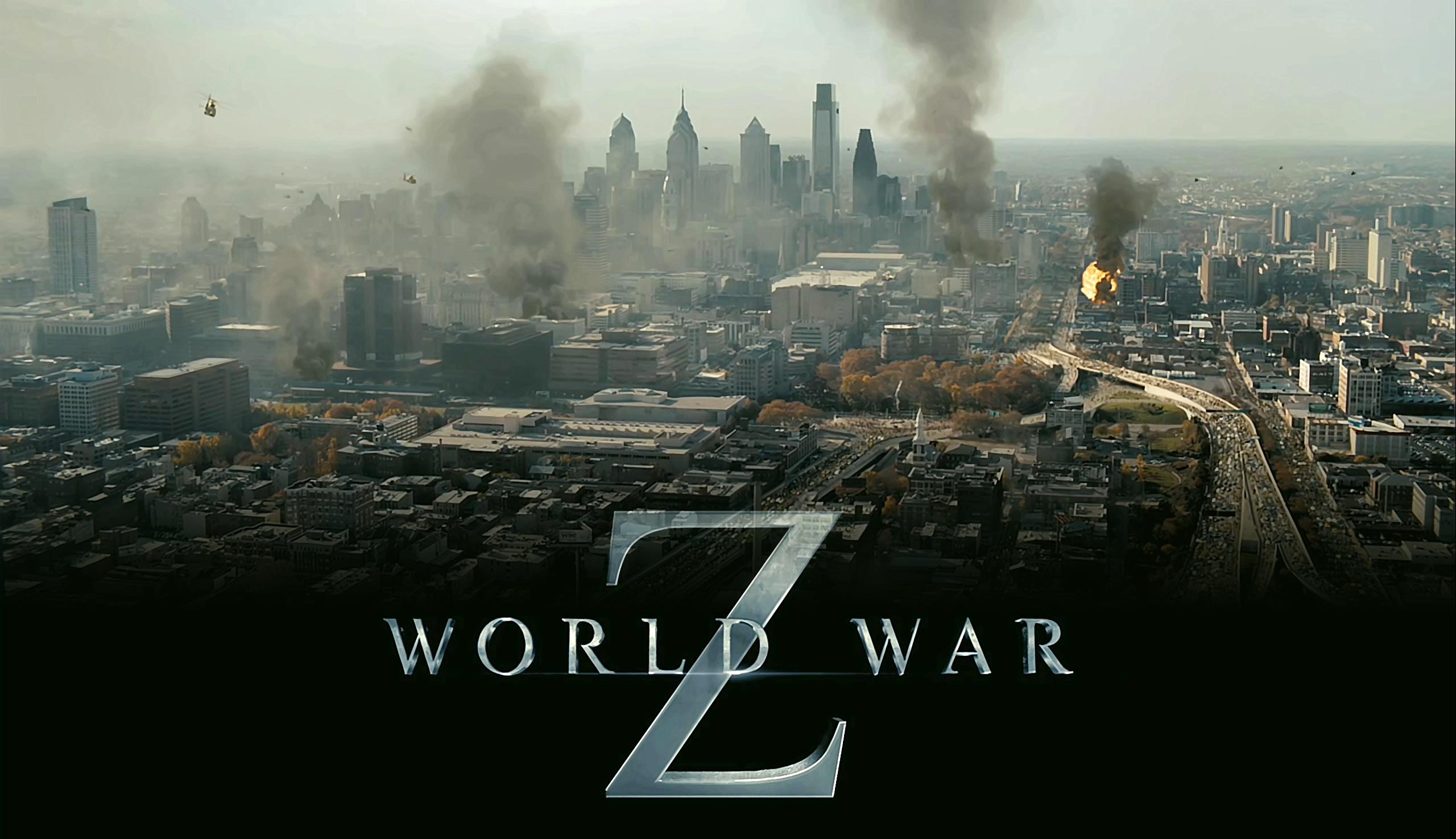
World War Z

world war z movie

Directed by Marc Forster

Starring Brad Pitt, Mireille Enos, Danielle Kertesz

Grade: C+

Zombies work best as satire. They can be frightening, disturbing, unsettling, and downright horrifying satire, but satire nonetheless. Zombies are brainless consumers, completely selfish and only concerned with their own carnal needs. Basically, they’re us, or at least a metaphor for us. When you reduce the gore, in a blatant marketing attempt to get it down to PG-13 and bring the teenage dollars in, and turn the zombies from an all consuming predator into a virus attempting to spread itself, the horror of zombies is nullified. What World War Z gives us is nothing more than a very suspenseful film that doesn’t add up to anything else.

The story follows Gerry (Brad Pitt), a former United Nations covert mission operative (and if you know what that means you automatically know more than the filmmakers) who is on a mission to find the source of the virus causing the rising of the dead. In his travels, which include South Korea and Israel, he is unable to find the source, or patient zero, because the world has erupted in far too much chaos to do that kind of detective work. Nobody has any answers for Gerry, who because he is Brad Pitt and is the star of the movie always has to be the smartest guy in every room, so he sets out to find a method to fight them. I won’t give away any spoilers here, but let’s just say that his solution isn’t entirely satisfying and poses a lot more logical questions than it gives dramatic solutions, but it does, of course, set up the sequel.

The first act of this movie is actually fairly good. The panic on the streets, the confusion, the terror, all feel very real and immediate. Due to his training, Gerry is calm and focused during the chaos, which allows us, the audience, to deduce what’s going on with him. He gets his family to safety, and then plot takes over. He’s the only man the government, or what’s left of them, trusts to go on this mission to find patient zero. This feels inauthentic, and just an excuse to give the film a reason to keep Brad Pitt as the focus. The second act, despite itself, stays fairly interesting as well. Taking us around the world, we at least get a glimpse, however disappointingly brief, of the global impact of the undead. Fans of the novel will recognize elements of the book during this period. It’s the third act where it really falls apart. The very title, World War Z, suggests a worldwide scope. This is an excellent idea, because all zombies shows and films feel very isolated with only the immediate need for survival on the characters’ minds. Unfortunately, the third act falls into the trap of only following a few people, in a very isolated area, and the massiveness of the devastation feels lessened. This turns the movie into a series of subpar zombie scares instead of an exploration of what it means to have a world war against the living dead.

The characters are pretty much paper thin, never given room to breathe. They only exist to set up the next plot point, the next run in with zombies. Pitt does a serviceable enough job, everybody in the cast does in fact, but there’s just nothing to do. The big emotional scene towards the end should feel a lot more impactful than it does, but it just never earned it. I think there’s a good movie here, but it requires a lot more ambition than is shown here. The film should feel bigger, the zombies should be more horrifying, there were actually a couple unintentional laughs during close-ups of the zombies, and there should be a sense of how silly the whole thing is. The novel had that, as Max Brooks understands satire, but the movie takes itself entirely too seriously. Where the book had fun with all the mythology surrounding zombies, the movie never takes a second to have any fun at all.

To be clear, the movie doesn’t’ fail because it didn’t follow the book very well, it failed because it completely missed the point of the book. The very spirit was altered in order to turn it into a summer blockbuster instead of a contemplative, and sadly funny, look at what it means to be human and just how important our civilization is to us. Also, zombies don’t move fast, they just don’t. Please stop making them run, Hollywood.

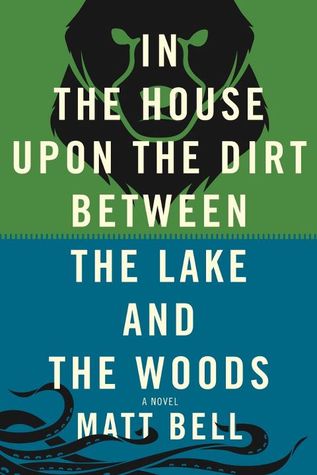
In the House Upon the Dirt Between the Lake and the Woods by Matt Bell

In the House

Grade: B-

Metaphors are the building blocks of writing, or one of the building blocks anyway. Metaphor gives us symbolism and symbolism gives us meaning. The problem arises when a writer leans on metaphors too hard and they become murky and convoluted. You stack metaphor on top of metaphor until you lose all meaning and you’re left with a Dio song, a great ride but ultimately just confusing. Matt Bell’s debut novel In the House Upon the Dirt Between the Lake and the Woods reads like an allegory, a fable meant to instill in us some moral that will enrich us in some way, but is just too fucking weird for its own good most of the time. In playing too many themes too close to the vest, it just becomes a frustrating exercise in deciphering meaning that may or may not be there.

The novel follows a man and a woman, whom we never learn the names of, who move away from the city and into the woods where they build a cabin to live in and hope to have a child. This proves first difficult and then downright impossible. The wife has a series of miscarriages and it becomes clear that she cannot bring a pregnancy to term. In desperation, the husband eats the tiny, dead fetus of one of the miscarriages and it begins to grow inside him. The fetus begins to speak to him and corrupt him against his wife. Then the wife steals a cub from a bear and turns it into a human son, and lies to her husband about the origins. She claims the child is his, but he suspects otherwise. Also, the bear wants revenge and there is a squid/whale monster in the lake that wants to take possession of the husband. The through line is actually a lot more understandable than it sounds. Bell writes in clear enough language that the action is easy to follow and builds suspense and a sense of dread effectively.

There are things done right in this novel, in fact things that are downright awesome. Bell is a master with language and great at creating vivid imagery. The action scenes, particularly ones where the man crafts his own suit of armor out of raw hides and fights The Bear, feel immediate and dangerous. The first half of the novel keeps the suspense amped up to where you won’t feel very comfortable but you will want to keep reading, though that aspect peters off some in the second half. Bell is, in a way, a victim of his own talent. He’s a very good writer, but too often the story suffers from Bell feeling the need to prove it and the book devolves into overly long segments of “look how well I can write these sentences and describe things.”

The message I suppose, if there is one, is that the pressure of childrearing can bring out the worst in people. The refreshing thing here is that it’s from the paternal side rather than maternal. More often than not, it’s the other way around. Overall, I liked this book, though the second half dragged quite a bit, but ultimately wasn’t sure what I was supposed to get out of it. Ambiguity is fine, even an asset a lot of the time, but this just seems simultaneously convoluted and vague. There is a lot more to writing than just proving how smart you are. Bell is a good writer, but not, at least in this book, a great storyteller.


Buy this book!