Home Land by Sam Lipsyte

homeland

Grade: A

There is a deep seeded fear in me, that increases with every year that passes, that being moderately intelligent and moderately creative is just not good enough. My concrete successes are few and far between where my victories seem more on the abstract end. In that respect Lewis Miner, or Teabag as he’ll forever be dubbed due to an unfortunate locker room incident that he mistakenly (but probably knowingly) mistook for an initiation rite, the protagonist of Home Land by Sam Lipsyte is me, in fact he is all of us, all of our fears and limitations and shortcomings and failures. He’s in his early thirties and he “didn’t pan out.”

His failures haven’t made him particularly wise or sagely and he doesn’t offer up any great advice, but the thing he does have is the truth, at least his version of it. He writes to his high school newsletter, giving updates of his life that go far beyond the typical nonsense found in such rags. He’s not there to share about his minor life achievements, rather his sexual depravities, his drinking, his financial woes and generally his stalled life. In the meantime he also exposes the truth of his old high school mates empty lives and odd perversions. I say his version of the truth because Teabag is a classic example of that lovely word we all fell in love with in English 101, the unreliable narrator. We only get his perspective and it’s clearly a warped one. He spins all kinds of tales, never romanticizing his own life, but absolutely destroys all the hopes and aspirations of the entire town. I call him unreliable because I’d be willing to listen to the argument that all the action in this book is imagined or an outright lie, but whether it’s the truth or not doesn’t feel important. What is important is that it feels true.

Plot wise, there’s not much. There are several mini-plots that all lead up to the looming high school reunion, or the Togethering, as it’s referred to. We know we’ll get some pay-offs when we get there, but it never really feels important. Home Land is all about the characters and spending some time with them. The entire town feels alive and poignant, a lot like the one I grew up in actually.

The voice is what drives this book. Teabag is funny and horrible, but so honest and pathetic that you can’t help but love him. He’s the kind of guy that will never amount to anything in the traditional sense but he’s accepted that and only maintains a just below the surface anger that is hard to see. He spends a great deal of the book obsessing over his ex-girlfriend but in one of the funniest, tragic, crass segments I’ve ever had the pleasure of reading, treats her like dog shit when he gets a chance to rekindle, though to be fair she doesn’t exactly merit nice treatment. He mocks the world around him and knows he’ll never be a part of it, but there will always be a touch of sadness about that. He fixates on his old principal, Fontana, and won’t stop until he’s dragged the man down to his level, but then redeems him in a beautiful, if warped, moment.

What makes Teabag so sympathetic and relatable is that in his own way he wants everyone to be happy and honest. He submits his updates to his fellow Catamounts, the school’s mascot, with the knowledge that they will never be published but in the hope that it reaches someone who is inspired to deny the lies their lives have become. In a way he’s taken all the shittiness of an entire town and placed the burden entirely on himself. Teabag’s not heroic, not by any reasonable standard, but he’s willing to stare the world in the face and call it for what it is, and that’s worth something. Teabag is the voice of our fear, that maybe we’re not really meant for great things after all.


Buy this book!

Being Flynn

Being-Flynn

Grade: B-

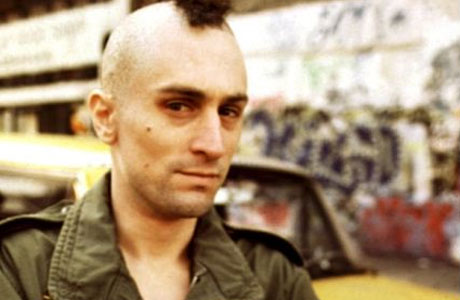
Few actors can go unhinged like Robert Deniro. He can terrify us with nothing more than a look. It was never the violence of his movies that unnerved the audience, it was the glint in his eye like he was enjoying himself on a level we’d never fully understand. Deniro characters were people we want desperately not to exist, because the alternative is too terrifying to face. That’s why people often refer to him as one of the greatest actors, if not the greatest, of his generation, or any generation. The problem is, and this is no surprise to anyone who’s watched movies for the last 15 years or so, that Deniro, that dark mirror into our world, has seemed to disappear. He’s been replaced by a loveable spoof of the tough-guy gangster. Oh, he intimates Ben Stiller just fine in Meet the Parents, but he never intimates us, because the character is a cartoon, a ridiculous concoction created only for laughs. He’s an enjoyable presence to watch on screen, but that’s the problem, I don’t want to have an enjoyable experience with a Deniro movie. I want to be uncomfortable, nervous and worried about what insane thing he’s going to do next. I think the problem is that the self-parodying, caricature Deniro has now replaced the dangerous actor he used to be. When we see him on screen, we expect him to do his Deniro schtick with his faux-tough guy talk and self-aware smile.

I once dressed up like this for Halloween.  I did not intimidate anybody.

I once dressed up like this for Halloween. I did not intimidate anybody.

In Being Flynn Deniro is attempting to find that old Scorcese-starring rage-filled method actor. And he doesn’t do an awful job either. Any other actor giving the same performance, I would probably just say “that was pretty good” and be done with it. But seeing Deniro try to go for the subtly unstable, unpredictable and dangerous character, and coming up short is jarring. In fact, he goes a bit over the top in a lot of scenes, choosing to yell his way through vulgar, racist and homophobic monologues, rather than letting that anger fester within him until it bubbles to the surface. There’s little danger to his character, just the standard crazy, delusional stuff. Crazy’s not what we want though, crazy’s boring. We want to be scared of Deniro again, but it seems to be getting clearer and clearer that he just might not have it in him anymore.

Deniro just remembered Rocky and Bulwinkle

Deniro just remembered Rocky and Bulwinkle

I didn’t hate this movie though. There were redeeming qualities, Julianne Moore’s performance comes to mind, as the depressed, ever suffering mother. Paul Dano is steady, though doesn’t dig quite deep enough for my tastes. And Deniro, despite the above criticism, did have a couple of inspired moments.

The movie is based off the book Another Bullshit Night in Suck City by, you guessed it, Nick Flynn. I haven’t read the book myself, but all accounts it’s awesome and worth a read. The story follows Nick, estranged from his father his entire life, who’s drifting along, dealing with drug addiction and daddy issues. He gets a job at a homeless shelter where his father, recently kicked out of his apartment and cab because of his drinking and craziness, shows up. They’re both aspiring writers and Nick fears he will end up just like his father. A lesser movie would aim for a redemption ending or at least give us some sense of finality, but Being Flynn, to its credit, isn’t interested in either of those things. Sure, Nick seems to have a lot figured out, too much in fact but back to that in a second, but his father is stuck permanently in a static state, forever believing that Viking is ready to publish his novel. Nick’s story isn’t quite earned. He gets addicted to cocaine too easily, then gets off it too easily, then seems to launch a successful writing career much too easily (trust me, it’s fucking hard). Everything just seems to happen to him and I never got the feeling he was actually working toward anything. The most interesting plot in this movie is the bits and pieces of Julianne Moore’s character, the big reveal of her death and the way it’s played. It might come off a bit like melodrama, but in my mind it works. She is the film’s emotional center and probably could’ve been used even more while scaling back Deniro’s performance a bit.

This movie wasn’t a total failure, in fact it was pretty good. But it had the opportunity to be something more and it came up short. This is the kind of movie I would rather be awful than pretty good. I don’t know if that makes sense, but the worst thing I can say about a movie starring an unhinged Robert Deniro is that I’ll most likely forget it in a couple months.

Marvel Comics: The Untold Story by Sean Howe

marvel comics the untold story

Grade: A

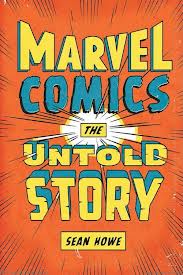
Lies, deceit, grandstanding, backroom deals, backstabbing, and the creation of some of the most iconic characters and story-lines in modern history. This is the history of Marvel Comics. Author Sean Howe takes us through over a century, starting with Martin Goodman and comic books starting to take shape in popular culture, all the way to present day with Marvel owned by the monster corporation Disney and pumping out movies and merchandise in addition to the comics themselves. Everybody knows the name Stan Lee, and he is the one figure that hovers throughout the entirety of the book, and even casual comic fans will recognize the names of Jack Kirby, Chris Claremont, Frank Miller and Grant Morrison, but Howe details the contributions, failings and personalities of dozens of other writers and artists that have come and gone over the years. What’s amazing about it is that Howe manages to actually bring all these people to life and get a sense of who they are/were. The strength of this book is that it’s interest is in the people behind the scenes rather than exhausting us with the history of the characters, which any good comic fan already knows anyway.

Regarding Stan Lee: It’s debatable how much, if anything, he actually had to do with any of the creative process throughout the years. He is officially credited with creating such characters as Spiderman, the Fantastic Four and the X-Men just to name a few, and many people take that at face value. This book details how Jack Kirby probably did most of that creating, if not all of it, and essentially got screwed both in a financial sense and a pop-culture sense. That comic book nerds know the legend of Jack Kirby is little comfort to a man who died bitter and resentful, and mostly broke. What makes this book unique is that it doesn’t try to take sides on these issues of creator vs. company. It acknowledges Stan Lee as an amazing salesman who took credit for all these things, but it hardly paints him as a villain. He’s his own tragic figure in fact, taken advantage of by the company while getting screwed in business deals with internet start-ups, while constantly dreaming of Marvel characters being turned into Hollywood movies. That he got his wish as an old man after trying to make it happen since the 1970’s is a testament to his ability to play the long game. Still, he’s something of a tragic figure in that he became a legend for something he really had little love for. He still pines for what might’ve been. He’s quoted saying “I wish I had the time to be a novelist. I think I could have done better. I mean, I would have loved to have written a great novel. I would have loved to have written a great bunch of screenplays. I would have loved to have written a Broadway show. I didn’t have any big compulsion to write comics. It was a way of making a living.” The great champion of comics over the years was just trying to make a buck. In fact, he originally took on the pen name Stan Lee only because he imagined himself becoming a serious writer one day.

This is not Stan Lee’s story though. It’s a story, as the name suggests, of Marvel. The artists, the business men, the presidents, the salesman and everyone in between, Sean Howe brings it all to life. He does it with a fan’s eye but without getting overly sentimental about anything. He freely acknowledges the lack of quality certain eras contained and details the reasons why it went downhill. Each generation brought with it new ideas and new shortcomings. This is not a book about how after a rough road everything is now fine in Marvel land. The company still has its problems, especially in comic sales, and the royalties paid to the artists has still never been solved in any kind of satisfactory way. But it’s the characters that will live on. The artists and the writers come, they leave, and come back. They quit in grand gestures, as stances against the exploitation of the creative staff, sometimes solitary and sometimes in groups, but then they come back because they make comics and there are just not that many paying gigs for comic book writers and artists. Their professional lives parallel the comics they write. The superheroes that die and come back and are stuck in stasis are really the creators who keep telling their stories. There seems to be no permanence in their world, but really it’s only the illusion of change.


Buy this book!

The Grey

images

The Grey
Starring Liam Neeson
Directed by Joe Carnahan

Grade: B-

To be honest, I wasn’t very excited about seeing this movie. In fact, the first time I saw the trailer I laughed my ass off. What a ridiculous concept. Liam Neeson is a fine actor who has stumbled his way into self-parody over the last few years. We all liked the first Taken so now he just feels he has to make movies where he punches things. So combine Neeson’s recent track record, a director that doesn’t inspire a lot of confidence and a terrible trailer, and I assumed I had it pegged. After seeing it, though, I’m going to go ahead and chalk it up to another victim of mis-marketing. It’s a quiet, contemplative movie that deals more with existential crises than wolf vs man action. I’d say it’s sort of like Open Water, if being stranded in the ocean was a metaphor for the absence of God.

Neeson plays Ottway, an Alaskan oil rigger and a widower who’s on the brink of suicide. We know this because he reads us the suicide note he’s writing through the magic of voice over. A note to film-makers, 93 percent of the time you’re thinking about using voice over, don’t. He’s sad and writing something, then he goes to the bar for a contemplative drink, then puts a gun in his mouth. I’m intelligent enough to figure out that it was a suicide note that he was writing. Make me work a bit as you do with the rest of the movie. Then Ottway and some fellow riggers board a plane to Anchorage for some R&R time which means hookers and booze. All in all, it takes about 15 or 20 minutes to get to the meat of the action. The plane crashes in the middle of nowhere and it’s quickly established that no one will come looking for them, and even in the unlikely event they do, they certainly won’t find them. These men are on their own.

A nice clue that this isn’t simply another action movie is that the only woman in the cast is a flight attendant and she’s killed in the initial crash, and I don’t recall a single line of dialogue from her. A lesser movie would make her survive and thrust Ottway into the role of her protector, who then slowly sees his icy heart melting from her sheer feminine goodness. This doesn’t happen here, because she’s dead and we’re not interested in redemption.

The surviving men are trapped, and dying off pretty rapidly. Most are killed off by wolves, others by harsh conditions. There are some attempts to fight back against the wolves, but these are not bad-ass brawls or Schwarzenegger-esque action sequences. Instead, they’re desperate, fumbling attempts at killing their attacker. It’s pathetic and sad and human. Ottway is their leader and, just like every other recent Neeson character in recent history, he is the smartest and strongest among them. This is pretty fair though, as I imagine if I ever meet Neeson there would instantly be no doubt who was stronger and smarter. He’s a very intimidating man. The nice variation on that idea in this film is that, though he is smart and seems to act when nobody else will, all of his ideas don’t work and lead to disastrous results. Every decision that is made just leads them further away from hope. The wolves know how to survive in the frozen tundra, the men don’t, and the movie never pretends it’s the other way around.

All this builds to the climax. Now we’re getting to the wolf fights, right? Well no, not really. What we get is Ottway sitting alone, freezing and wet and terrified looking up at the sky and demanding that God give him something, anything. He deserves some kind of sign, some signal that this all has some meaning. When he gets nothing from God he says “Fuck it, I’ll do it myself.” This sets him on his final path and a delightfully ambiguous ending. Some people will want to know more, will want to know what happened. But whether he lives or dies is not important, hell he already accepted and embraced death in the opening shots of the movie, dying is not really much of a climax in that scenario. No, what matters is what “Fuck it, I’ll do it myself” means. Does it mean that he’s made his peace with God or that he’s shunning him? Does it mean that he’s accepted that there is no God and humanity is ultimately on our own or that God is real and simply demands that we forge our own path? Both of these answers are acceptable dramatically, but the fact that it’s unknown allows us to place our own prejudices on the subject matter. Religiously inclined people will see it one way while unbelievers will see it another.

Dolores

re: Jimmy

(Editor’s note: This post is part of the new experiment by this site and The Roost. It is an ongoing flash fiction serial with the working title “MacDougal Drive.” There will be weekly stories. This is the third in the series.)

The news reports kept coming in. Monotone voices of the anchors and the background screeches of sirens and screaming and mayhem combined with the hum of the broken ice machine created a white noise that hovered throughout the house. Dolores Greyson hated watching the news, couldn’t figure out why she did it to herself, proving Walter right. The world really was going to hell, Walter had taught her that, and the news proved that every day.

But those poor kids. Who would attack two boys like that? The evil was spreading, she could feel it in her bones. And the news anchor had the nerve to suggest it was a blessing that one of them had survived the assault. She could hear Walter’s voice, talking about getting a posse together to go after the bastard. He’d left her his entire arsenal, taught her how to shoot. His last gift to her. She saw his face then too, crusty and dying. He told her not to let the scum infect her like it did him. The government had given him cancer through years of testing rockets and God knows what else up on that hill where he had worked. Walter knew in detail the destruction that they were capable of. “Stay vigilant, stay strong.” He had told her.

The knocking at the door cast Walter’s decrepit face away. Dolores eyed the door suspiciously, massaging the .22 in her lap. The knock came again and she reluctantly placed the gun under the cushion and answered the door.

The man standing on her porch was balding and overweight, wore a Maytag work shirt. He was unassuming in all the right ways. The tool box he gripped, too tightly, contained God knows what.
“Understand you’re having problems with the ice maker, Ma’am.” He smiled, but it never touched his eyes.
“I was starting to think you weren’t coming.”
“Sorry, this is my last stop.”
“Well come on in.”
He came in and headed straight for the kitchen, opened up the freezer. He hadn’t given her a name. Bad manners or something else? Something worse? She was old but a good shot. Could she make it to a gun fast enough? He was sure to be quicker than her.
“Terrible about those kids,” he said.
“This world’s sick.”
“Can’t argue with that.” He pulled a screwdriver from his toolbox. “Of course, you gotta wonder if it’s our fault somehow.”
She tensed, inched towards the couch. “Our fault?”
“Maybe we manifest these freaks because of our addiction to shock media.” He looked at her with an unsure smile. “Sorry, I took some sociology classes in college and I sometimes try to impress people with that fancy talk.”
Dolores arrived to the couch and slid her hands between the cushion. She could feel the handle. “Well count me as unimpressed. Whoever attacked those kids is sick, and that’s that.”
“Sorry, ma’am. Didn’t mean anything by it.” He stood up and closed the freezer. “There, that should do it.”

The humming had stopped. Some order felt returned, but now she readied herself for the attack. He walked back through the living room, his gaze paused a second on her hand underneath the cushion.
“You have a good rest of your day, ma’am.”
She met his gaze, held it. “You too, young man.” A slight smile cracked her lips. “Be good.”
He laughed, a bit nervously it seemed, and left her house. She sat still for five minutes before she released the grip on the gun. She leaned back and turned the news on. Maybe it was a small blessing that one of the children had survived.