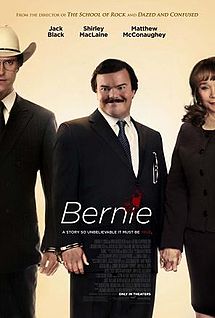
Bernie

215px-Bernie_film_poster

Grade: A

Is murder ever justifiable? Should a man be condemned for his entire life because of one bad moment? These don’t sound like questions a comedy would normally tackle, but Bernie is a question of moral ambiguity disguised as a screwball, black comedy. The movie is based on a true story, for whatever that’s worth anymore, and because of that it doesn’t pretend to have any definitive answers. We know a murder took place and who committed the act, but we don’t know for sure what the motivations were or what the relationship between the murderer and the murderee was. This forces us to tackle these questions with our own logic, our own morality and our own experiences.

The title role is played by Jack Black in one of his most restrained performances. Gone are all the boisterous and obnoxious qualities that have made him famous, and instead we get an effeminate, awkward man who seems to spread good will wherever he goes. He is a mortician who caters to every need and whim of both the deceased and the bereaved. The town of Carthage, Texas adores him for his kind spirit. Most seem to either think he’s gay or asexual, though some seem to have quiet theories about what he does with the old widows that he comforts.

Enter Marjorie Nugent (Shirley Maclaine), a recent widow whose wealth is only outdone by her malice. Bernie befriends her, much the same way he does all the women, and starts enjoying the perks of being a rich, lonely woman’s friend. They go on exotic vacations together, staying in first class hotels, he learns to fly a private airplane and spends a great deal of his time and her money up in the air. He finally even obtains power of attorney so he can spend her money at his leisure. Then he kills her and hides her body for nine weeks, only being discovered when her granddaughter leads the police in a search of her home when Bernie isn’t around, in an icebox.

This seems mostly cut and dry, and to the town sheriff (Matthew McConaughey) it is. A gold-digger gained the trust of a rich old widow, gained power of attorney, then killed her and enjoyed her wealth all to himself. Except the movie gives us enough evidence that it might not be that simple. Bernie might’ve been a genuinely good guy who snapped after being harassed by a mean old woman for far too long. The town refuses to believe he’s capable of such a thing, and even if he did do it, which he did, he admits it freely once caught, he should be forgiven because of all the good he did for the community.

Black and Maclaine bring humanity to what could have been stock characters. If we don’t know who exactly Bernie is, then that’s okay, because this is the kind of movie that could inspire passionate debates over several rounds of beers.

I’ve talked about three of the characters in the movie but I’ve failed to mention the fourth and maybe the most important one: The city of Carthage. The structure of the movie moves through a compilation of interviews with the citizens of the small town. They are eerily realistic and though they employ all the clichés of typical southern small town people as seen by Hollywood, they come off as real viable human beings. They’re probably the best part of the movie, at once hilarious and a bit terrifying. Their faith in Bernie goes beyond any possible atrocity he may have committed because he’s one of them and they’ve seen the good he’s capable of.

The last thing I want to point out is that this movie is in fact a comedy, and it succeeds there too. So forget all that shit about moral dilemmas and conundrums and whatever other pretentious things I said, and just know that it’s pretty goddamned hilarious.
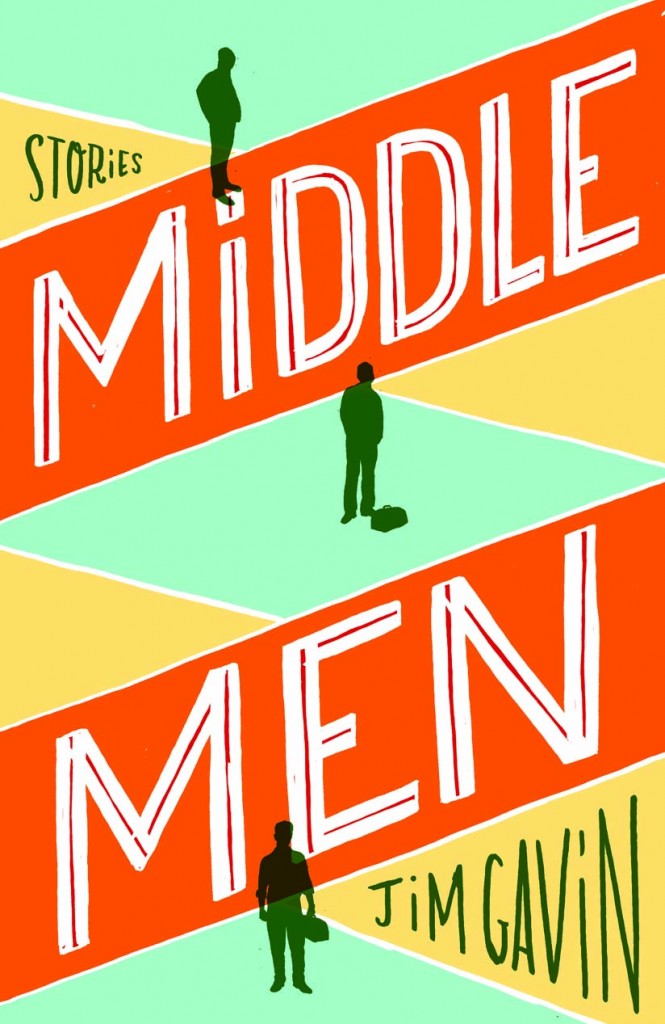
Middle Men by Jim Gavin

Release Date:  February 19, 2013.  Simon and Schuster

middle men

I’m a fan of the short story.  A good short story can do more in 15 pages than an entire novel in 600.  There is nothing quite like that gut punch you receive, and the helplessness you feel, at the end of a Raymond Carver or John Fante story.  When I find a new collection, especially by an author I’ve never heard of, I get all giddy like a 15 year old Bieber fan (That’s what the kids are still listening to right?  I’m not quite in the loop).

Jim Gavin’s Middle Men is that new collection.  I’ll try to refrain from gushing too much in the interest of being viewed a serious critic, but this is the best collection I’ve read in the last year.  It’s both hilarious and devastating, and at times, at least for me, hits just a little bit too close to home for comfort.  The title refers specifically to a two part story at the end called “The Luau” and “Costello” about middle men in the sales world, but works to encompass the entire book as well.  The characters are stuck in that middle part of their lives, that frustrating and seemingly meaningless part where nothing seems to happen and personal and professional failures seem to mount endlessly.  The setting is in and around the city of Los Angeles, and if there is a better locale for people who are stuck in purgatory than Hollywood then I don’t know of it.

Then there is the time period.  All the stories are set in the 1990’s.  Gavin sums up the decade and the place with simple language, always a welcome tactic for me, with lines like.  “It was 1992.  Our shorts were getting baggy and Magic had AIDS.”  This direct prose, two short sentences, sum up everything you need to know.  It gives us the time period and we learn something of the narrators personality and humor.  Funny and cynical, it sums up the entire collection rather well.  Gavin’s a bit older than me, but I’m most definitely a child of the 90’s and that probably helps me identity with his characters.  It helps that I grew up in basically the same area.  I’ll be honest, it also helps that throughout this entire collection, characters are either listening to, or watching, Dodger games.

The two specific stories that got to me most are “Elephant Doors” and “Bewildered Decisions in Times of Mercantile Terror.”  The first is a story about Adam, a struggling stand-up comic who also works as a production assistant on a game show as his day job.  The story is framed around the game show host, Max, manipulating Adam into stealing his dog back from his ex-wife, while in between we get a glimpse of Adam’s non-existent career as a comedian.  In one of the most dead on renditions of life as a comic, Gavin gives us the true futility of standing on a stage in front of a bunch of drunks and other comics, who all hate you.  Adam’s set opens with “I finally found the self-help book that’s going to unlock my potential.  It’s called Mein Kampf.”  He then deals with the inevitable silence of opening with such a tasteless, and just not very funny, joke.  This story captures perfectly the feeling of being in on the fringes of show business.  That spot where you’re a nobody, and it’s worse because you’d like to be a somebody.  The story ends, fittingly, with Adam taking his place in the comedy club, ready to make a fool out of himself again, because what else is going to do with his life?

The other story I want to talk about, and I’ll be brief, “Bewildered” deals with bi-polar disorder.  The first serious short story I ever attempted writing was about more or less the same thing, and wow does Gavin do it better than me.  Using a mental illness to illustrate the failings of the world around us is not a new concept by any means, but here it’s used with enough sympathy and absolutely no sentimentality that it seems fresh and tragic and moving.

If this collection has a failing, it’s that some readers will find it a little on the boring side since it can be construed that nothing really happens.  I disagree, but if you’re more drawn to stories that have actual danger and action to them, then this probably isn’t the ideal fit.  It slides into the category of “bored suburban kids who suddenly realize they don’t have a place in the world.”  I put that in quotes because someday I feel that will be a real genre.

My final thoughts:

There are two basic narratives that continuously come up concerning L.A.  One focuses on the seediness and the underground sleaze that’s so ironic in such a city of supposed glamour.  These are your Bukowski’s and your crime noirs.  Then there are the stories that focus on the glitz itself, like every reality show ever created.  I will concede a third, that’s kind of derivative, and that’s where the glamour and glitz hides an inner seediness.  Death Becomes Her comes to mind, maybe?  I don’t know why that movie is what pops into my head, but I’ll go with it.  There is nothing wrong with these narratives, in fact a lot of times they can be quite well done, it’s just that we’ve seen them time and time again.  People tend to forget that Los Angeles is actually a really, if unforgiving, city with real people facing real struggles and have perfectly reasonable ambitions.  I think this is why it’s refreshing to see Gavin tackle the real city.  He shows us these people stuck in between the sleaze and the glamour, struggling through their daily lives.  Hollywood is ever present in their lives, but it’s not always the driving force.


Buy this book!

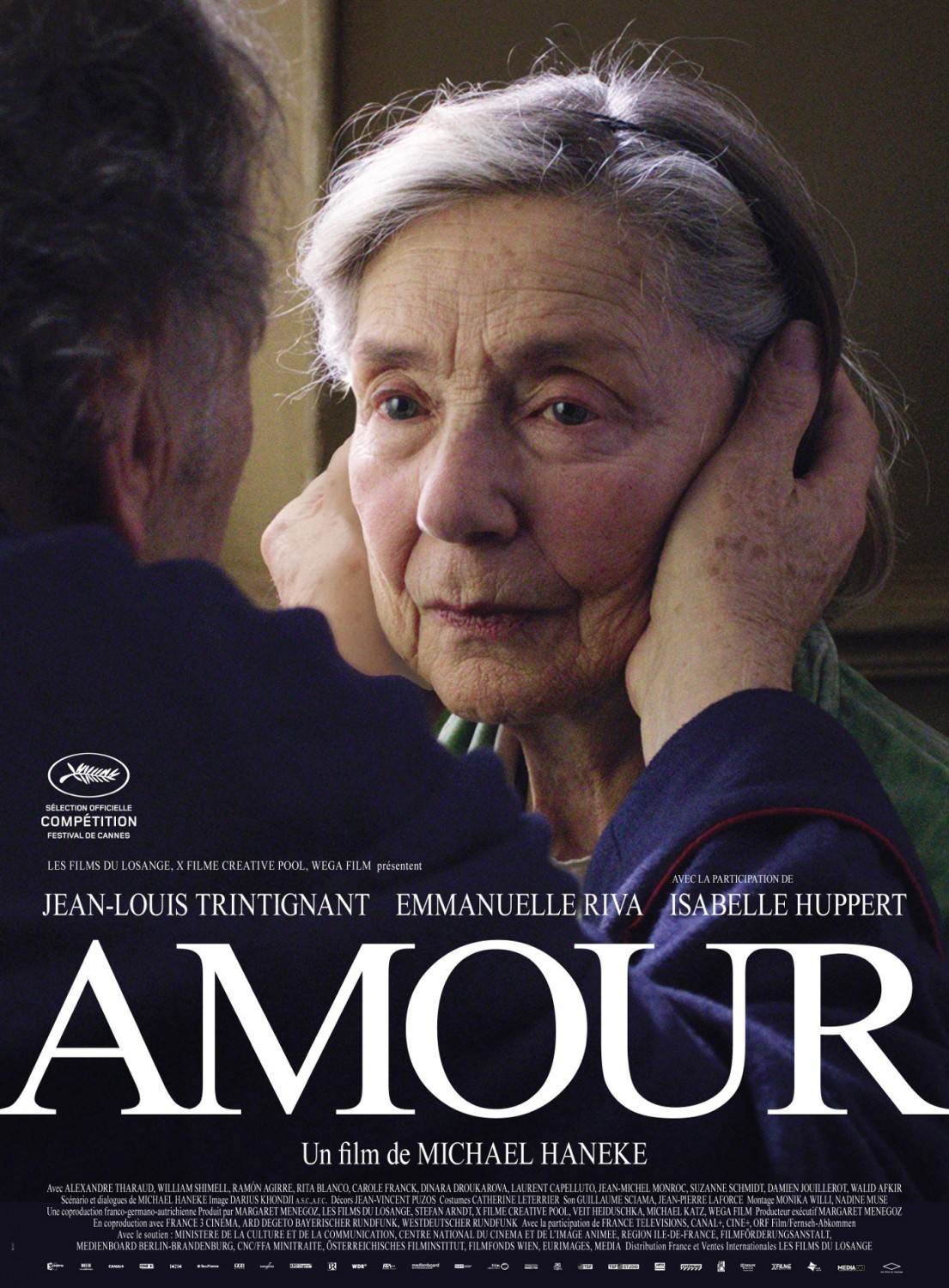
Amour

(Editor’s note: I’m currently on vacation and will be back to post after the weekend. The following review is by the writer of The Roost and her contributions are greatly appreciated here at Some Damn Fool.)

amour-movie-poster-2

Grade: A+

The Oscars are on Sunday, and if “Amour” goes home with nothing, the Academy doesn’t know a damn thing about film. Michael Haneke has created a gorgeous piece of art, with raw emotion that filters through every scene – start to finish. Death and dying are not topics our society has an easy time looking at with honesty. We like to sugar coat it, wrap it in wry remarks and humorous anecdotes, hoping to distance ourselves from the inevitable reality we will all face. “Amour” doesn’t do that. It “bares all” in its examination of dying, and the effects that it has on our loved ones. More importantly, it “bares all” when it comes to what love truly means.

From the onset, it is clear that the movie deserves it’s title. In the opening pre-credit scene, police barge into the apartment find the bedroom sealed off, a carefully laid to rest Anne inside. The care and consideration taken with her body are just a glimpse into the loving relationship Anne and George have. The chemistry between Emmanuelle Riva and Jean-Louis Trintignant enriches the script and reverberates off the screen, leaving the daughter’s marriage to a philandering English musician in stark contrast. Snippets throughout the movie of George’s care of the infirmed Anne – from helping her get out of her chair, to aiding her with the toilet, feeding her when she can no longer feed herself, washing her, taking her through her exercises – show a man unable to even consider a life without his wife; loving her even when her mind is too deteriorated to return that love.

Anne and George Laurent are retired music teachers, an elderly couple who still find comfort in each other’s company. Anne suffers from a stroke, leaving her paralyzed on the right side of her body. At first, George takes care of her by himself, cutting up her food so that she can still feed herself, helping her with the nuances of using the bathroom or taking a bath, and taking her through her daily exercises. She can still read, still talk, still move around in her automated wheel chair, but this changes. It is inferred that Anne has suffered a second stroke, and finally George must get a nurse to come in – three times a week. The remaining time, he is still her primary care taker, a role that ages him considerably throughout the movie. Anne’s mind is slipping, she is unable to do even the most basic of tasks, and the two of them start to remove themselves from the outside world.

Much like the pigeon that keeps flying through the courtyard window, their daughter flutters in and out of their apartment, unwilling or unable to leave her parents to simply die, even when it is requested. A nurse is let go for attempting to show Anne a mirror, so that she might see the hairstyle the nurse has roughly brushed out. A letter from a former student, remarking upon the sadness of Anne’s condition, changes their tiny moment of excitement back into depression. The young do not understand what it is to die. While well-meaning, their interruptions and sentiments are not acts of selflessness, but of an inability to relate; a reflection of their own needs and not the needs of the couple. George’s final interaction with Anne may be construed by society as murder, but for them, it was release. Love is acknowledging the needs of another.

Trintignant is superb as a man completely devoted to his wife. Every expression, every movement, every line delivered reflects the progressing toll Anne’s condition has on George. His wife is suffering her way to death, and it is killing him. The Oscar nod was truly deserved for Riva, however. Her performance was heartbreaking. Frustration, resentment, depression, dignity, mental deterioration – there are very few actresses that could act with such grace and subtlety. Riva doesn’t just show us the emotional turmoil Anne is going through, she makes us feel it.

We talk a lot about what defines marriage and love, our proclamations of “in sickness and in health” and “’til death do us part” often ring hollow. Haneke’s “Amour” is more than just a couple dealing with death. It is a movie about love beyond youth, beyond romance, beyond the good times. Love through sickness and frustration. Love that is devoted and respectful and forgiving. While looking through family photo albums, Anne remarks in sad reflection “C’est beau – la vie.” Haneke’s exploration of love and dying are equally beautiful – and devastating. Bring your tissue boxes.

Silver Linings Playbook

silver linings playbook

Grade: A-

Bi-polar disorder is something that is never really handled well in story-telling. It’s either played for laughs or makes the afflicted person such a crazy, bat-shit mess that it’s hard to root for them and even harder to understand why the characters around them tolerate their bag-shittiness. Silver Linings Playbook does it better, in fact I daresay it gets it right. Pat Solitano (Bradley Cooper) is mostly a good and nice man, however he has no filter from his thoughts to his speech and he’s prone to explosions of extreme rage and violence. All the while he maintains a tragically positive attitude towards life and believes that if he just tries hard enough he will get a happy ending, a silver lining if you will. The result of this is a tragic and darkly funny movie that has earned the mostly positive reviews it’s getting.

Pat’s just getting released from a mental hospital after serving a court ordered eight months there, and is ready to get his ex-wife back. This proves difficult because she has a restraining order on him for beating her lover half to death after he catches them in the shower together. Pat has a support group, his father Pat Senior (Robert Deniro) who suffers from a pretty intense bout of OCD that centers around the Philadelphia Eagles, his mother Dolores (the unsung hero of this movie Jacki Weaver) and a supporting cast of character actors that add life to the film. Nobody can quite get through to him that his wife, Nicki, has moved on and wants nothing to do with him and that maybe they weren’t really right for each other in the first place anyway. Pat doesn’t want to hear any of this and reacts very poorly when it’s even mildly suggested, like when he becomes consumed with rage and becomes a danger to his parents because he can’t find his wedding video.

Cue the hot girl. Tiffany (Jennifer Lawrence) is a recent widow, sex-addict and might have a spot of bi-polar herself. Tiffany shows up and is introduced to Pat through mutual friends because they probably figure it would be easiest to just pawn off the two crazies on each other. The movie then pretends it’s not a romance even though we’re well aware that it is, and the climax revolves around a big dance scene and the result of the big football game, finally resolving itself in a somewhat easy manner. But more to that in a second.

The acting is what drives this film. Cooper, Lawrence, Deniro and Weaver are all outstanding. All the major roles received Oscar nominations and all deservedly so. I wrote about a week ago about Deniro in Being Flynn and how he just doesn’t seem to play an unhinged character all that well anymore, and in this he finds the right role for himself at this stage. In fact, he’s a man so hinged that anything disrupting it causes complete chaos. Deniro proves that I was wrong about him and he’s still got the goods when given a script that works. Jennifer Lawrence plays a quietly haunted character perfectly, though she’s less good during her big explosions. Cooper finds just the right note of a bi-polar man, not crazy, just struggling to maintain his composure and adjust himself to a world with too much stress for him to handle. Jacki Weaver is awesome in this movie. I’m incredibly happy she got a nomination, and I hope she wins. Hers is a thankless role, the long suffering mother. She’s endlessly nice, but has a son with bi-polar and a husband with OCD. She loves them both and is clearly holding on to her composure by the skin of her teeth. Weaver’s performance is the emotional center of this film in my eyes.

Now let’s get to the ending. I didn’t love it. This movie was great because it didn’t try to deny that the problems the characters faced were complicated. It feels honest and it doesn’t mess with the audience’s head just to get a cheap emotional point. But then the ending feels a little coy, and employs a ton of clichés, some of which to be honest I’m okay with because they used them in new and refreshing ways, and makes this otherwise very complicated situation resolve itself a little too easily. The final few minutes, while satisfying in a way, just doesn’t resonate as well as I would hope. It’s a minor gripe, but it prevents Silver Linings Playbook from being a borderline masterpiece.

Bill Volume 2: Reborn

Continuing MacDougal Drive

Bill left the bar and lit a cigarette. Larry was a good sort, even picked up the tab. Bill resolved that he would buy beer the next time they were out, though he’d have to figure out a way to make some money first. Once he’d been full of ideas, some ridiculous sure, but there was never a short of inspiration. Then the dark times, the waiting around for his mother to die had taken something from him. He felt now that it was coming back though, that a spark had been relit somehow. A change had occurred, there was no denying it. Since the letter from the writer’s conference he’d been smoking too much, had started boozing again. The fragile illusion of control he had so carefully cultivated was becoming impossible to maintain. The nicotine shot through his brain and focused his thoughts, sent his drunkenness away to hide in a corner. He walked up the street towards home where he’d check on his mother, who would probably yell at him for leaving her alone. It had become clear that she was clinging onto life only to burden him, keep him down until he knew, and would never forget, what a rotten son he was to her.

The skies were an unnatural black above him. No, not unnatural he told himself, just cloudy, the threat of rain looming. He thought of how badly the city needed a good rain. Not for the drought, that was perpetual, but to give a feeling of being washed. That kid that had been killed made everything and everybody feel dirty and tainted, guilty over their own small roles in the evil. Murders were rare in this town, child murders almost unheard of. He’d given a lot of credit to that awful letter, but this sensational act of violence was just as much responsible for the change. A dark energy had fallen over the town, something sinister yet potentially beautiful.

He picked up his pace to beat the rain, felt the booze creeping its way back into his consciousness. Bill felt awful about the dead kid, the one that lived too, to live is sometimes worse. He was pretty sure that kid was a neighbor, but he had little memory for faces. But he had to admit a certain excitement too. Finally something worth talking about, something maybe even worth writing about again. He could follow the case, interview the victims and suspects, turn it into a narrative. He could be like Truman Capote, except he wouldn’t be gay. Well, he’d be willing to fake it if it meant selling the book. Bill didn’t have a lot of sexual urges one way or another anymore. But what a story, what a writer!

The drunk was back in full now and he had to piss. He stopped and whipped out in front of a brick wall, tried writing the first sentence of his new book with his stream. He became vaguely aware of someone shouting. He turned to see an officer of the law getting out of his car and coming at him.
“What’s going on here?”
Bill looked down at his exposed member. “Couldn’t wait.”
“Put it away.” The officer approached him and sniffed the air. “Drunk?”
“Boy howdy.”
“Alright, come on.” He led Bill into the backseat of his cruiser, but didn’t cuff him. “You’re gonna sleep this one off in the tank.”
Bill laughed in delight, he was back. Yes, he was losing control of himself. He could be a writer again. He watched the neighborhood fly by through the window and thought only of his new masterpiece.

Read the rest of the series of MacDougal Drive:

Bill

Jimmy

Dolores

Harley